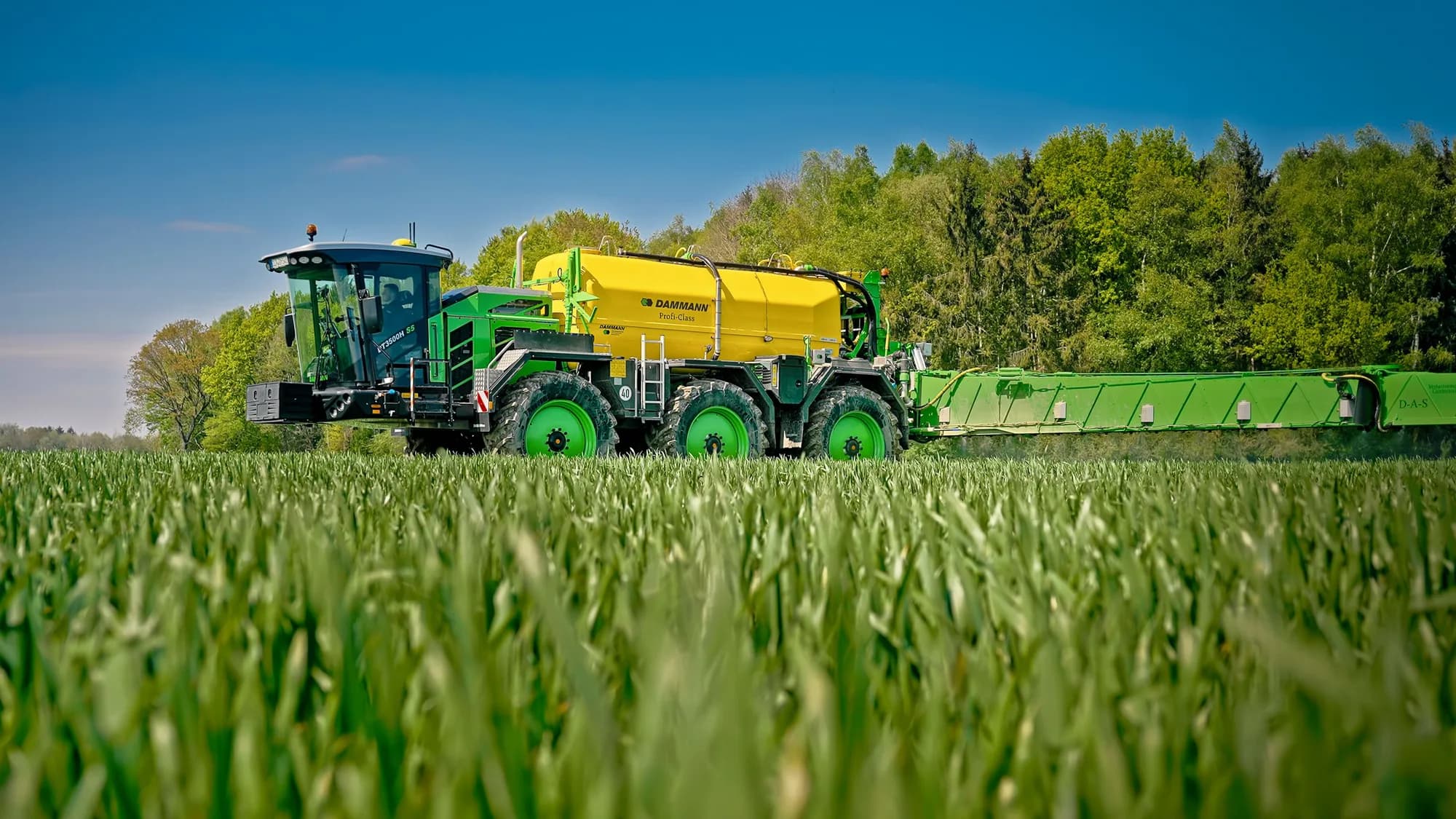
DAMMANN DT 3500H S5 EcoDrive
Self-propelled DAMMANN-trac: 8,000–12,000 l, three axles, six driven wheels
A machine for a working day measured in hundreds of hectares
Maximum tank
Maximum boom
Driven, on three axles
Self-propelled DAMMANN-trac: 8,000–12,000 l, three axles, six driven wheels
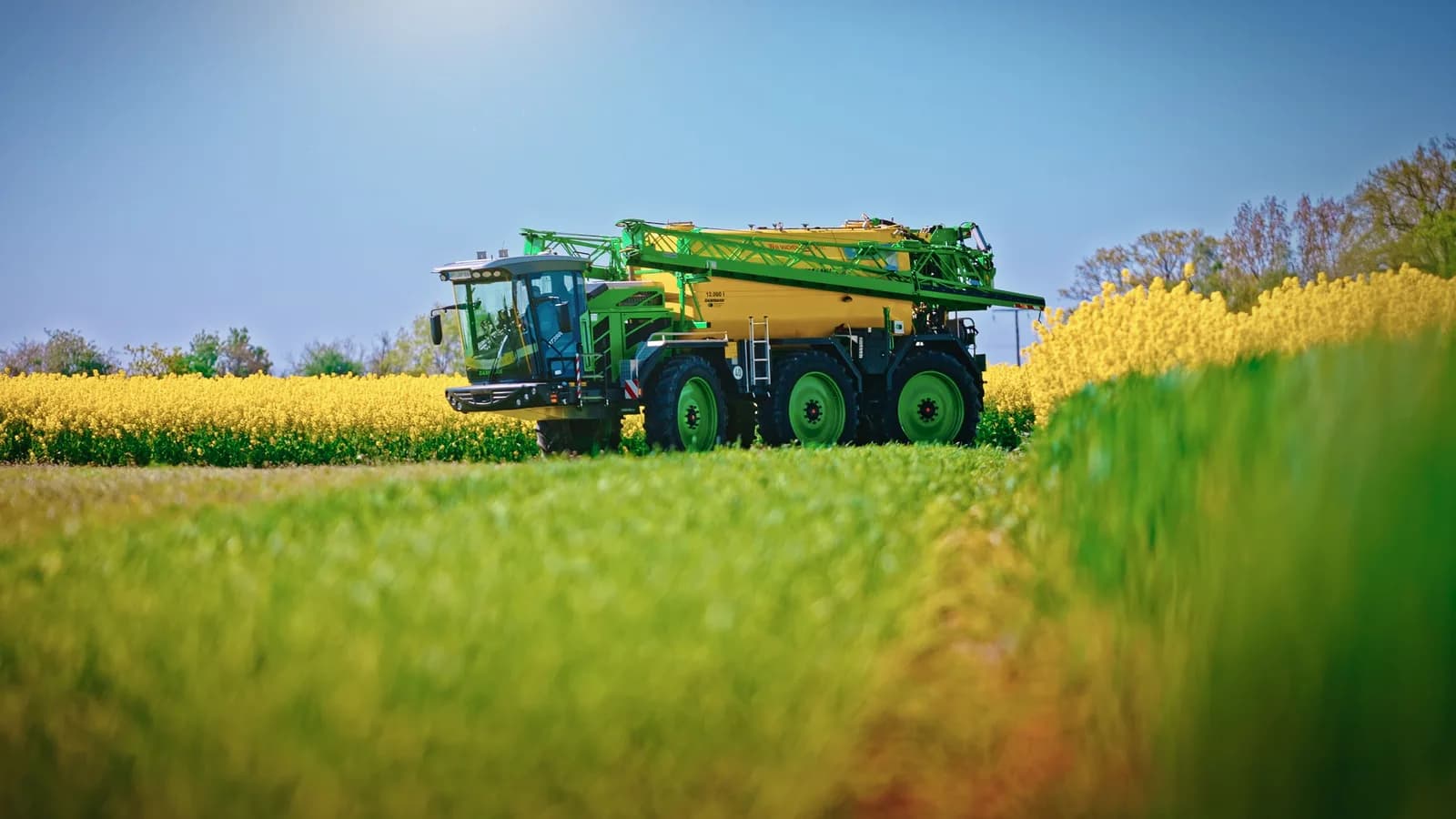
The DT 3500H is the most powerful machine in the DAMMANN-trac range, built for farms and contractors for whom the treatment window is measured in hours. A tank of 8,000, 10,000 or 12,000 l and a boom up to 48 m mean the fewest possible refills in a working day. Three axles spread the 25 t weight across six driven wheels, and the first and third axles are steered, so the rear wheels follow the front ones instead of cutting the turn through the crop. The "3500" designation is a series code, not the tank capacity: this is the first misunderstanding worth clearing up when comparing offers.
Twenty-five tonnes that are meant to leave no rut
A large tank solves one problem — the number of trips to fetch water — and creates another: mass on the field. The DT 3500H design is a response precisely to that second problem.
Litres cost soil compaction
Twelve thousand litres of liquid is twelve tonnes of payload. Added to the machine's own mass, this gives a maximum permissible gross mass of 25 t. On two axles, such a load would mean ground pressure at which an early-spring entry onto the field stops being sensible, and the rut stays until harvest.
Three axles, six wheels, articulated suspension
The mass is spread over six contact points instead of four. All three axles have hydraulic suspension and are mounted on articulated joints, so the wheels stay in contact with the ground even over unevenness — and the pressure does not momentarily concentrate on one of them. The first and third axles are steering: the machine follows its own track, rather than cutting corners wider than the front.
Source: Manufacturer's data
“3500” is not the capacity
The series designation is sometimes read as litres, leading to comparisons of machines that do not belong in the same class. The DT 3500H tank is 8,000, 10,000 or 12,000 l — the choice depends on the distance to the filling point and on how many hectares one filling should cover. On fields close to the farm, a larger tank can be a cost rather than a gain: you end up hauling water instead of working.
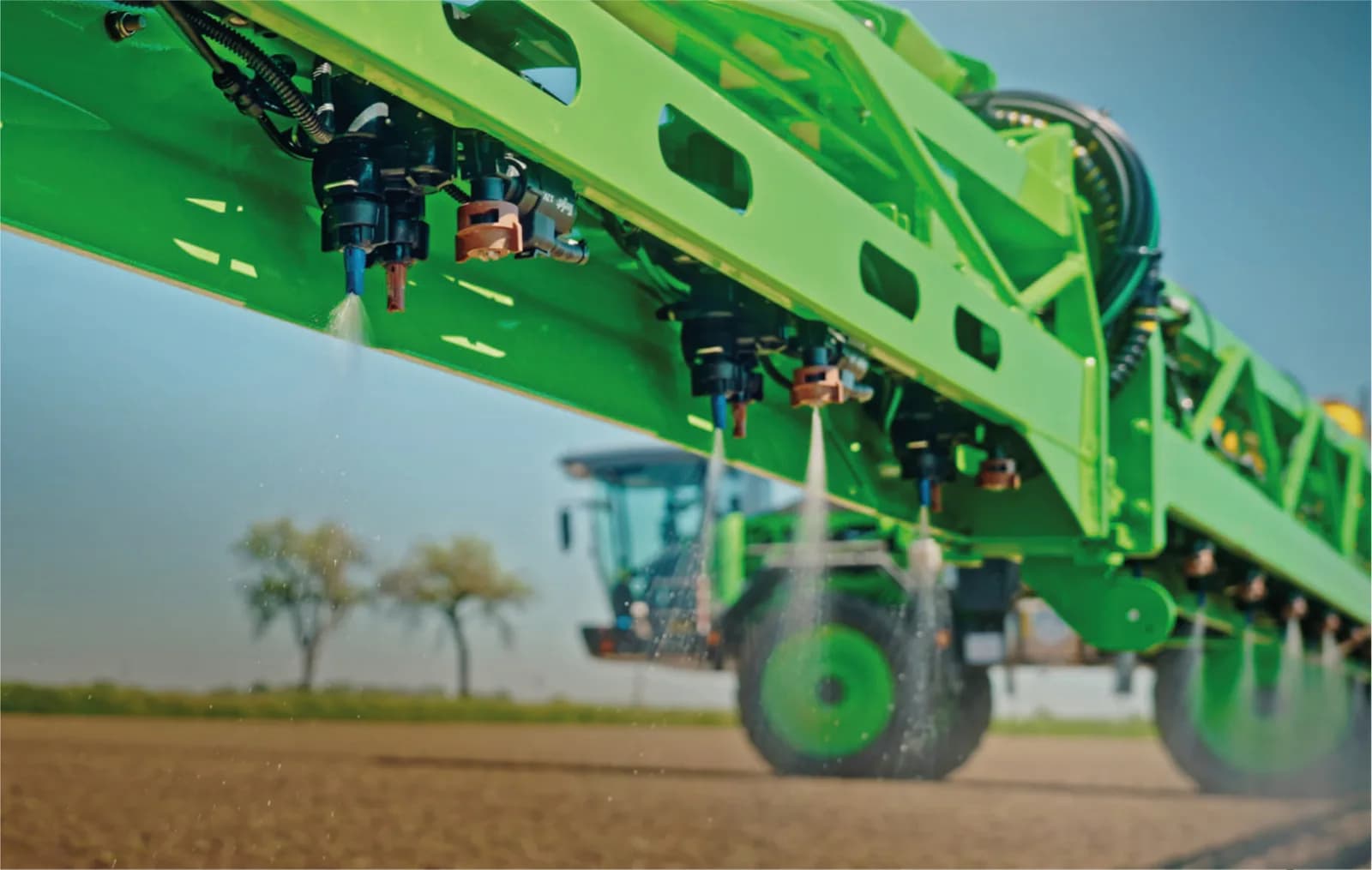
DCD 2/4 — boom guided by six sensors
On a boom approaching 48 m, every centimetre of deviation at the end of a wing changes the rate beneath it. The active DCD boom guidance in the 2/4 version (G26-6) works on six ultrasonic sensors and keeps the height above the crop, rather than above the ground under a single wheel. This is optional equipment; the versions with two and four sensors are cheaper and less accurate over unevenness.
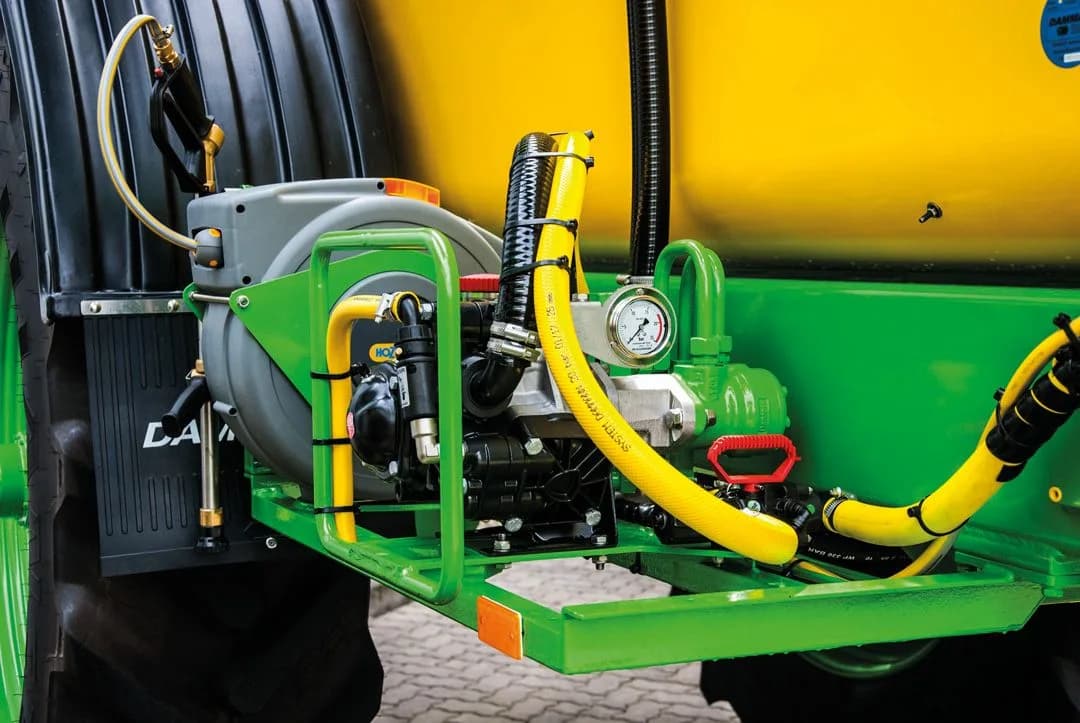
Continuous internal cleaning while driving
The CID (D10-1) rinses the tank during operation: a hydraulic pump feeds clean water to the standard cleaning nozzles, and control runs from the ISOBUS terminal with a sensor in the clean-water tank. With a large tank, this is not a convenience but a condition for changing product within a reasonable time — the residue left from the previous application stays minimal, without a return to the farm.
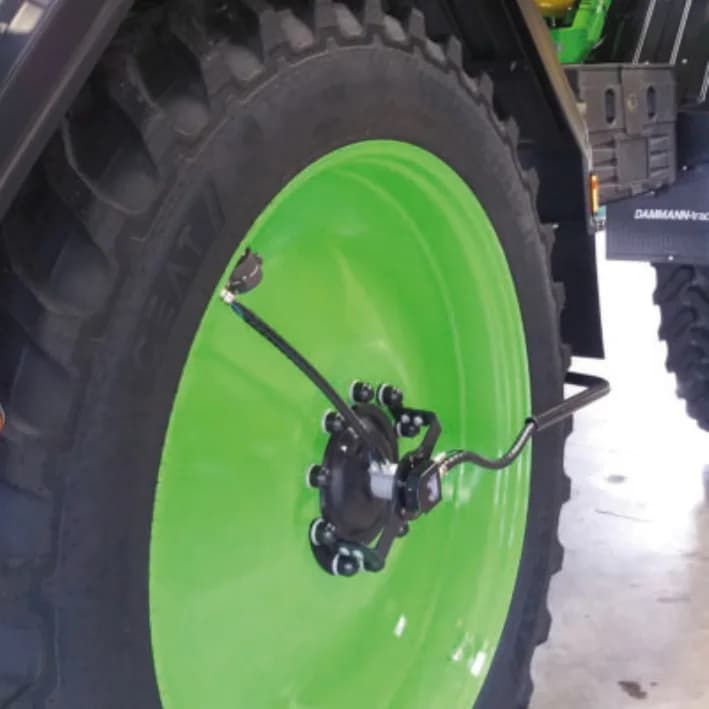
Tyre pressure adjustment from the cab
The ATC system (S33-6) lowers tyre pressure in the field and raises it before driving on the road. At a mass of 25 t, the difference in wheel footprint is clear: lower pressure means a wider track and less soil compaction, higher pressure means less tyre wear and rolling resistance on asphalt. The system requires a hydraulically driven compressor.
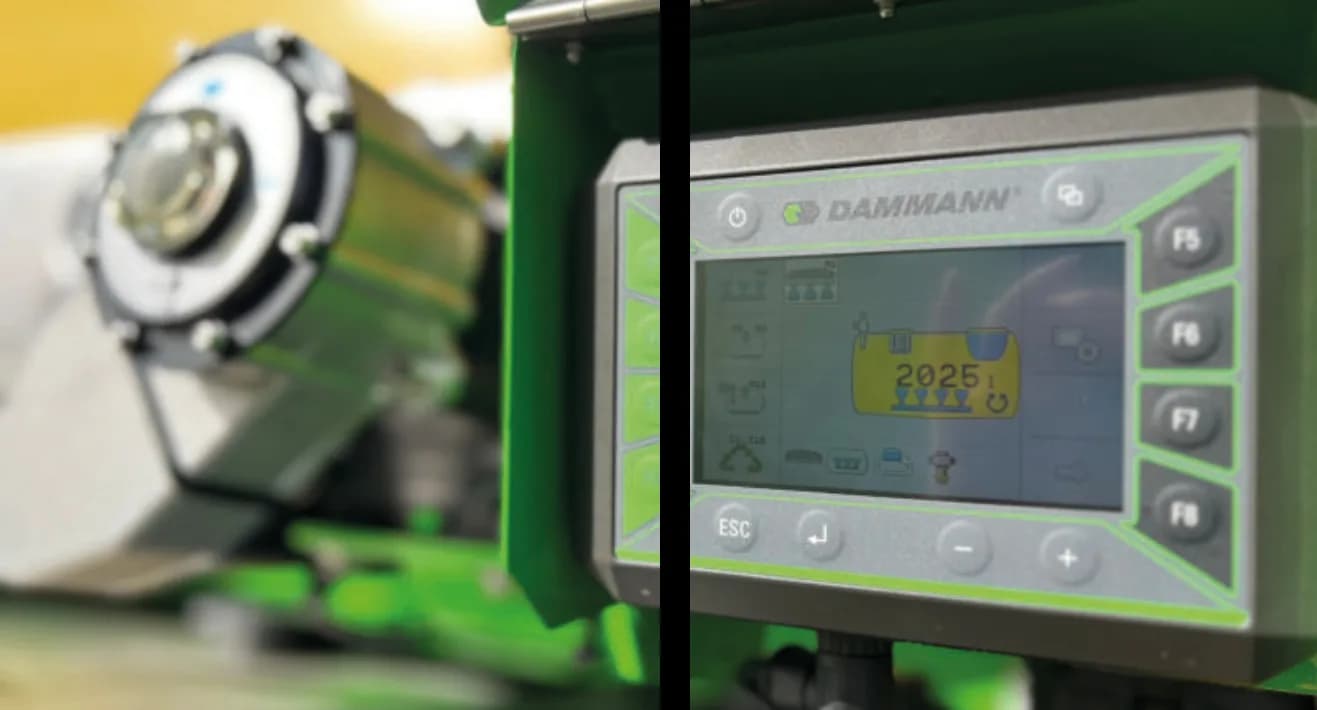
HD 1260 pad terminal — the whole field map on one screen
As standard, the machine works with an HD 8 pad terminal. The C350 position replaces it with the largest touchscreen monitor in the range, the HD 1260 pad, with TaskController, TRACK-Leader and SECTION-Control included. This makes sense where navigation, application map and sprayer control are to be on one screen at the same time.
DAMMANN-trac: DT 2400H Highlander vs DT 2800H vs DT 3500H
Three machines on one drive platform. They differ not in “power”, but in what they are meant to run on: the Highlander changes track width and ground clearance, the DT 2800H keeps to the typical grain tramlines, and the DT 3500H spreads its weight across three axles.
- Liquid tank
- 4 400 / 5 000 l
- Boom width
- 24–42 m
- Engine
- MTU 6R1000 · 285 KM
- Axles / driven wheels
- 2 axles · 4 wheels
- Ground clearance
- 1,100–1,800 mm, adjustable while driving
- Wheel track
- 2,250–3,050 mm, adjustable from the cab
- Steering system
- all wheels steered
- Total weight
- 18,0 t
- Length (depending on tank)
- 8,10–9,85 m
- Standard tyres
- 380/90 R46
- Fuel / AdBlue
- 250 l / 25 l
- Liquid tank
- 5 000 / 6 000 / 7 000 l
- Boom width
- 24–42 m
- Engine
- MTU 6R1000 · 285 KM
- Axles / driven wheels
- 2 axles · 4 wheels
- Ground clearance
- approx. 1,100 mm, fixed
- Wheel track
- 1 800–2 250 mm
- Steering system
- front axle steered
- Total weight
- 18,0 t
- Length (depending on tank)
- 8,25–10,60 m
- Standard tyres
- 380/90 R50
- Fuel / AdBlue
- 250 l / 25 l
- Liquid tank
- 8 000 / 10 000 / 12 000 l
- Boom width
- 30–48 m
- Engine
- MTU 6R1000 · 313 KM
- Axles / driven wheels
- 3 axles · 6 wheels
- Ground clearance
- up to 1,050 mm, fixed
- Wheel track
- 2 000–2 250 mm
- Steering system
- 1st and 3rd axles steered
- Total weight
- 25 t
- Length (depending on tank)
- 9,90–11,50 m
- Standard tyres
- 520/85 R42
- Fuel / AdBlue
- 380 l / 40 l
Source: Dane producenta
DT 3500H S5 EcoDrive — specyfikacja
DT 3500H S5 EcoDrive w polu
Services for other farms
Contract work is billed per hectare, while costs are driven by the hour. Anything that shortens stops counts directly: 12,000 l covers a many times larger area per filling, and a 48 m boom reduces the number of passes. In addition, there is the documentation of work performed from the terminal, which clients increasingly require.
Large, regular fields with a distant water point
The farther the filling point, the more of the day is consumed by travel. On fields far from the farm, a large tank stops being a luxury and becomes arithmetic: one fewer filling means several dozen more minutes of work.
Early timing on soils sensitive to compaction
Six wheels, hydraulic suspension on all axles and optional tyre pressure regulation allow you to enter the field earlier than a two-axle set of the same mass would. This does not remove the limits of soil bearing capacity — but it shifts the threshold at which entering the field stops making sense.
Explore the whole DAMMANN family
This model is part of the DAMMANN manufacturer's range. The other machines address the next stages of the same technology.
 Crop protection
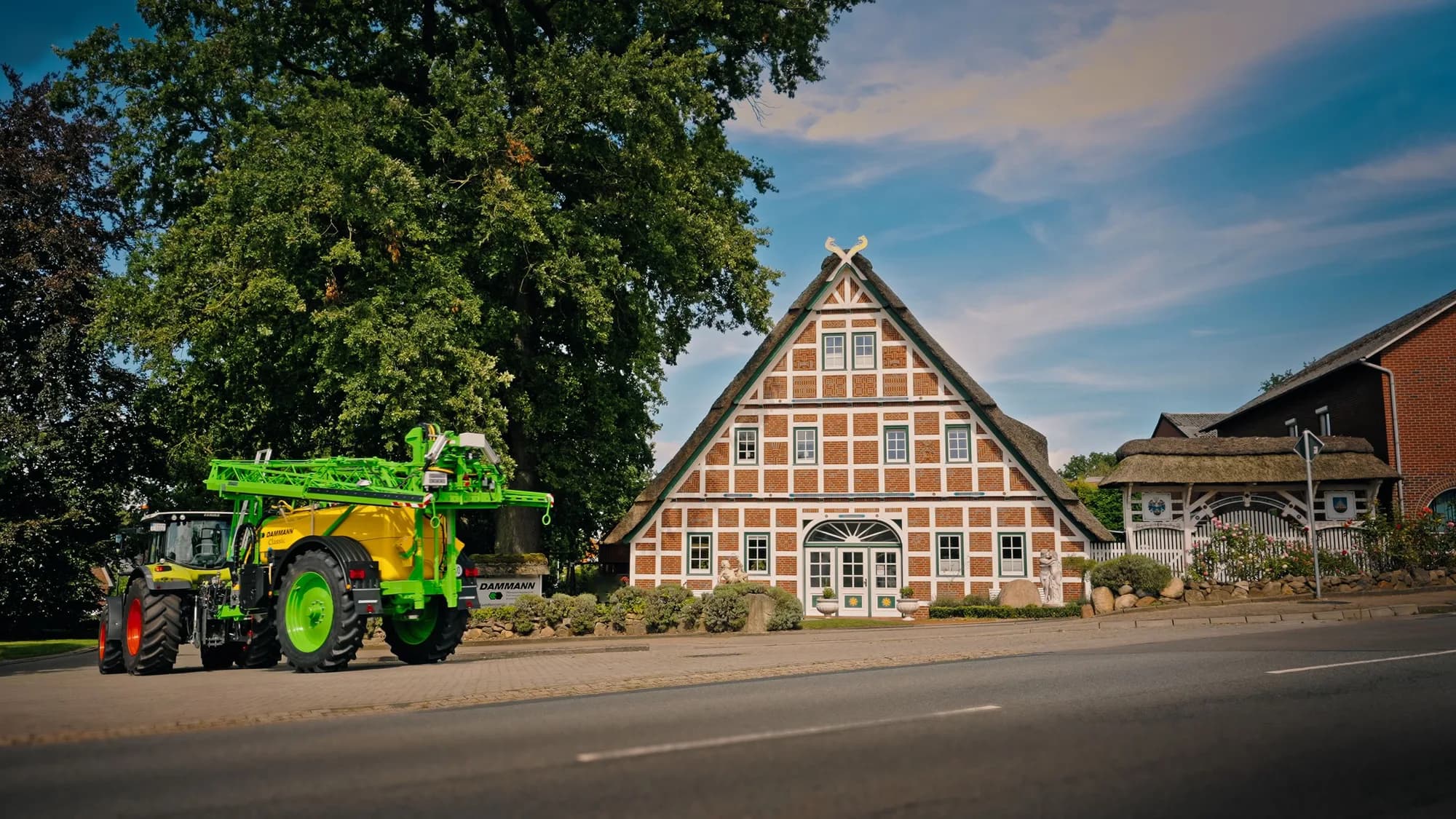
Classic
Single-axle trailed sprayer — 4,400–6,000 l, boom 18–36 m
View model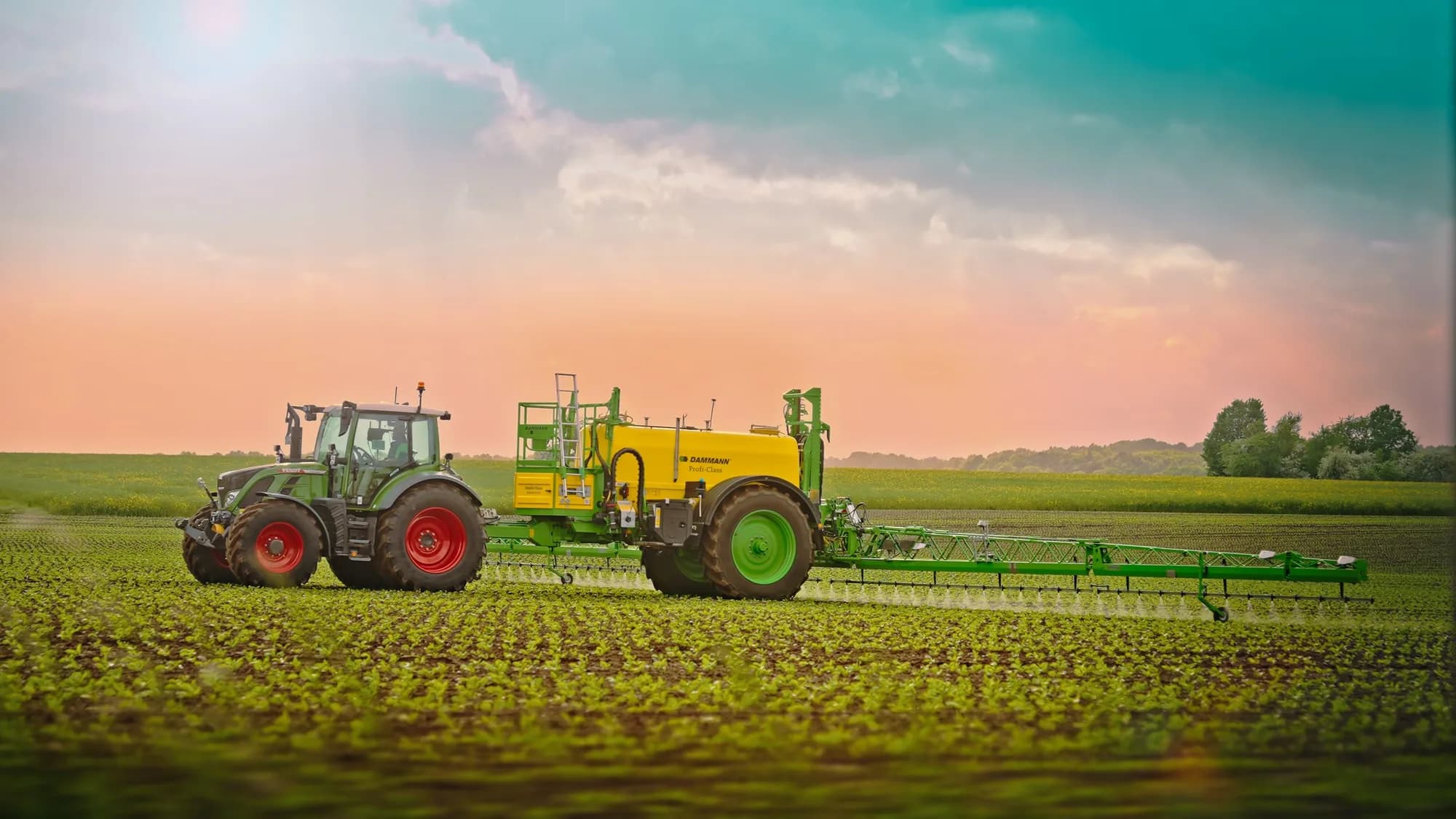 Crop protection
Profi-Class
Single-axle trailed sprayer — 5,000–7,000 l, ISOBUS and pressurised circuit
View model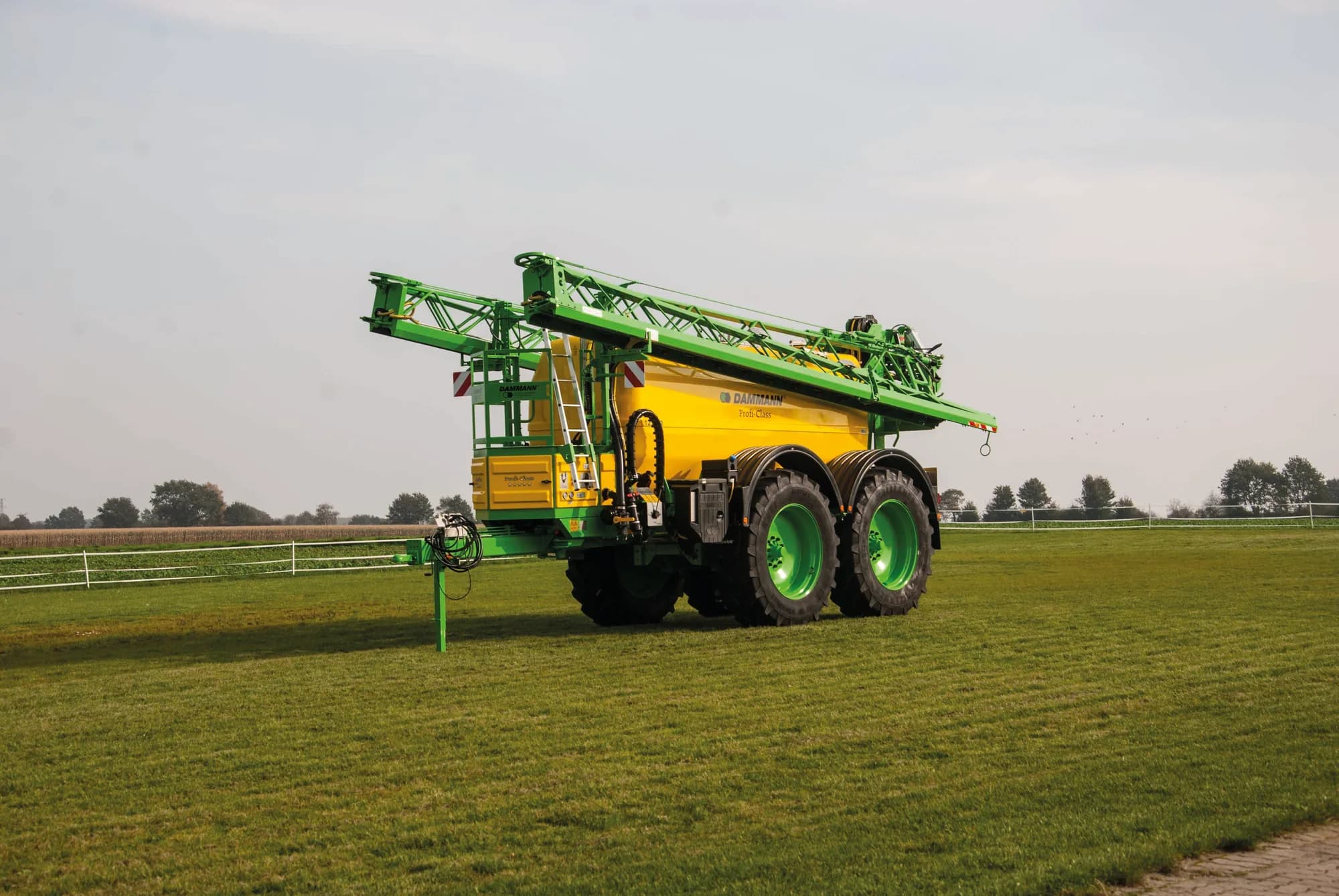 Crop protection
Profi-Class Tandem
Two-axle mounted sprayer — 8,000–14,000 l, boom up to 48 m
View model Crop protection
Profi-Class Tridem
Three-axle trailed sprayer — 20,000 l, boom 40–48 m
View model Crop protection
DT 2400H S5 Highlander
Self-propelled DAMMANN-trac — wheel track and ground clearance adjustable from the cab
View model Crop protection
DT 2800H S5 EcoDrive
Self-propelled DAMMANN-trac: 5,000–7,000 l, ground clearance approx. 1,100 mm
View modelCrop protectionYou are currently viewingDT 3500H S5 EcoDrive
Self-propelled DAMMANN-trac: 8,000–12,000 l, three axles, six driven wheels
Aktualny model Crop protection
Profi-Class on a carrier vehicle
Body for Unimog, JCB Fastrac or MB-trac — 2,000–4,000 l
View model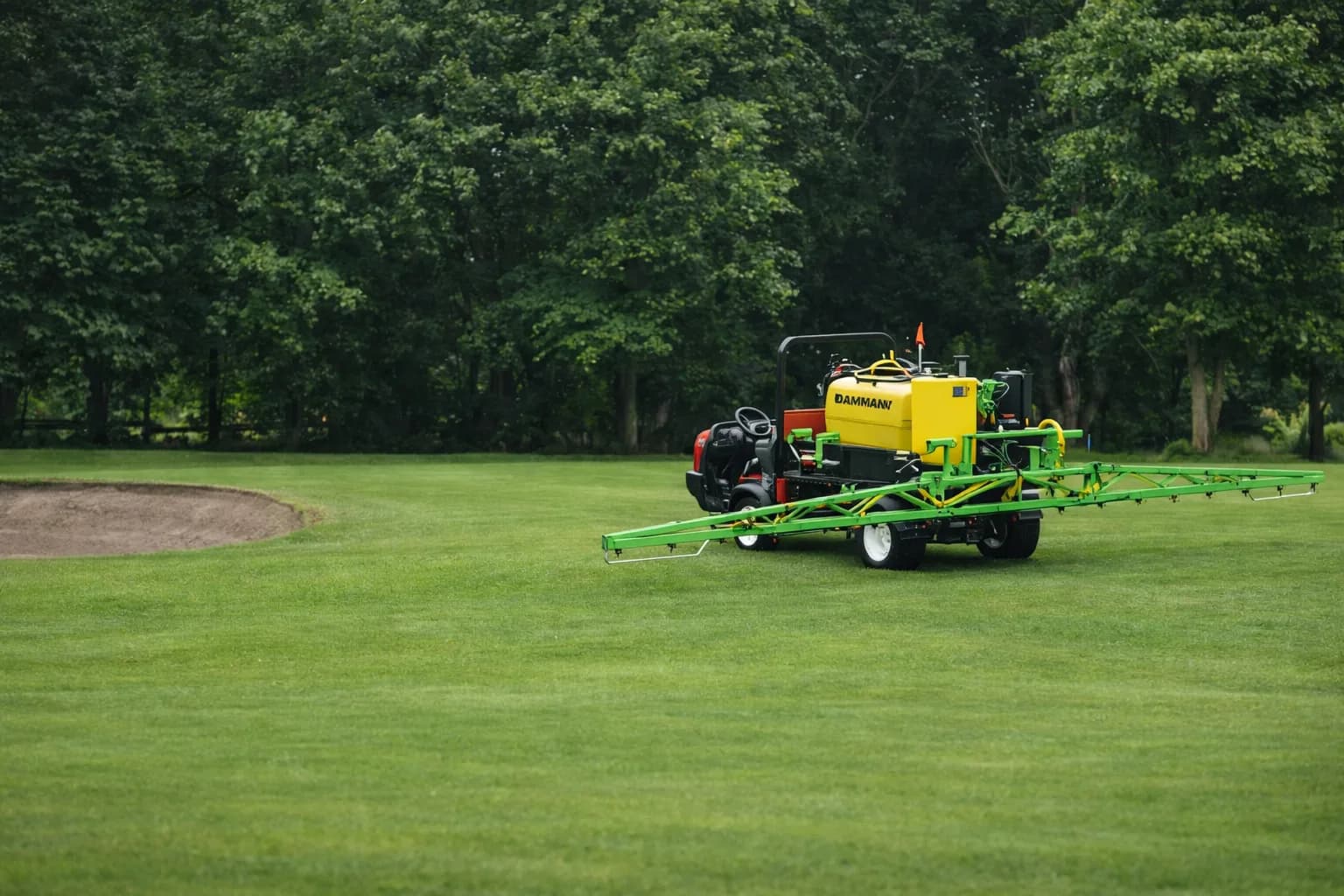 Crop protection
Profi-Class-GREEN
Turf and green areas: 500–2,000 l, boom up to 12 m, D-GPS rate control
View modelDT 3500H S5 EcoDrive on each side
Conversation with an engineer.
The most common questions we hear from farms before purchase.
We have collected the questions we most often hear from farms before purchase — and the answers from our engineers. Every answer is based on verified knowledge of the machine.
- manufacturer's materials
- dokumentacji technicznej
- questions asked by farms
Answers based on the experience of thousands of farms in Europe.
Yes — across the full DAMMANN field range, the ISOBUS terminal is standard equipment, together with automatic section control. The number of sections depends on the model and boom width. In the tractor, a compatible ISOBUS UT terminal is sufficient.
DAMMANN-trac machines have no gearbox, axles or differentials: each wheel is driven by its own hydraulic motor supplied from a pump. In practice this means three things. First, a wheel with weaker traction does not take torque away from the others — which is what a differential does. Second, speed is adjusted smoothly from creep speed up to 40 km/h without switching ranges, so the application rate does not jump when the pace changes. Third, there are no drive shafts running the length of the machine, and that space is taken by the frame for the implement.
Yes, and that is the purpose of the design: the carrier frame is mounted at three points, and the implement stands on its own parking supports (price list item A88, with wide tyres A90). After removing the sprayer, a mounted fertiliser spreader fits onto the same frame — it requires preparation R50 and, if the spreader is driven, a second hydraulic circuit H06. These are price list items, not standard equipment; when enquiring, state whether you plan a second implement, as they are added at the factory.
Category 4 according to EN 15695-1:2009 is a cab that protects against vapours and aerosols of plant protection products: it operates under positive pressure and with a carbon filter, so air enters only through the filter. An ordinary air-conditioned cab does not provide this — it protects against dust, not against the product. On DAMMANN-trac machines, the category 4 cab is standard equipment.
Depends on the machine: DT 2400H and DT 2800H have 250 l of diesel and 25 l of AdBlue, DT 3500H — 380 l and 40 l. In practice both sizes are sufficient for a full shift without stopping for fuel; the bottleneck of the working day is water, not diesel, which is why the liquid tank capacity is chosen according to the distance to the filling point.
We start from the fields, not the catalogue: seasonal area, spread and size of plots, soil bearing capacity, crops and crop height, and tractor availability at the peak of spraying. On this basis we determine the machine class, tank capacity and boom width, and only then the equipment. You can start the selection yourself — the “Sprayer selection” tool on this page guides you through the same questions, and the configurator assembles the machine item by item according to the manufacturer’s price list structure.
Yes. As an authorised distributor, we order parts for DAMMANN machines directly from the manufacturer, using DAMMANN catalogue numbers. Service requests are handled by our after-sales team — a service request requires the machine’s serial number and year of manufacture.
A machine for a working day measured in hundreds of hectares
Assemble this machine item by item — tank, boom, sections and equipment within the manufacturer's structure. We will prepare an offer for the finished configuration.