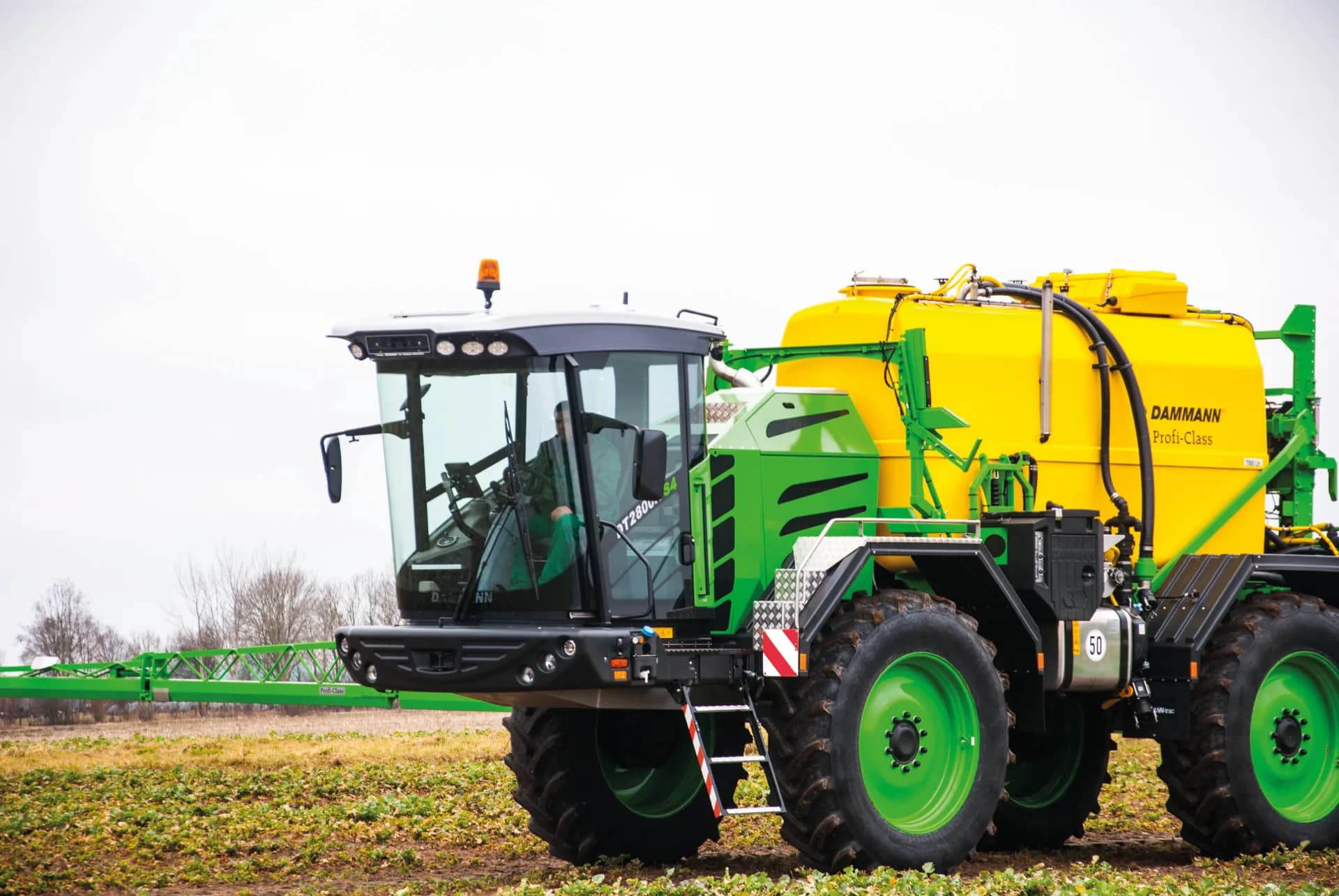
DAMMANN DT 2800H S5 EcoDrive
Self-propelled DAMMANN-trac: 5,000–7,000 l, ground clearance approx. 1,100 mm
Independence from the tractor starts here
Maximum tank
Maximum boom
Load Sensing hydraulics
Self-propelled DAMMANN-trac: 5,000–7,000 l, ground clearance approx. 1,100 mm
The DT 2800H is the basic self-propelled DAMMANN-trac and the most common entry point into this class. Ground clearance of about 1,100 mm and track width of 1,800–2,250 mm suit the technological tramlines of cereals and oilseed rape, and a tank of 5,000, 6,000 or 7,000 l gives what the Highlander cannot: a reserve of litres. Hydrostatic drive through four motors in the wheels means constant traction without differential mechanisms, and the EcoDrive system matches engine speed to the load instead of keeping it high as a margin. This is the choice for a farm where late treatments in tall crops are not the main work, and the spraying window closes faster than a tractor can return.
Hydrostatic drive: what goes away along with the axles
The DAMMANN-trac has no gearbox and no differential gears. This is not a design curiosity: it determines how the machine behaves in the field.
Four motors, one in each wheel
A pump driven by a combustion engine feeds oil to four hydraulic motors mounted in the wheels. There are no shafts transmitting torque from front to rear, and no differentials dividing it between the wheels. Speed is the result of the pump's flow, so it changes smoothly from crawling to 40 km/h, with no gear ranges and no interruption in drive.
Source: Manufacturer's data
A wheel that loses grip does not take the drive away from the others
A differential by definition directs torque wherever resistance is lowest, that is, to the wheel that is currently spinning. In a hydrostatic system each wheel has its own supply and its own resistance, so a loss of grip at one wheel does not immobilise the machine. For a sprayer there is a second, less obvious consequence: constant speed means constant rate, and the rate goes out of step precisely when the machine jerks.
EcoDrive: engine speed matched to the load, not held in reserve
The EcoDrive system matches engine speed to actual demand. In practice the machine rarely works at maximum revs, which translates into lower fuel consumption and less cab noise over a shift of a dozen or so hours. The MTU 6R1000 engine meets Euro 5 standards with an SCR catalytic converter and a particulate filter, hence the 25 l AdBlue tank alongside the 250 l diesel tank.
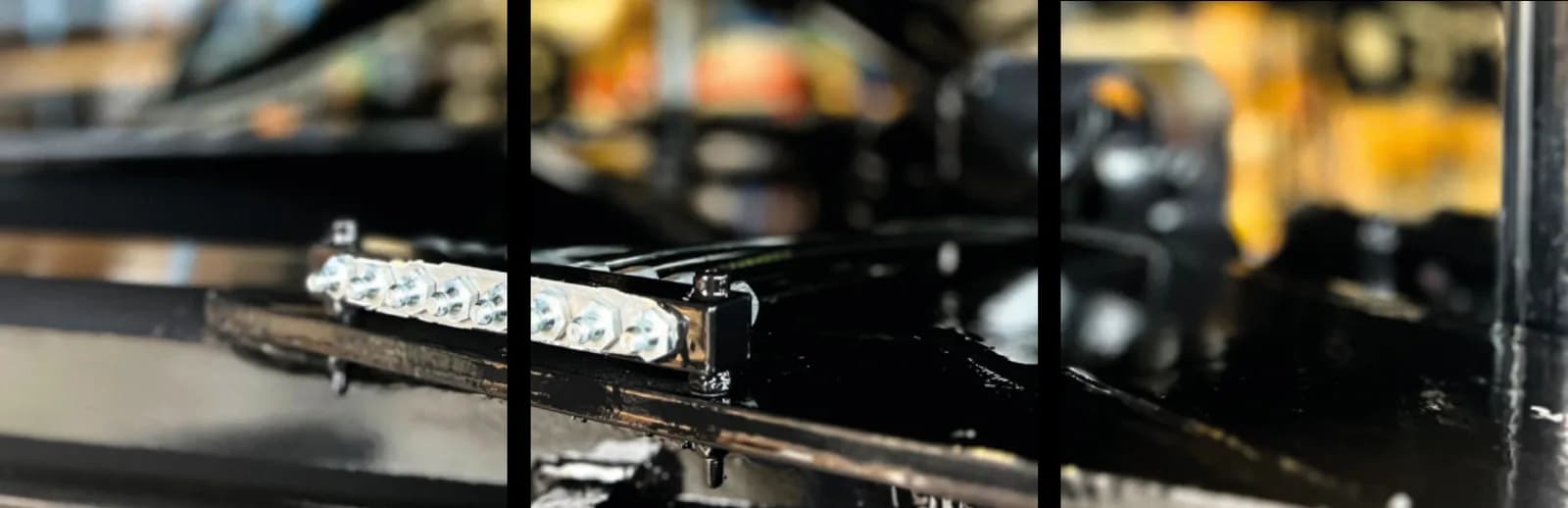
Quad-nozzle bodies: four nozzles on a single housing
As standard the machine has twin nozzle bodies: two nozzles, switched without stopping. Position D184 replaces them with quad-nozzle bodies with pneumatic control, four sets of nozzles at once, and with VARIO-Select control (C67) the selection is made automatically, according to pressure and the required droplet spectrum.
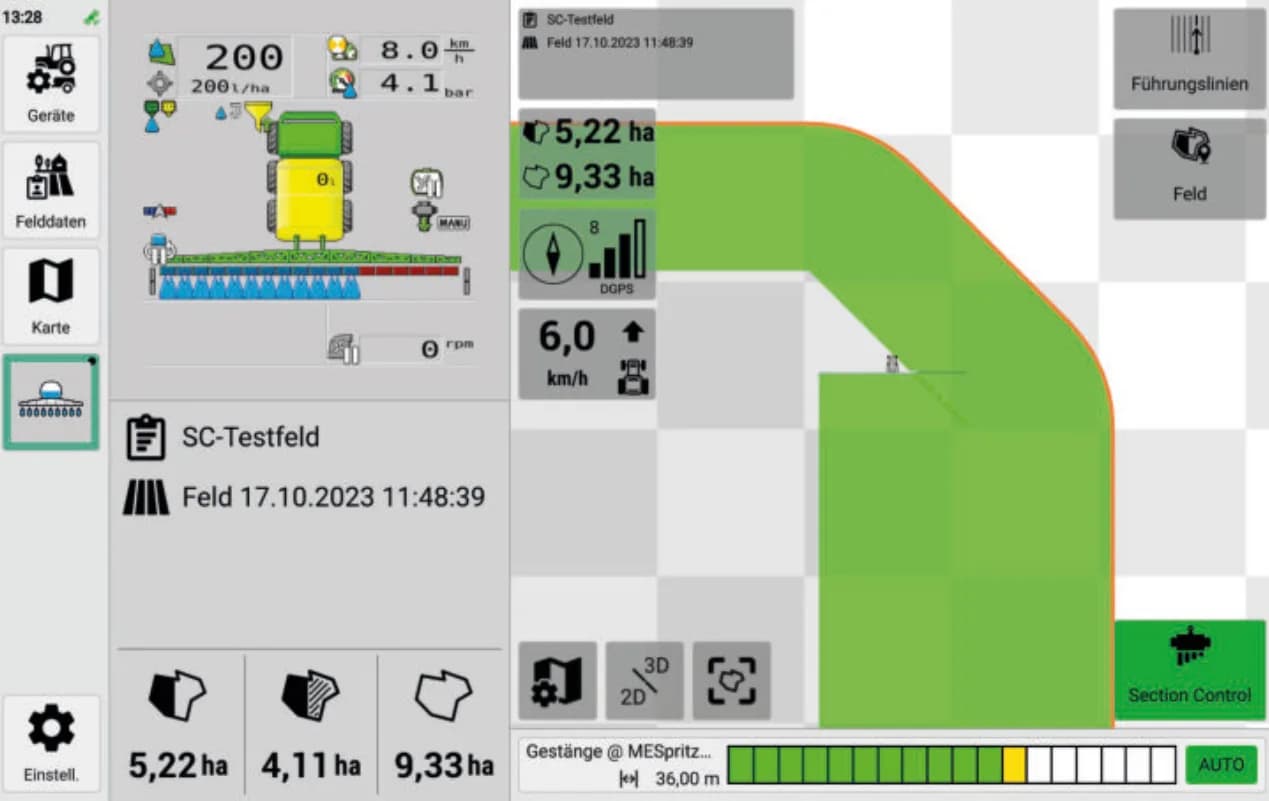
SECTION-Control: sections switch off where you have already driven
Automatic section switching on and off (C74) closes the nozzles over the area already treated: on wedges, at turns and at field boundaries. This is the only item on the list whose return is easy to calculate: the saving on product in overlaps is directly proportional to how irregular the fields are. HEADLAND-Control is included in the package.
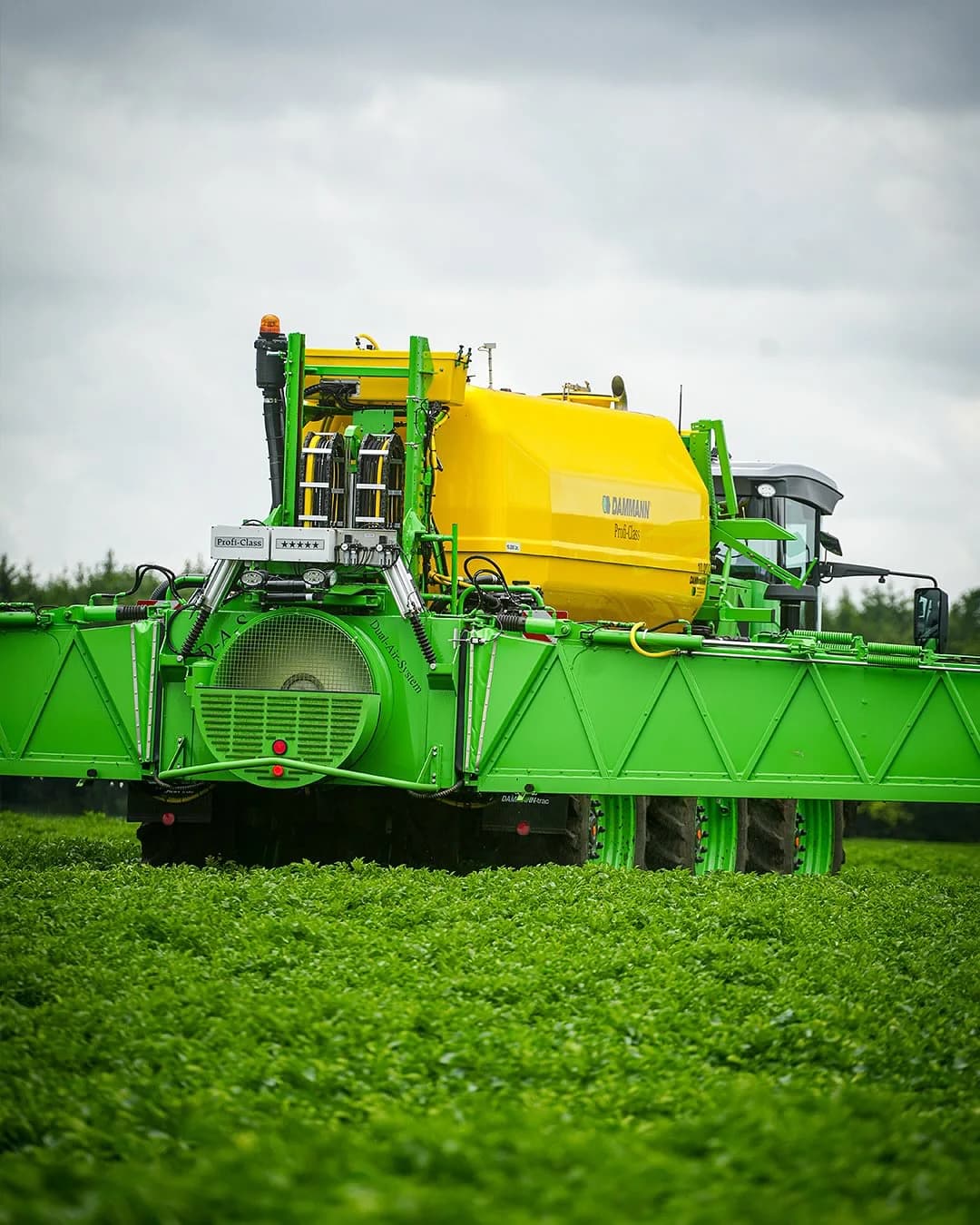
Dual-Air-System: air pressing the droplet onto the plant
D-A-S (I34/D) is air assistance for the boom: an air stream carries the droplet into the crop canopy and presses it onto the plant. This reduces drift and widens the weather window, so work can continue in wind at which a standard boom would have to stop. Driving the blower requires a second hydraulic circuit (H06).
500 l/min pump instead of the standard 320
Pump capacity sets the limit at which a high liquid rate can be maintained at a given working speed. Position L50 raises it from 320 to 500 l/min, together with 3" filtration. It makes sense where the boom is wide and rates are high; with a narrow boom and low rates, the standard pump is not a bottleneck.
DAMMANN-trac: DT 2400H Highlander vs DT 2800H vs DT 3500H
Three machines on one drive platform. They differ not in “power”, but in what they are meant to run on: the Highlander changes track width and ground clearance, the DT 2800H keeps to the typical grain tramlines, and the DT 3500H spreads its weight across three axles.
- Liquid tank
- 4 400 / 5 000 l
- Boom width
- 24–42 m
- Engine
- MTU 6R1000 · 285 KM
- Axles / driven wheels
- 2 axles · 4 wheels
- Ground clearance
- 1,100–1,800 mm, adjustable while driving
- Wheel track
- 2,250–3,050 mm, adjustable from the cab
- Steering system
- all wheels steered
- Total weight
- 18,0 t
- Length (depending on tank)
- 8,10–9,85 m
- Standard tyres
- 380/90 R46
- Fuel / AdBlue
- 250 l / 25 l
- Liquid tank
- 5 000 / 6 000 / 7 000 l
- Boom width
- 24–42 m
- Engine
- MTU 6R1000 · 285 KM
- Axles / driven wheels
- 2 axles · 4 wheels
- Ground clearance
- approx. 1,100 mm, fixed
- Wheel track
- 1 800–2 250 mm
- Steering system
- front axle steered
- Total weight
- 18,0 t
- Length (depending on tank)
- 8,25–10,60 m
- Standard tyres
- 380/90 R50
- Fuel / AdBlue
- 250 l / 25 l
- Liquid tank
- 8 000 / 10 000 / 12 000 l
- Boom width
- 30–48 m
- Engine
- MTU 6R1000 · 313 KM
- Axles / driven wheels
- 3 axles · 6 wheels
- Ground clearance
- up to 1,050 mm, fixed
- Wheel track
- 2 000–2 250 mm
- Steering system
- 1st and 3rd axles steered
- Total weight
- 25 t
- Length (depending on tank)
- 9,90–11,50 m
- Standard tyres
- 520/85 R42
- Fuel / AdBlue
- 380 l / 40 l
Source: Dane producenta
DT 2800H S5 EcoDrive — specyfikacja
DT 2800H S5 EcoDrive w polu
Full crop rotation without treatments in tall crops
Cereals, rapeseed, sugar beet and legumes run along typical tramlines of 1.8–2.25 m. A ground clearance of approx. 1,100 mm is sufficient for treatments at the timings at which most farms run them; if maize in late growth stages is a fixed item in the plan, the Highlander will be the better choice.
A farm where the tractor is the bottleneck
The most common cause of late treatments is not technical: the machine is there, but the tractor is busy hauling or cultivating. A self-propelled machine removes this dependency entirely: heading out to the field requires releasing nothing else.
A second implement on the same frame
Once the sprayer is removed, a mounted fertiliser spreader fits onto the frame. This requires factory preparation (R50, and for a spreader drive also H06). The decision is worth making when ordering, because it is fitted at the factory, not by the customer.
Explore the whole DAMMANN family
This model is part of the DAMMANN manufacturer's range. The other machines address the next stages of the same technology.
 Crop protection
Classic
Single-axle trailed sprayer — 4,400–6,000 l, boom 18–36 m
View model Crop protection
Profi-Class
Single-axle trailed sprayer — 5,000–7,000 l, ISOBUS and pressurised circuit
View model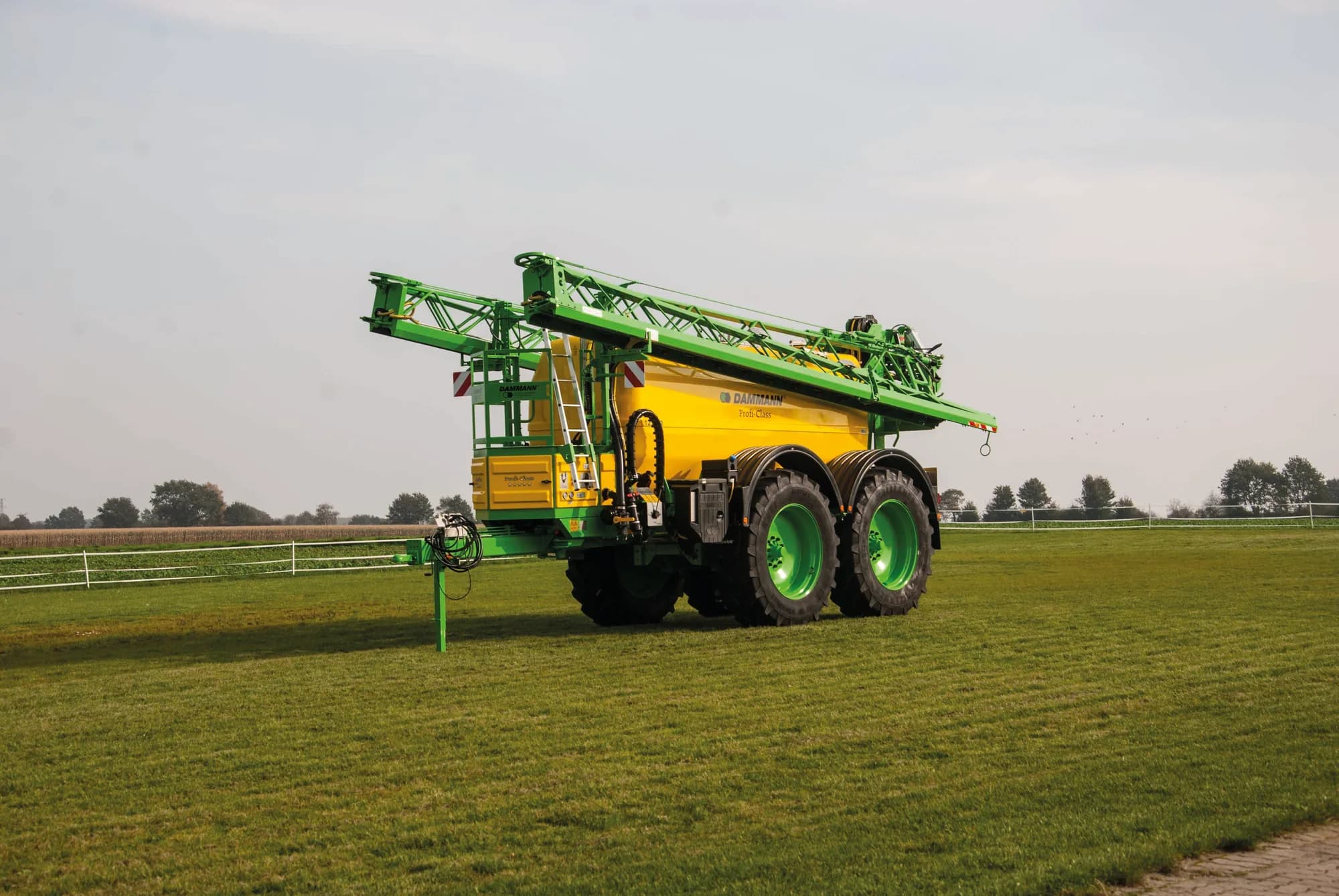 Crop protection
Profi-Class Tandem
Two-axle mounted sprayer — 8,000–14,000 l, boom up to 48 m
View model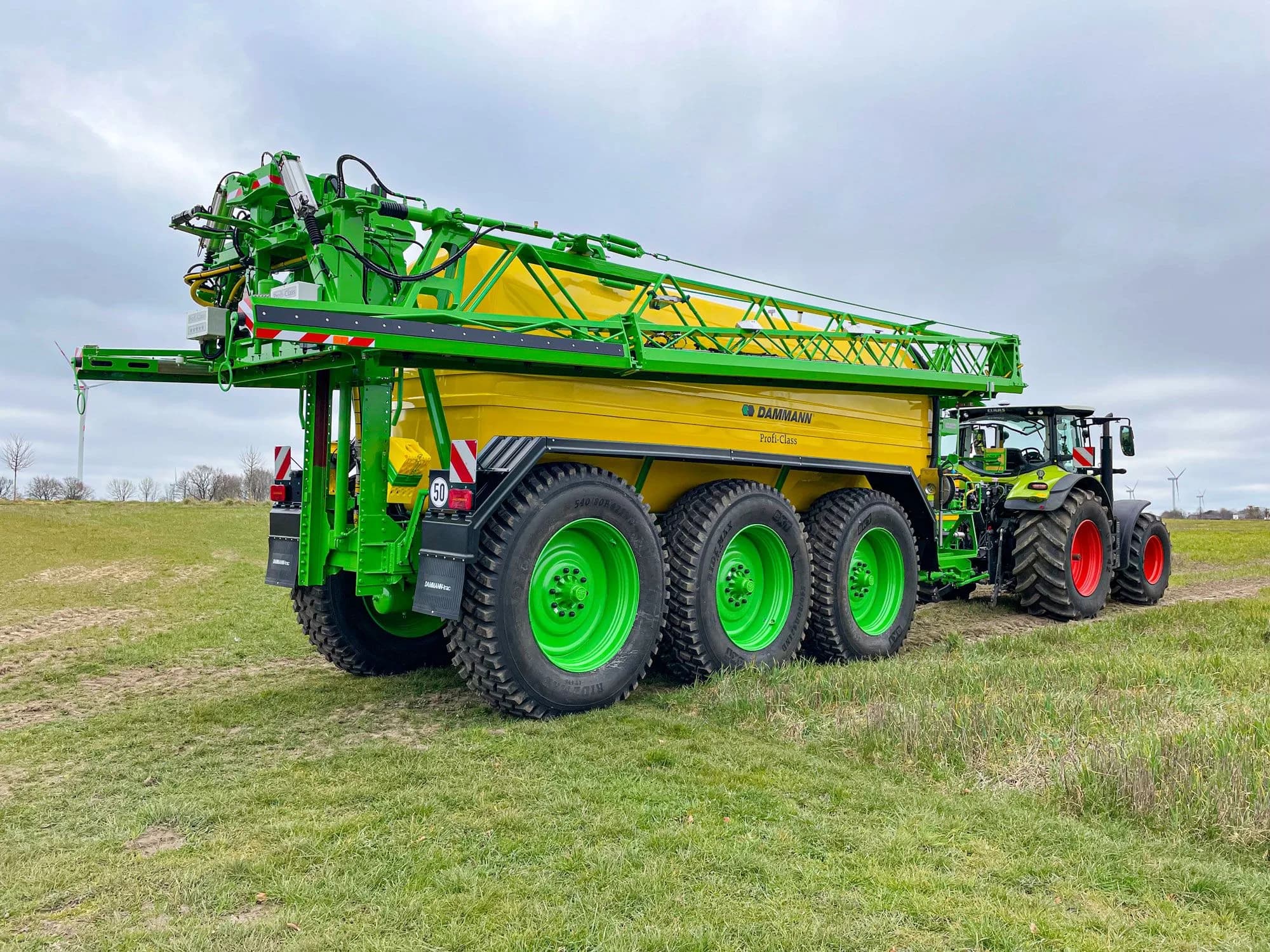 Crop protection
Profi-Class Tridem
Three-axle trailed sprayer — 20,000 l, boom 40–48 m
View model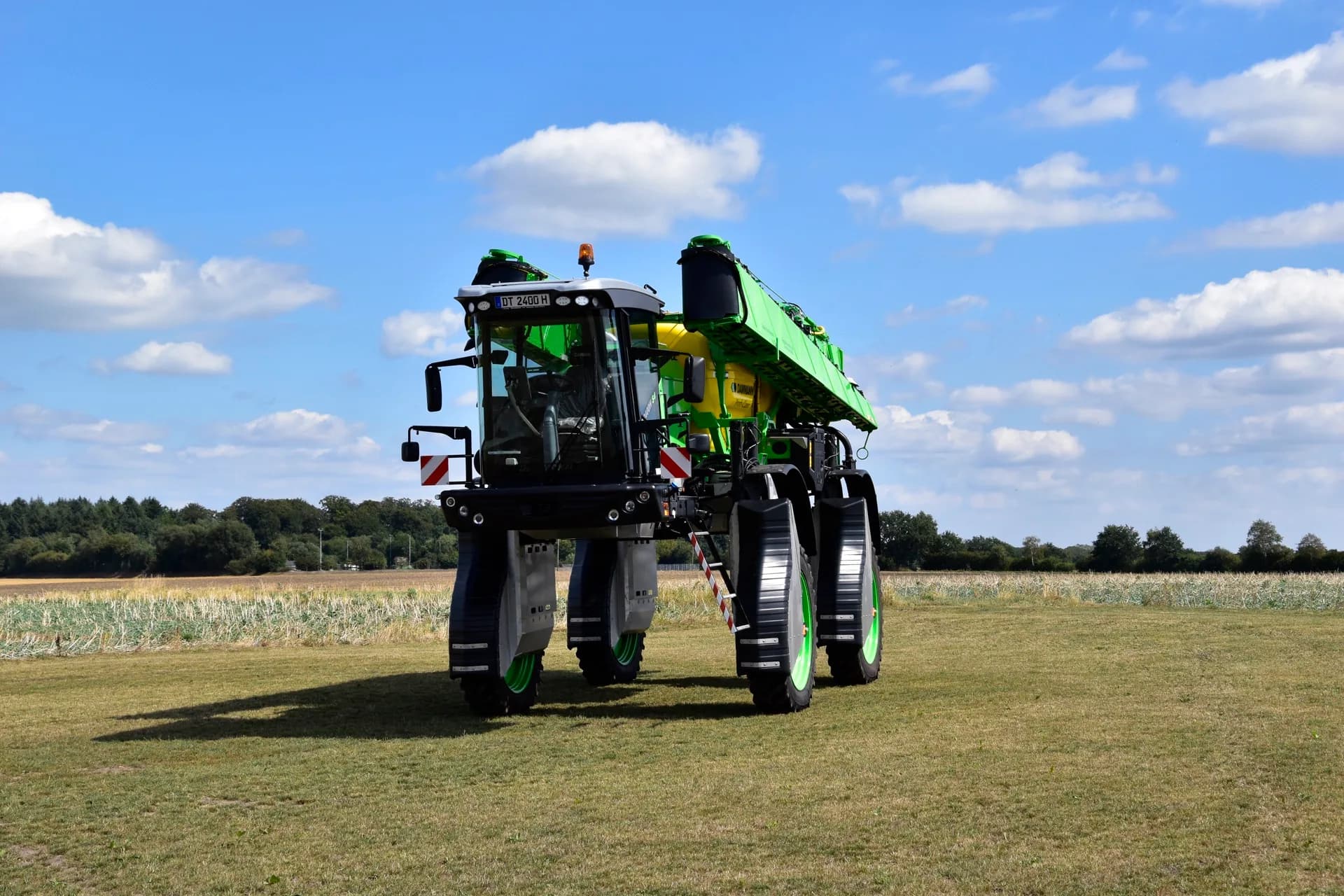 Crop protection
DT 2400H S5 Highlander
Self-propelled DAMMANN-trac — wheel track and ground clearance adjustable from the cab
View modelCrop protectionYou are currently viewingDT 2800H S5 EcoDrive
Self-propelled DAMMANN-trac: 5,000–7,000 l, ground clearance approx. 1,100 mm
Aktualny model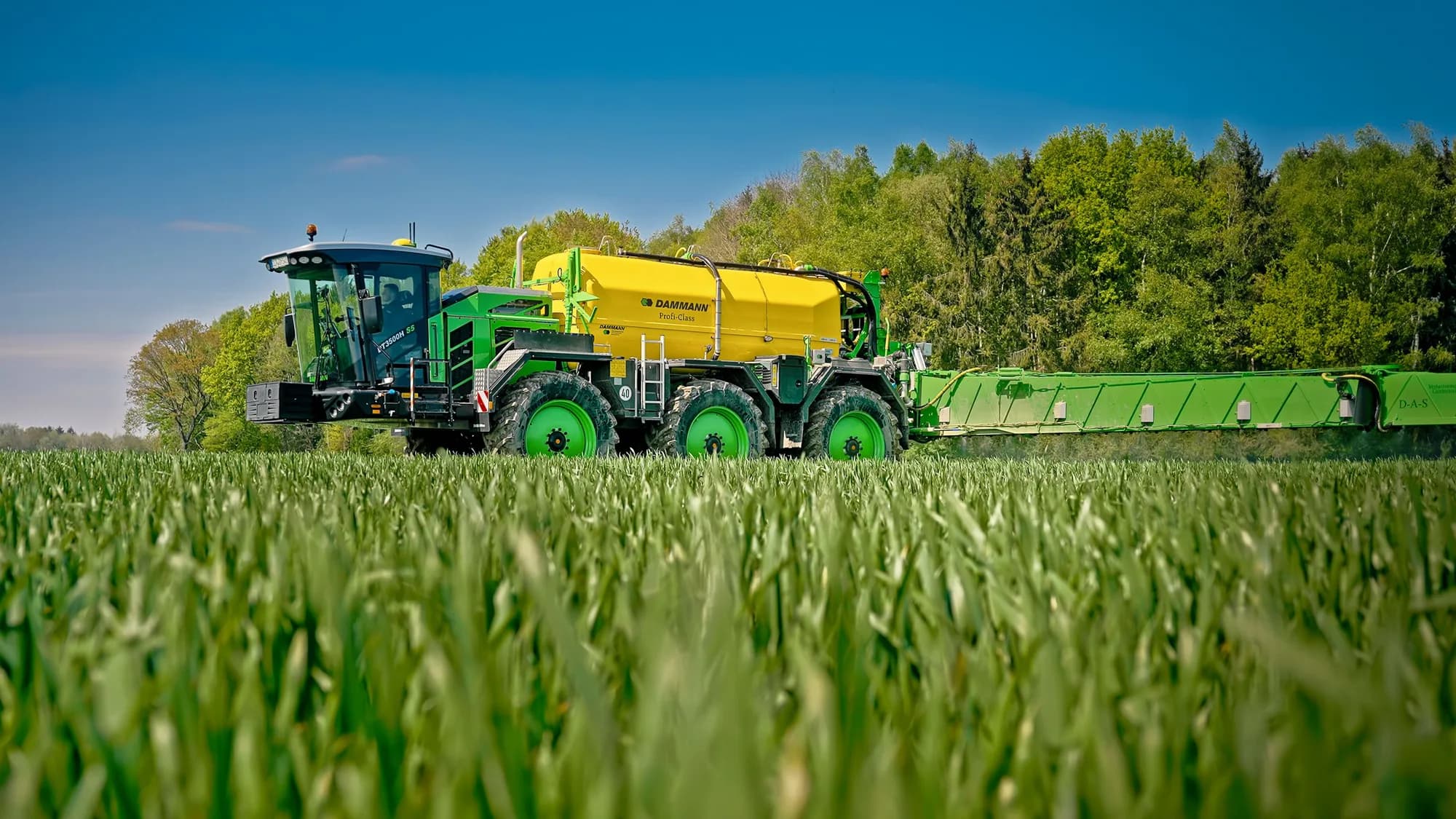 Crop protection
DT 3500H S5 EcoDrive
Self-propelled DAMMANN-trac: 8,000–12,000 l, three axles, six driven wheels
View model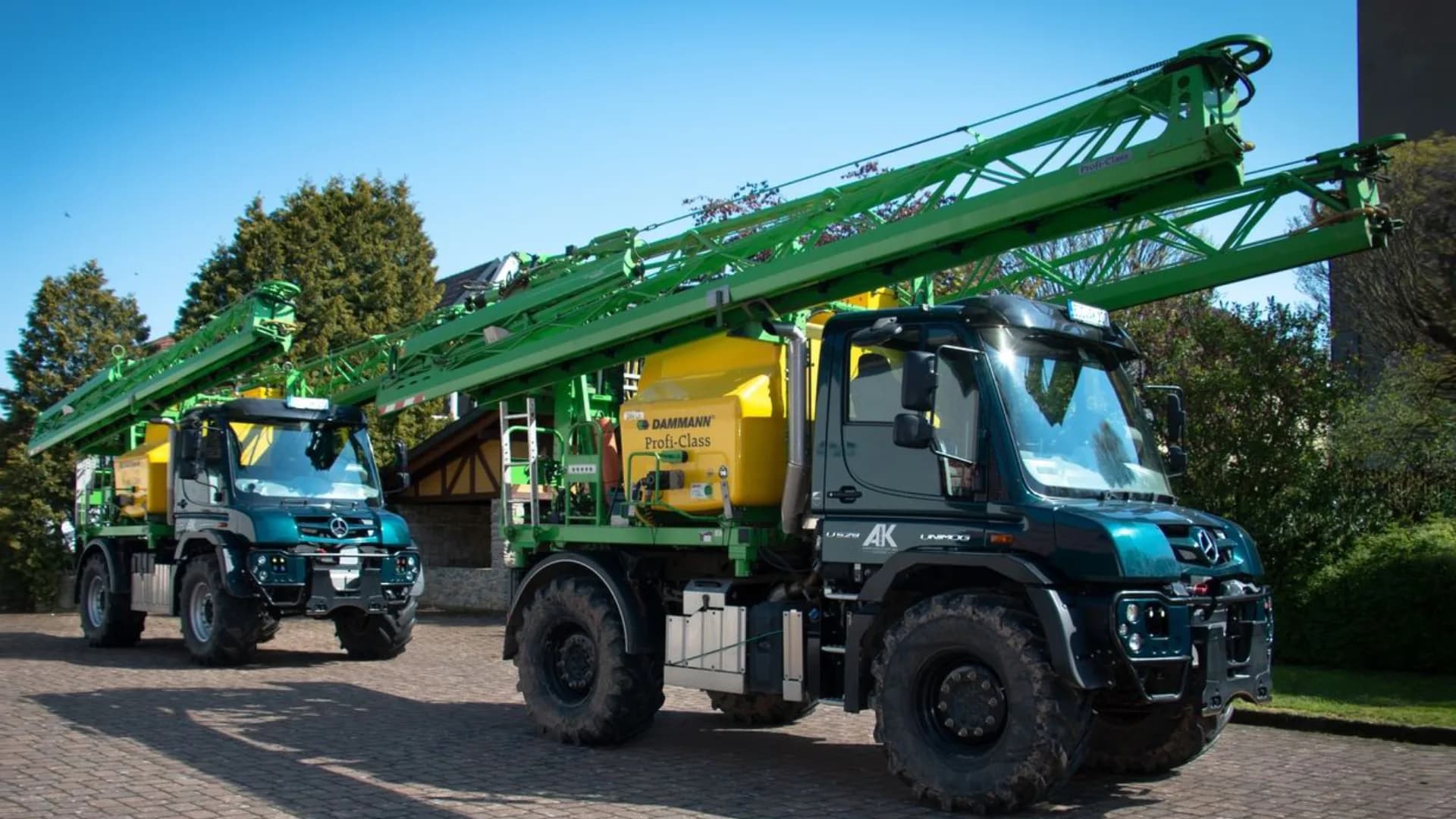 Crop protection
Profi-Class on a carrier vehicle
Body for Unimog, JCB Fastrac or MB-trac — 2,000–4,000 l
View model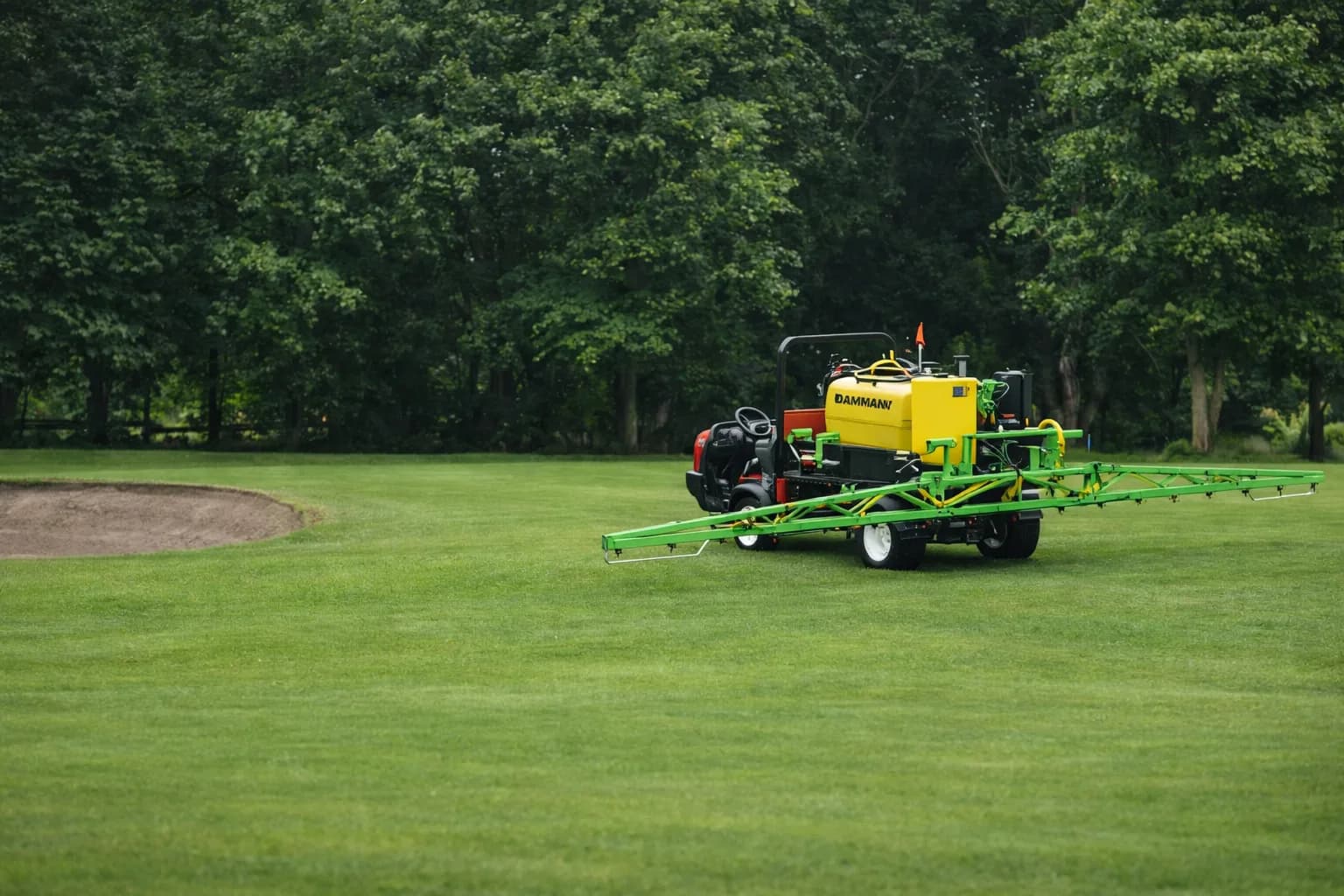 Crop protection
Profi-Class-GREEN
Turf and green areas: 500–2,000 l, boom up to 12 m, D-GPS rate control
View modelDT 2800H S5 EcoDrive on each side
Conversation with an engineer.
The most common questions we hear from farms before purchase.
We have collected the questions we most often hear from farms before purchase — and the answers from our engineers. Every answer is based on verified knowledge of the machine.
- manufacturer's materials
- dokumentacji technicznej
- questions asked by farms
Answers based on the experience of thousands of farms in Europe.
Yes — across the full DAMMANN field range, the ISOBUS terminal is standard equipment, together with automatic section control. The number of sections depends on the model and boom width. In the tractor, a compatible ISOBUS UT terminal is sufficient.
DAMMANN-trac machines have no gearbox, axles or differentials: each wheel is driven by its own hydraulic motor supplied from a pump. In practice this means three things. First, a wheel with weaker traction does not take torque away from the others — which is what a differential does. Second, speed is adjusted smoothly from creep speed up to 40 km/h without switching ranges, so the application rate does not jump when the pace changes. Third, there are no drive shafts running the length of the machine, and that space is taken by the frame for the implement.
Yes, and that is the purpose of the design: the carrier frame is mounted at three points, and the implement stands on its own parking supports (price list item A88, with wide tyres A90). After removing the sprayer, a mounted fertiliser spreader fits onto the same frame — it requires preparation R50 and, if the spreader is driven, a second hydraulic circuit H06. These are price list items, not standard equipment; when enquiring, state whether you plan a second implement, as they are added at the factory.
Category 4 according to EN 15695-1:2009 is a cab that protects against vapours and aerosols of plant protection products: it operates under positive pressure and with a carbon filter, so air enters only through the filter. An ordinary air-conditioned cab does not provide this — it protects against dust, not against the product. On DAMMANN-trac machines, the category 4 cab is standard equipment.
Depends on the machine: DT 2400H and DT 2800H have 250 l of diesel and 25 l of AdBlue, DT 3500H — 380 l and 40 l. In practice both sizes are sufficient for a full shift without stopping for fuel; the bottleneck of the working day is water, not diesel, which is why the liquid tank capacity is chosen according to the distance to the filling point.
We start from the fields, not the catalogue: seasonal area, spread and size of plots, soil bearing capacity, crops and crop height, and tractor availability at the peak of spraying. On this basis we determine the machine class, tank capacity and boom width, and only then the equipment. You can start the selection yourself — the “Sprayer selection” tool on this page guides you through the same questions, and the configurator assembles the machine item by item according to the manufacturer’s price list structure.
Yes. As an authorised distributor, we order parts for DAMMANN machines directly from the manufacturer, using DAMMANN catalogue numbers. Service requests are handled by our after-sales team — a service request requires the machine’s serial number and year of manufacture.
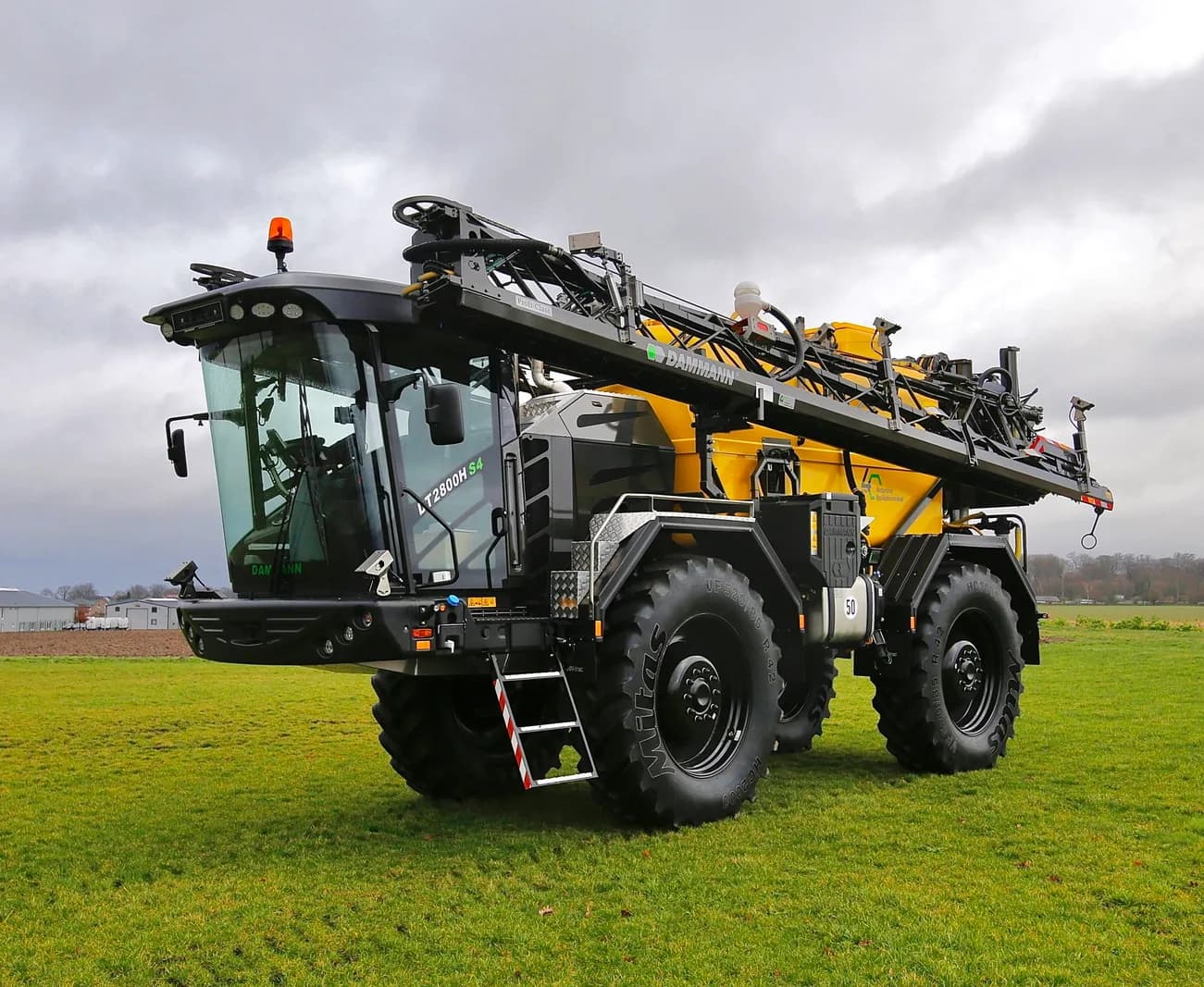
Independence from the tractor starts here
Assemble this machine item by item — tank, boom, sections and equipment within the manufacturer's structure. We will prepare an offer for the finished configuration.