
UNION
A Belgian family factory, one site, one product: three machine lines for the complete field cycle of fibre flax, covering pulling, swath turning and baling of retted flax straw.
UNION. 1947. One product: flax harvesting.
A Belgian family factory, one site, one product: three machine lines for the complete field cycle of fibre flax, covering pulling, swath turning and baling of retted flax straw.
UNION NV is a family-owned agricultural machinery manufacturer from West Flanders, operating since 1947 — historically associated with Beveren-Leie near Waregem, today based in Wielsbeke. It produces a complete range of field machinery for fibre flax harvesting: two-row pullers (GX220), two-row swathers (GX240) and self-propelled baling presses (GX255 Rafale). All production takes place in a single European engineering plant — from design, through welded construction, to final assembly. UNION’s traditional markets remain France, Belgium and the Netherlands — countries where fibre flax has been grown continuously since the 19th century. As a strategic partner, RUTHENIA ALBA is opening these machines to the markets of Central and Eastern Europe, where fibre flax is returning to rotation as an alternative to cereals.
FAMILY COMPANY SINCE 1947 · WEST FLANDERS
Pullers / turners / baling presses
Flagship puller: DEUTZ TIER 5
Flax is a chain: from seed, through harvest and scutching, to industrial fibre.
Van de Bilt (genetics and seed) → UNION (harvest) → CRETES (scutching) → Vanhauwaert (fibre processing). Each machine serves one link of the same process.
What stands behind UNION machines
Flax returns to European rotation, and changes the farm's economics
Flax fibre was Europe's principal industrial crop before cotton came to dominate in the 19th century. Today, amid volatile grain markets and growing demand for natural fibres in the textile, composite and insulation industries, flax is returning as a serious position in the rotation alongside wheat, oilseed rape and maize. The agronomic decision, however, differs from that for cereals: flax requires a long rotation (6–7 years between crops), sets the profitability profile for the whole season at the moment of sowing, and requires a complete chain of machinery that cannot be assembled from random components. UNION is one of very few European manufacturers that supplies this chain in full — pulling, turning swaths after rain, and baling dew-retted flax straw — from one engineering plant, one service network and one design school.
Pulling, not mowing: full fibre length
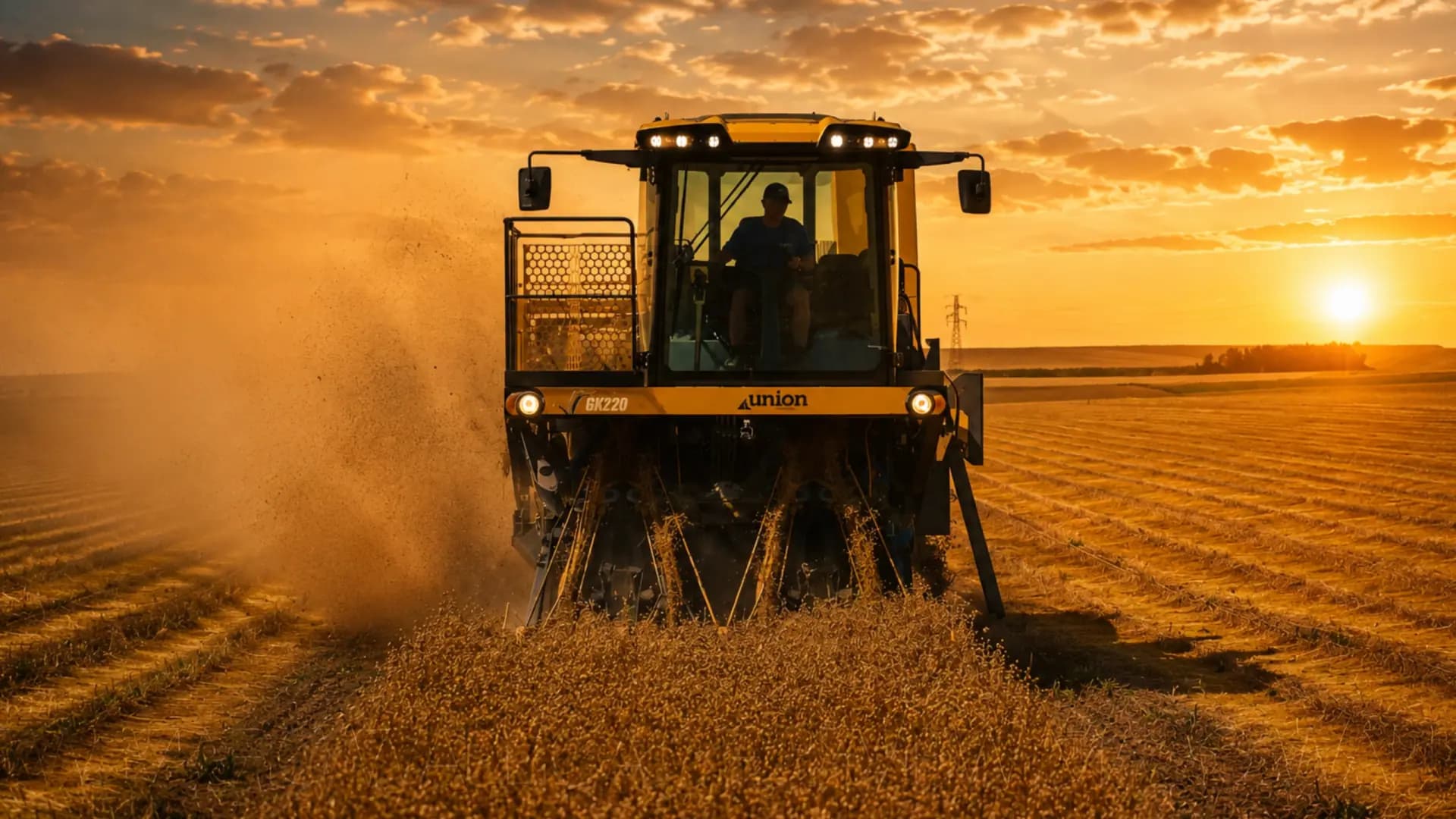
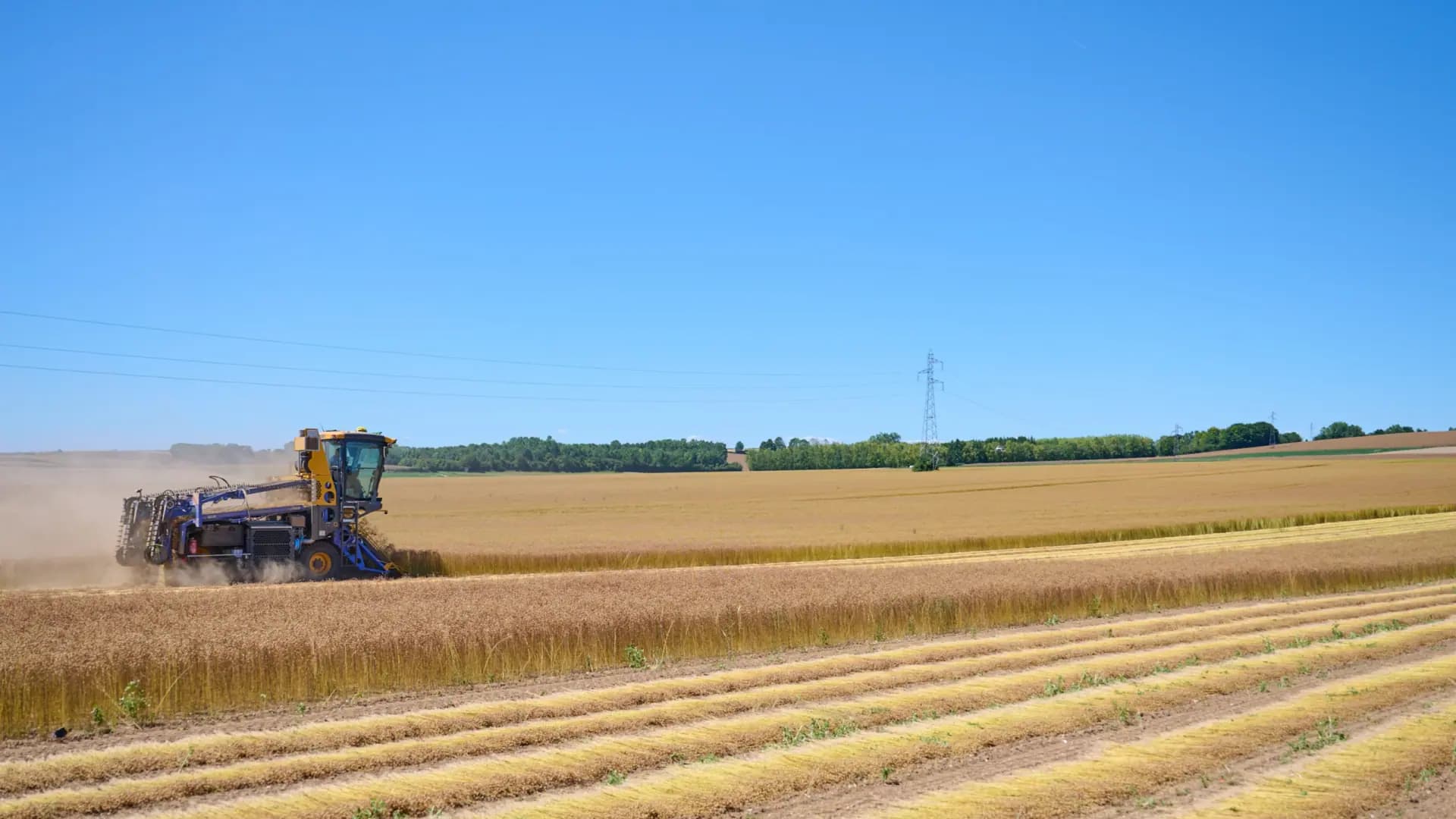
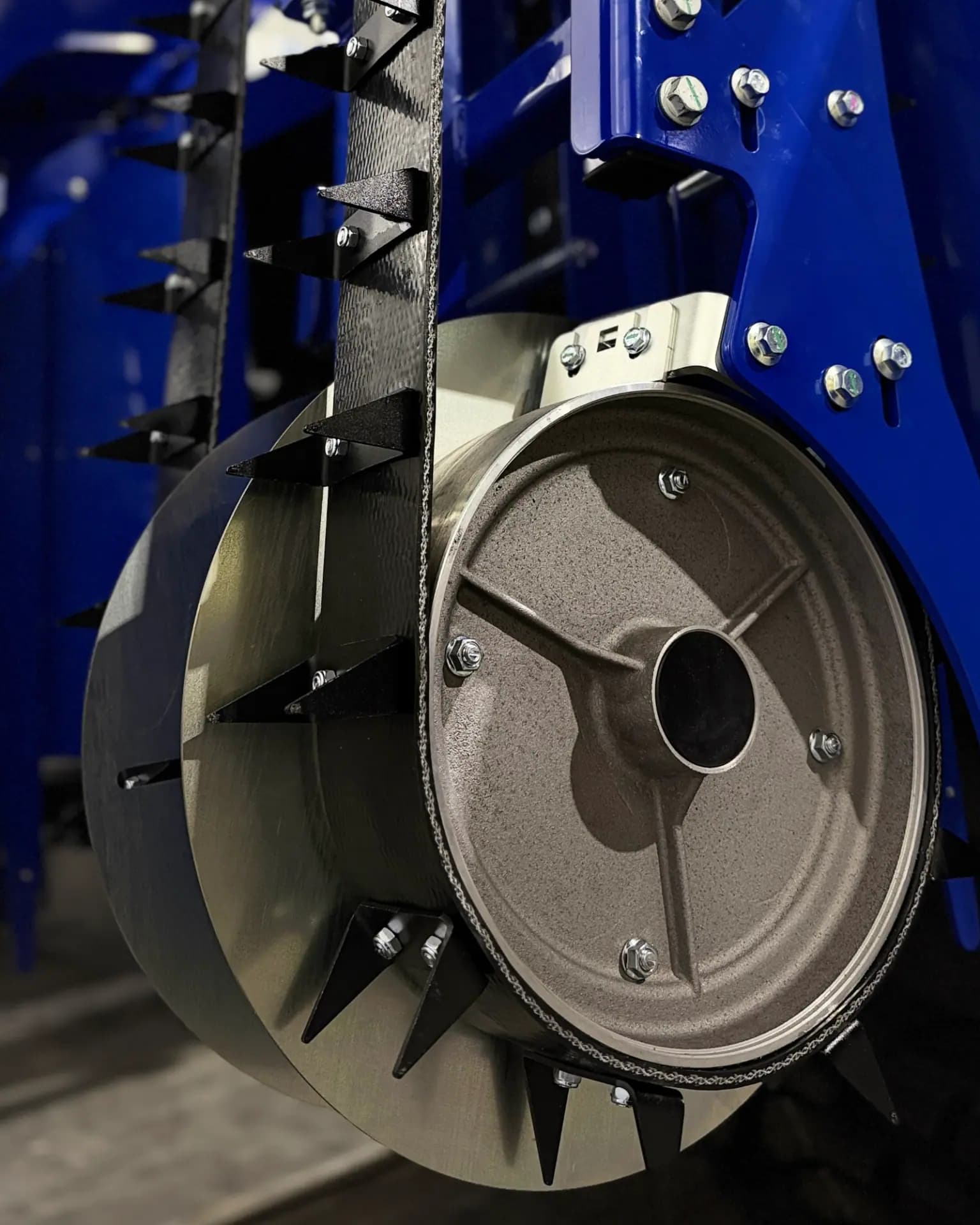
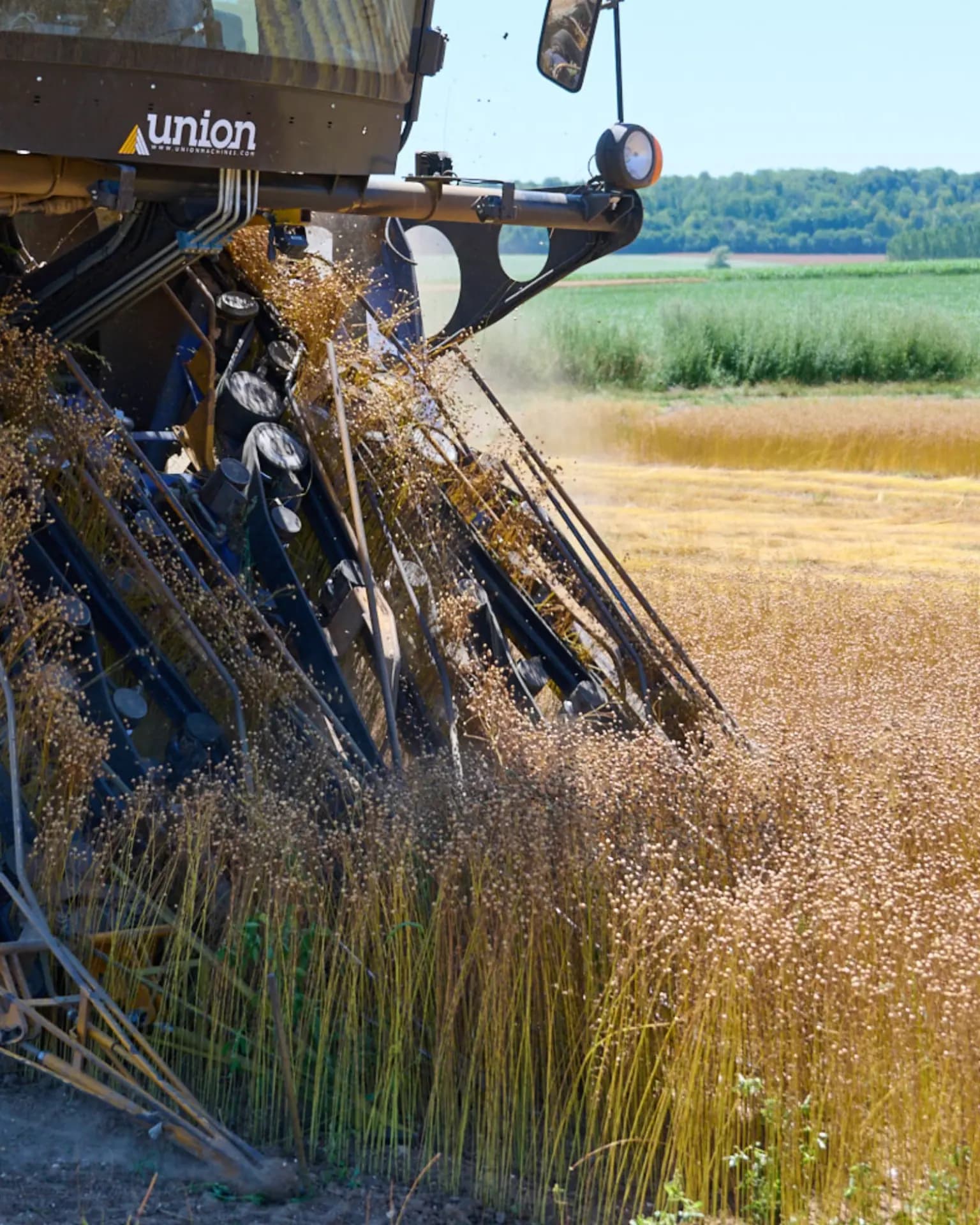
Fibre flax is pulled out of the ground together with its root, not mowed. The fibre runs the full length of the stem — from the root crown to the tip — and it is this length that determines the grade of raw material delivered to the flax mill. Mowing shortens the stem at the cutting point and leaves part of the fibre in the field; pulling preserves the full length, on which Belgian and French flax processing has been built for over a hundred years. That is why UNION machines are SPECIALISED for flax, rather than adapted cereal harvesters: pick-up, swath geometry, the hydraulic 3-wheel platform and the entire pulling system are designed from the ground up for flax agronomy. This is a fundamental design difference that determines the quality of the fibre that goes on to scutching.
GX220: two-row flax pulling in a single pass
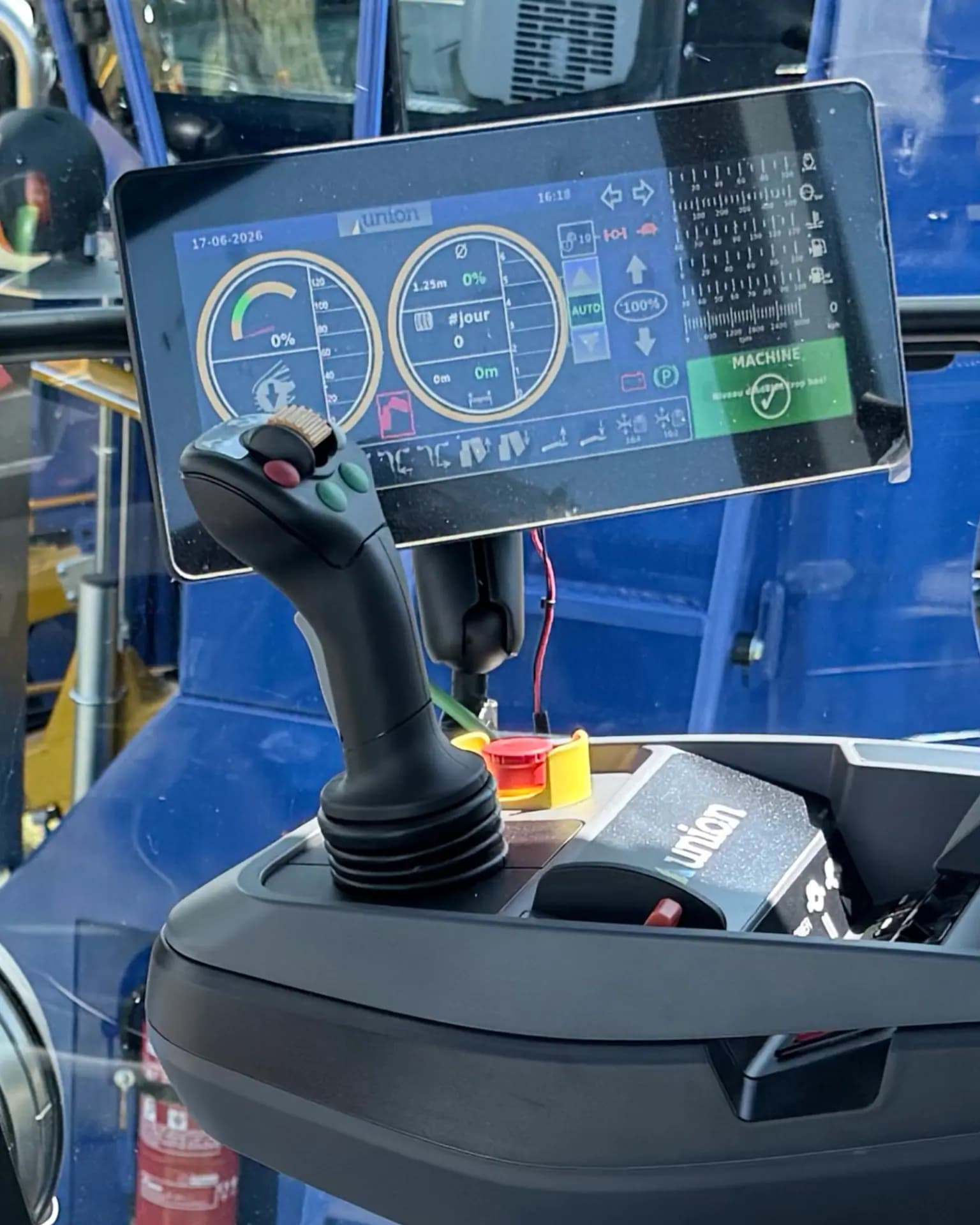
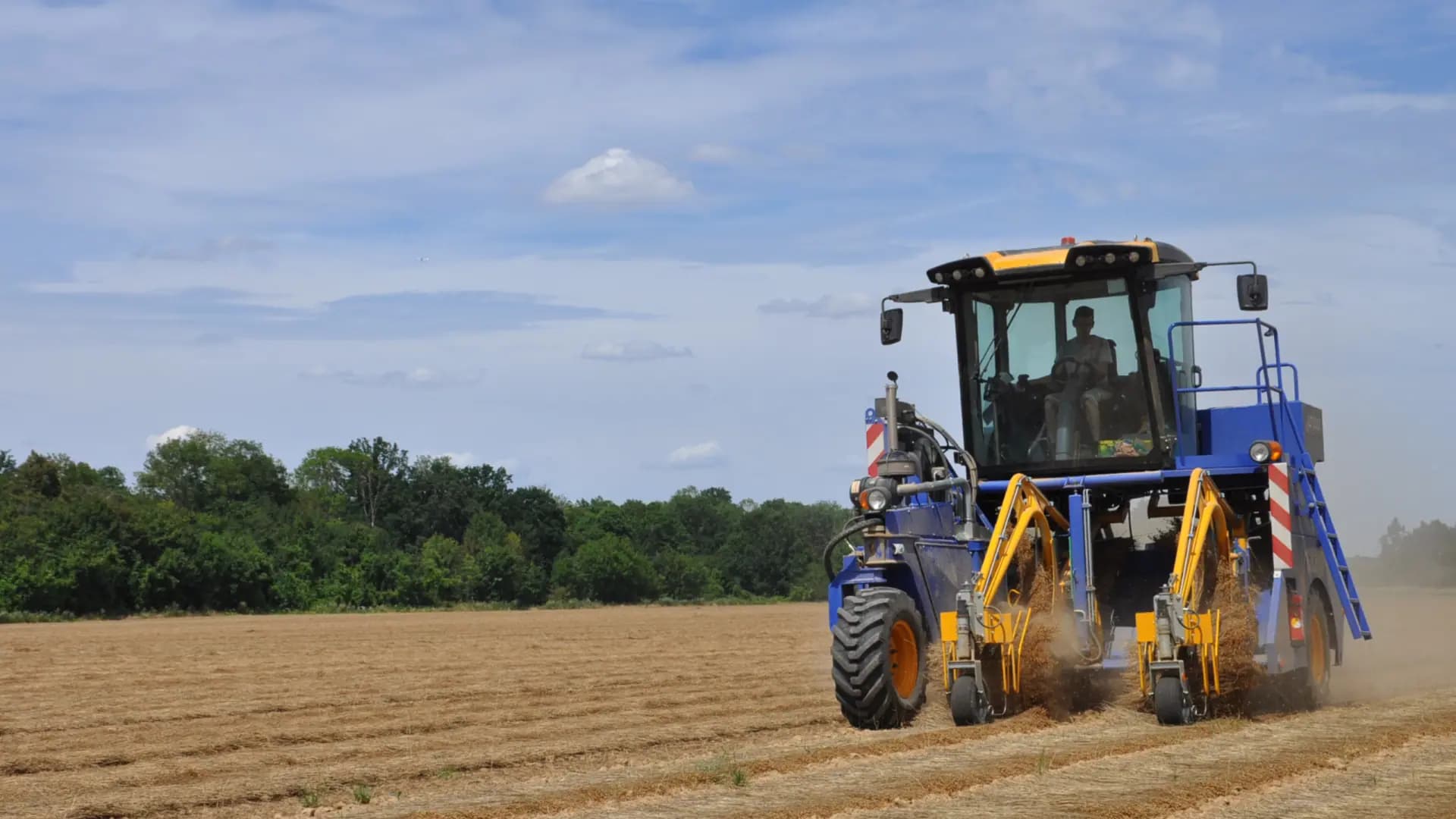
The flagship UNION machine is the GX220 two-row puller, powered by a DEUTZ TCD 6.1/L6 engine in the TIER 5 / Stage V class rated at 180 kW (245 hp). The hydraulic three-wheel drive gives a tight turning radius and even swathes, which are critical for later retting in the field. Operating weight 11,880 kg, dimensions 7.7 × 3.14 × 3.98 m, maximum road width 3 m. Standard equipment includes central lubrication, dynamic braking system, cyclone air filter, LED lighting, programmable flax-spreading table settings, and reversing cameras plus a camera on the pulling unit. Air-conditioned cab with air-suspension seat — the operator works 10 or more hours a day during the flax-pulling season.
GX240 — two-row turner for field retting
After pulling, the flax lies in swaths in the field and undergoes retting, a controlled breakdown of pectins under the influence of dew and rain that separates the fibre from the rest of the stem. Retting takes 3–6 weeks, and its quality depends on even exposure of both sides of the swath. The GX240 is a two-row tedder powered by a DEUTZ TCD 3.6 TIER 5 engine rated at 85 kW (115 hp), on the same hydraulic 3-wheel chassis as the GX220. Weight 6,800 kg, dimensions 6.15 × 3.00 × 3.77 m. The machine turns two swaths simultaneously, a key feature for maintaining uniform retting quality across the field.
GX255 Rafale — self-propelled baler for retted flax straw
The field stage of flax closes with the baler, which picks up retted flax straw and forms bales of uniform structure, without delamination or local density variations. The GX255 Rafale is a self-propelled baler powered by a DEUTZ TCD 3.6/L4 TIER 5 engine rated at 105 kW (143 hp), on the same hydraulic 3-wheel chassis. Weight 8,080 kg, dimensions 5.86 × 2.54 × 3.42 m, Michelin 400/70R20 tyres. Pick-up designed for retted flax straw, with minimal mechanical damage to the fibre during pick-up, which is key to preserving fibre length, and fibre length determines the purchase price. The GX255 can work together with the GX220 + GX240 Union, but also works independently with swaths formed by other manufacturers' equipment.
- 01Machines SPECIALLY built for fibre flax, not adapted cereal machines: chassis design, pick-up and swath geometry engineered around flax agronomy, not converted from cereal combines
- 02A narrow, long-term specialisation in one category, flax fibre harvesting machines, maintained at a single European engineering plant in West Flanders
- 03Three product lines forming a complete field sequence: two-row pulling (GX220), swath turning (GX240) and baling of retted flax straw (GX255 Rafale), all designed together, with service support running alongside
- 04Hydraulic three-wheel drive across the entire GX range: a shared chassis design gives a short turning radius, good swath levelling and a uniform service approach
- 05Membership of the Belgian Valtech Group (Menen) together with sister company CRETES (flax and hemp scutching lines from Wevelgem): a coherent flax ecosystem, with UNION field machines plus CRETES processing lines in one group, in one RUTHENIA ALBA offer
- 06Machines developed in direct contact with flax growers and scutching mills in France, Belgium and the Netherlands: the reference markets of European fibre flax production
- 07Local production at a single site: quality control from design to final assembly, and a faster route for individual configurations
- 08As a strategic partner, RUTHENIA ALBA opens the Union line to markets in Central and Eastern Europe: flax agronomy in Poland, the Baltic states, the Czech Republic, Slovakia and the Balkan countries
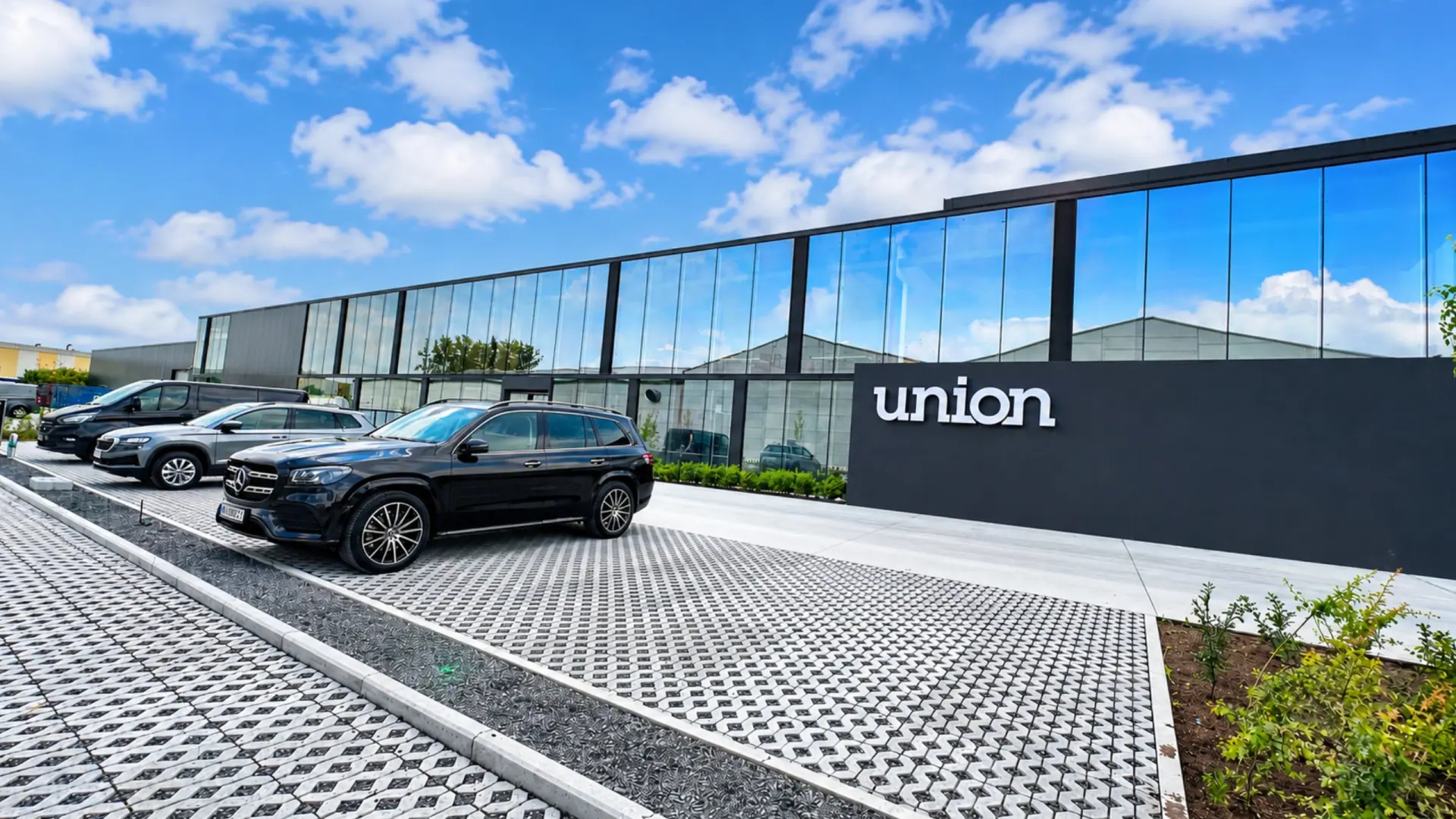
Wielsbeke (West Flanders), Belgium
For decades, UNION has specialised exclusively in one field: flax fibre harvesting technology. The three product lines that now form a complete field sequence (pullers, turners and baling presses) are designed in parallel and maintained by the same engineering base in West Flanders. Such a narrow concentration of expertise is rare in European agricultural engineering: a typical manufacturer in this category either diversifies its portfolio beyond flax or outsources the design to external suppliers. UNION maintains a model of a single integrated engineering plant, in which mechanical design, welded construction, hydraulics and final assembly remain under one roof. UNION belongs to the Belgian industrial group Valtech Group (group headquarters: Menen); the same group also includes CRETES, a specialist in long flax and hemp fibre scutching lines from Wevelgem. For RUTHENIA ALBA, this means a coherent flax ecosystem in one offer: UNION field machines (pulling, turning, pressing) plus the plant processing lines of sister company CRETES, with no integration gaps between independent suppliers. For flax growers in France, Belgium and the Netherlands, Union technology is the reference choice; in other regions of Europe and beyond, it is implemented by regional partners specialised in flax agronomy and processing logistics.
UNION models and solutions
 Natural fibres
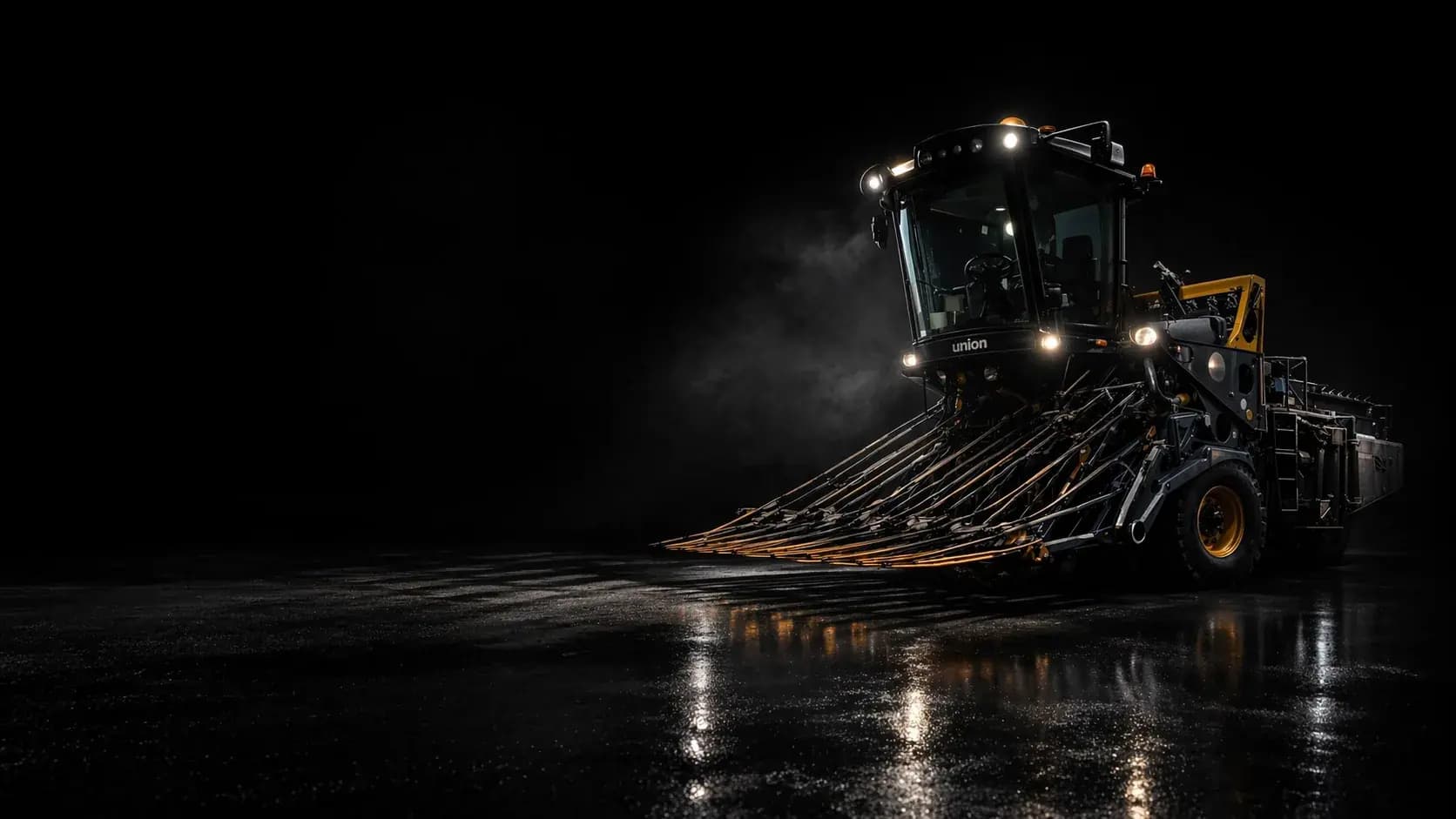
GX220
Self-propelled two-row fibre flax puller — DEUTZ TCD 6.1/L6 TIER 5, 245 hp
View model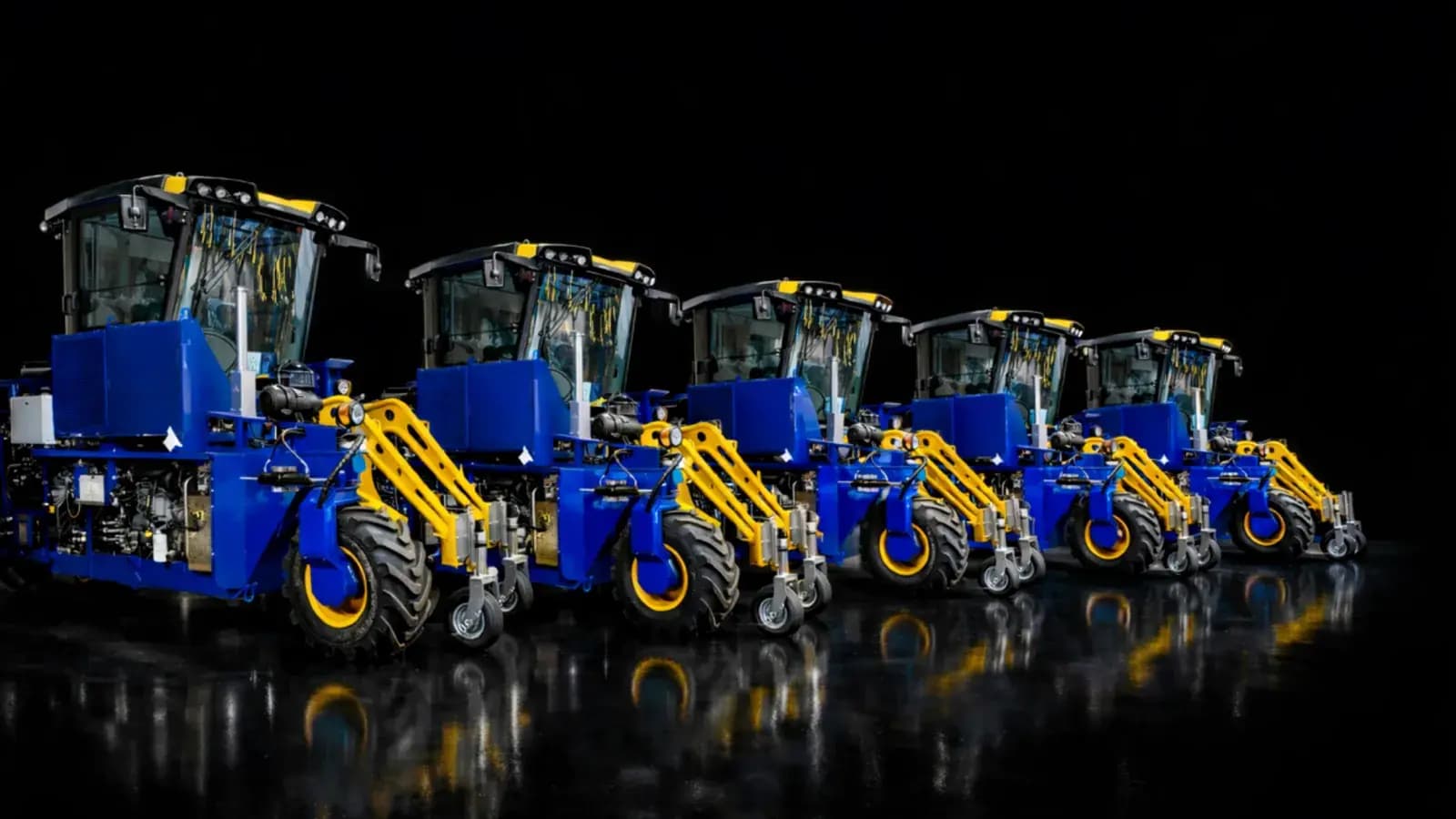 Natural fibres
GX240
Self-propelled two-row flax swath turner — DEUTZ TCD 3.6 TIER 5, 115 hp
View model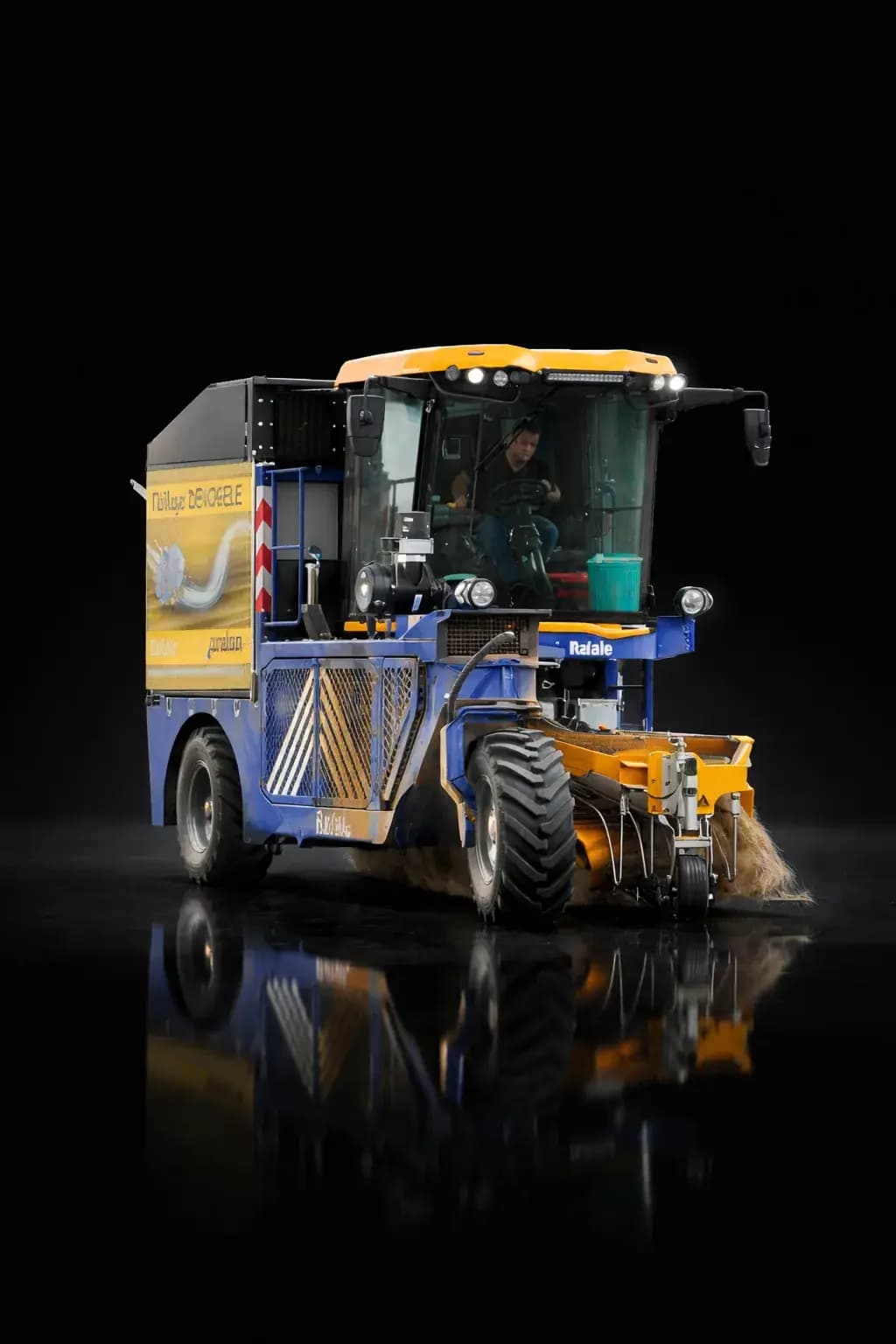 Natural fibres
GX255 Rafale
Self-propelled flax baler for retted flax straw — DEUTZ TIER 5, 143 hp
View model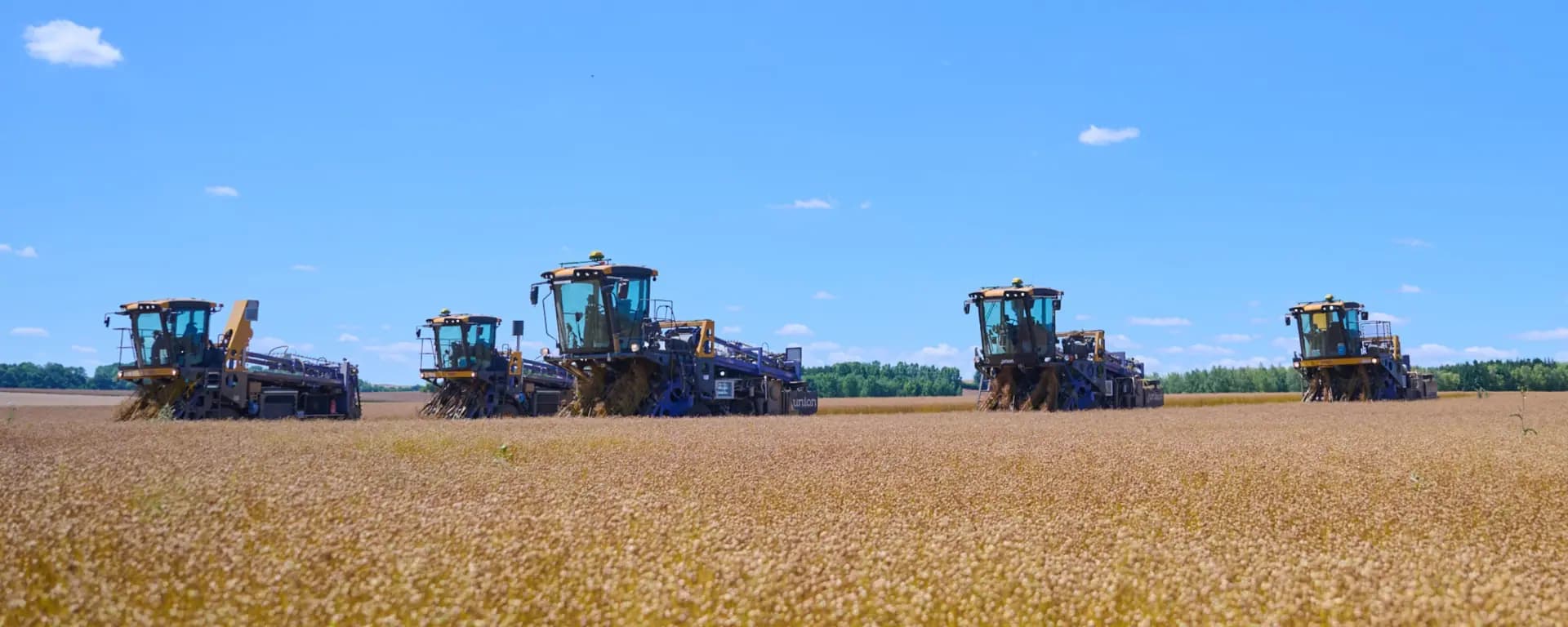
UNION w obiektywie
Context and next steps
Conversation with an engineer.
The most common questions we hear from farms before purchase.
We have collected the questions we most often hear from farms before purchase — and the answers from our engineers. Every answer is based on verified knowledge of the machine.
- manufacturer's materials
- dokumentacji technicznej
- questions asked by farms
Answers based on the experience of thousands of farms in Europe.
The agronomic decision is the result of several market processes occurring in parallel. Price volatility of cereals, pressure on the profitability of classic wheat/rapeseed/maize rotations, growing demand from the textile and composite industries for natural fibres, European regulations supporting renewable raw materials and local supply chains — all of these factors increase the importance of fibre flax as an alternative. However, a specific decision requires individual analysis: flax has a long rotation (6–7 years), specific soil requirements (loess and alluvial soils are best), and requires access to local processing infrastructure or a contract with a flax mill. RUTHENIA ALBA can help with selecting the machine configuration and making contact with processing partners, but the final agronomic decision rests with the farm.
Yes — with the caveat that the machine configuration is selected for specific agronomic conditions. The climate of Central and Eastern Europe (cooler and wetter summers than in the classic flax regions of Belgium and France) and the soils of northern Poland require adjustment of retting settings. The Union design — hydraulic three-wheel drive with a tight turning radius, low-pressure tyres, programmable flax-spreading table settings — is by design intended to accommodate adaptation to different field conditions. Regional adaptation of the configuration — retting settings, flax-spreading table parameters, tyres, bale-forming density control — falls within the scope of cooperation with the implementation partner and the flax mills receiving the raw material.
Yes. The GX255 Rafale is a self-propelled baler and can work with swaths formed by other manufacturers' equipment — provided the swath is laid properly, the GX255 pickup works with it. However, full consistency of the field cycle — the best bale quality and the lowest fibre losses — is achieved when the GX220, GX240 and GX255 work together, because pulling and turning directly affect the structure of the swath, which in turn affects the pickup geometry.
RUTHENIA ALBA acts as UNION's strategic partner for the markets of Central and Eastern Europe and selected markets outside Europe — Poland, the Baltic states, the Czech Republic, Slovakia, the Balkan countries, and selected projects in Central Asia, the Middle East and North Africa. The traditional market for Union remains France, Belgium and the Netherlands — countries with an unbroken tradition of growing fibre flax since the 19th century. The cooperation between RUTHENIA ALBA and Union opens the way to markets where flax is returning as a position in the rotation after a long break.
Not with the GX220 — it is a puller, and hemp is harvested with a different technology, because hemp is cut rather than pulled up by the roots. The hemp stalk is thicker, woodier and has a deeper root system than the flax stalk, so the pulling step does not apply in this line. The later stage of swath handling is different: the GX240 tedder and the GX255 Rafale baler can work with both flax and hemp, depending on configuration and the harvesting technology adopted, because they turn and bale an already formed swath, regardless of whether the stalk was pulled or cut. Harvesting hemp itself is a separate technological direction — RUTHENIA ALBA is developing it as a standalone solution based on the CRETES × UNION collaboration, with a mounted hemp fibre harvester as the leading machine of this line.
Yes. As a UNION partner, RUTHENIA ALBA runs a spare parts warehouse in Poland for the GX220, GX240 and GX255 machines — pickup belts, hydraulics, DEUTZ engine parts, tyres. Commissioning the machine in the field, the warranty and after-warranty support are carried out on site. The short and narrow field window for flax (3 weeks of pulling, a few days of baling after retting) does not allow waiting for parts from Belgium — that is why we maintain our own warehouse.
Get in touch and we will match UNION machines to your flax harvest: pulling, swath turning and pressing, tailored to your specific field and agronomy.
We will prepare an offer matched to the equipment and the needs of your farm.