RUTHENIA ALBA · Technology
From field to fibre
The complete fibre flax production chain — from seed in the soil to finished fabric. Eleven stages where agronomy meets harvesting and processing technology.
Sowing
Spring sowing of flax. It is sown densely, because a dense stand forces tall, weakly branched stems — and these give the longest fibre.
Growth
The plant is grown for its fibre. Flax is pulled at technical maturity, when the stem is fully formed and the fibre has reached its full length.
 03
Pulling
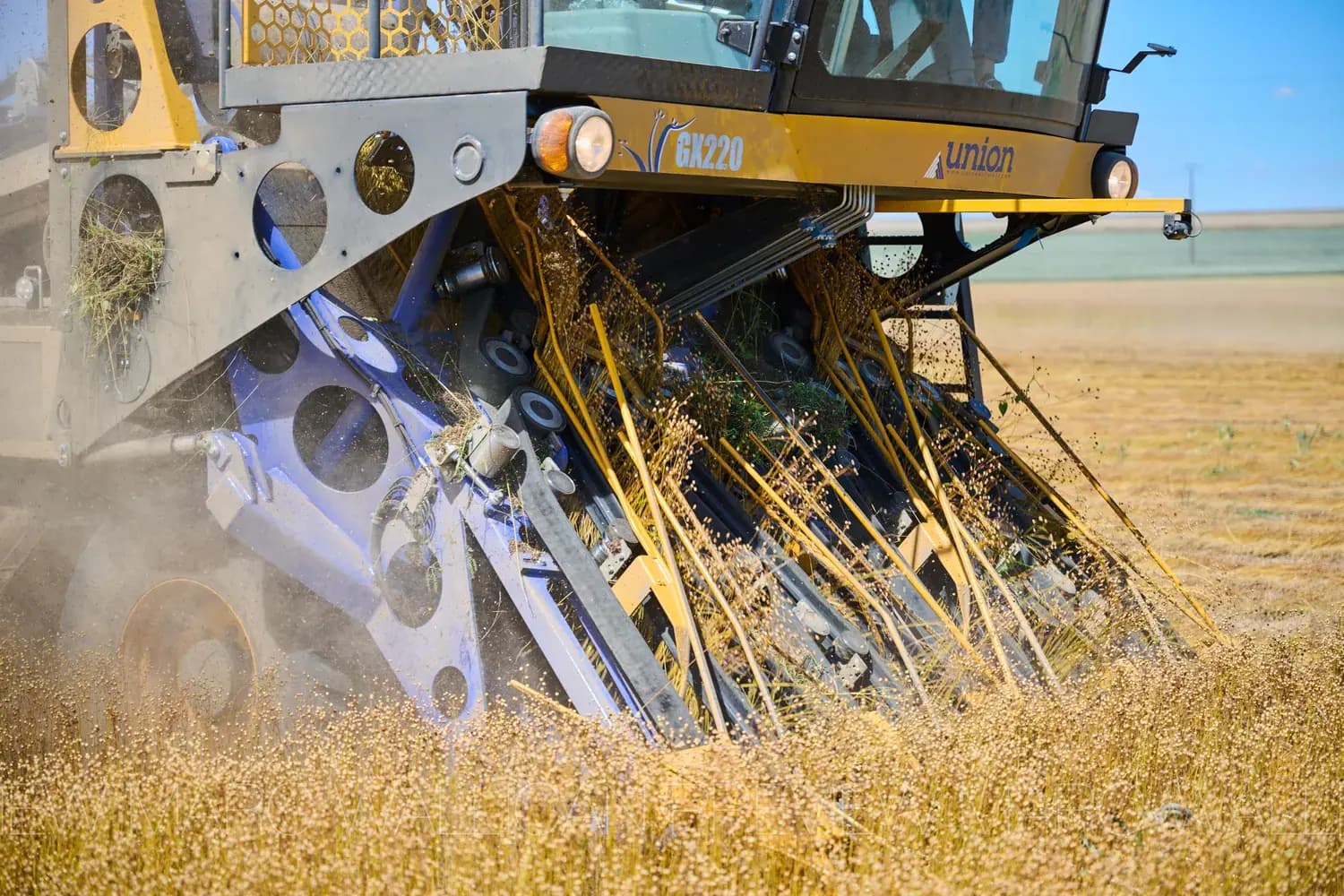
Flax is pulled with its roots, not cut — mowing would leave the fibre in the lower part of the stem. This is the basic difference from cereals.
 04
Field retting
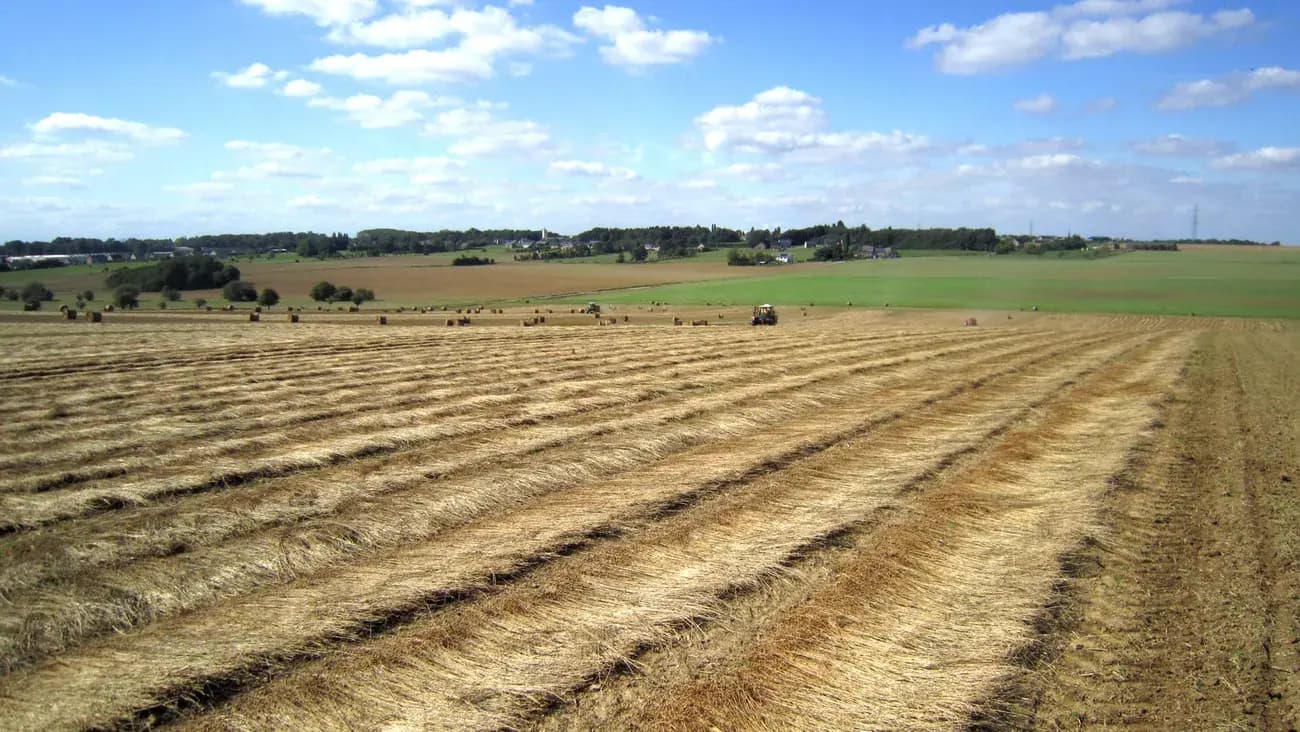
The stalks lie in the field. Micro-organisms break down the pectins binding the fibre to the woody part of the stem — this is retting, the step that determines fibre quality. The process depends on the weather.
 05
Turning the swaths
For retting to be even on both sides of the swath, the swath must be turned. The turner rotates two swaths at once, keeping retting quality uniform across the field.
06Baling
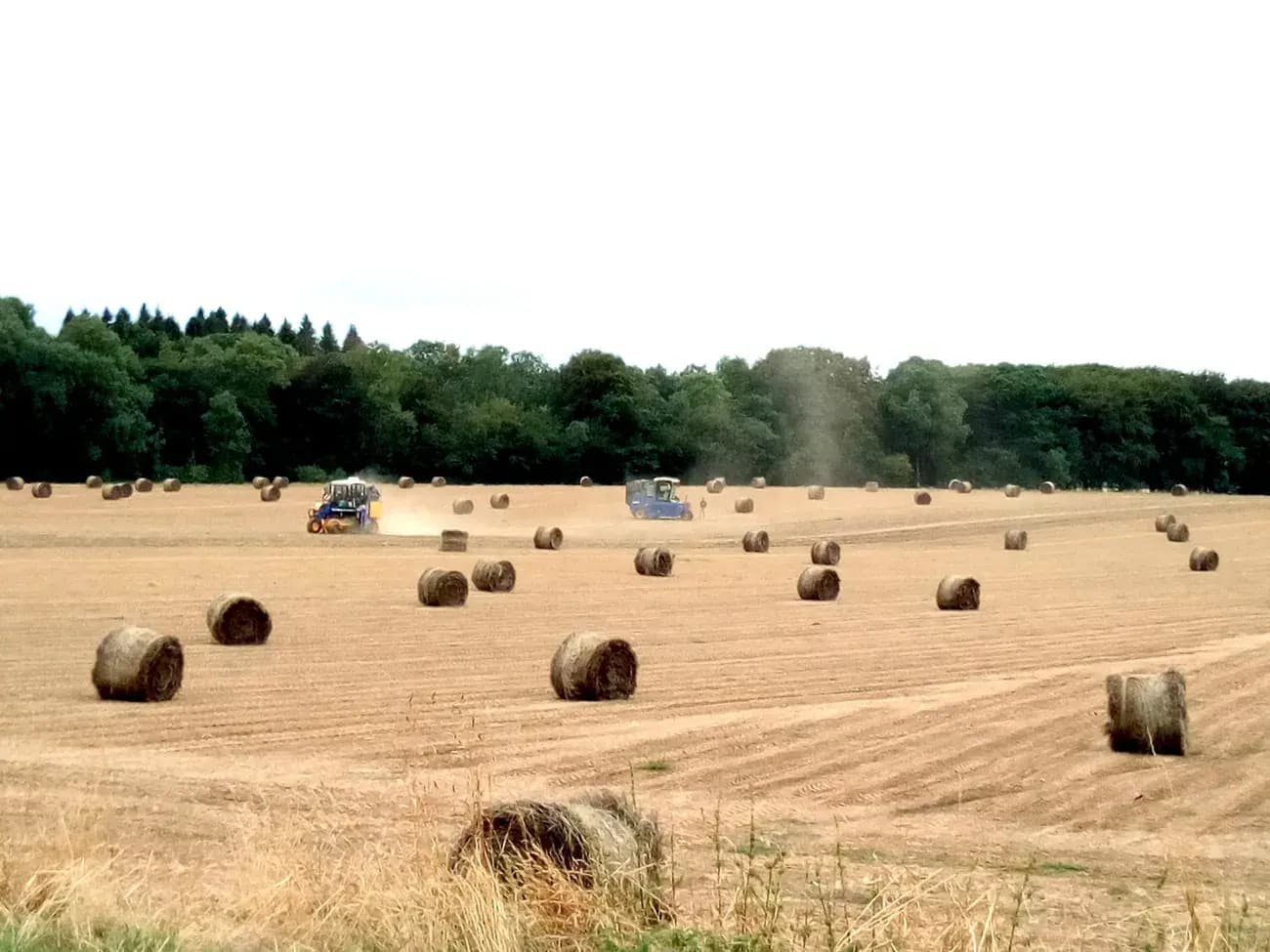
Retted flax straw is gathered from the field and formed into bales of uniform structure — ready for transport and processing.
Transport
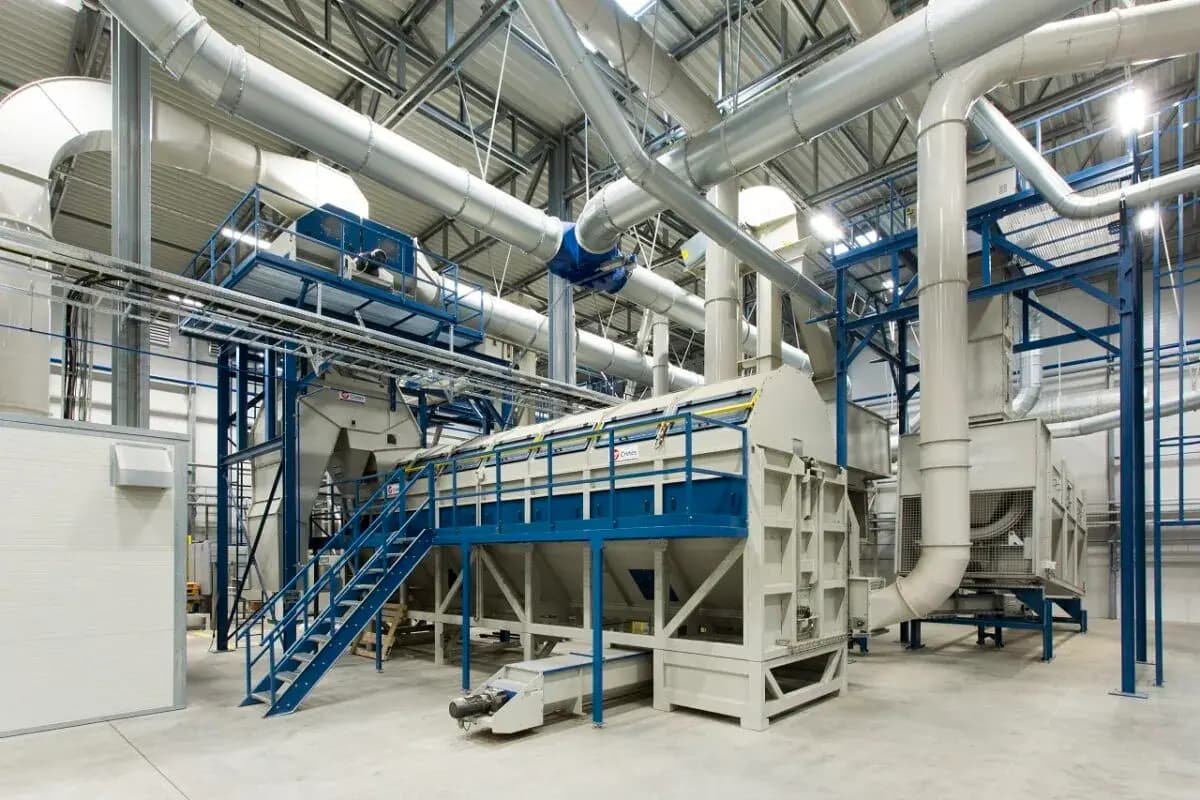
Bales of retted flax straw go to the processing plant — the scutching mill — where fibre recovery begins.
 08
Scutching
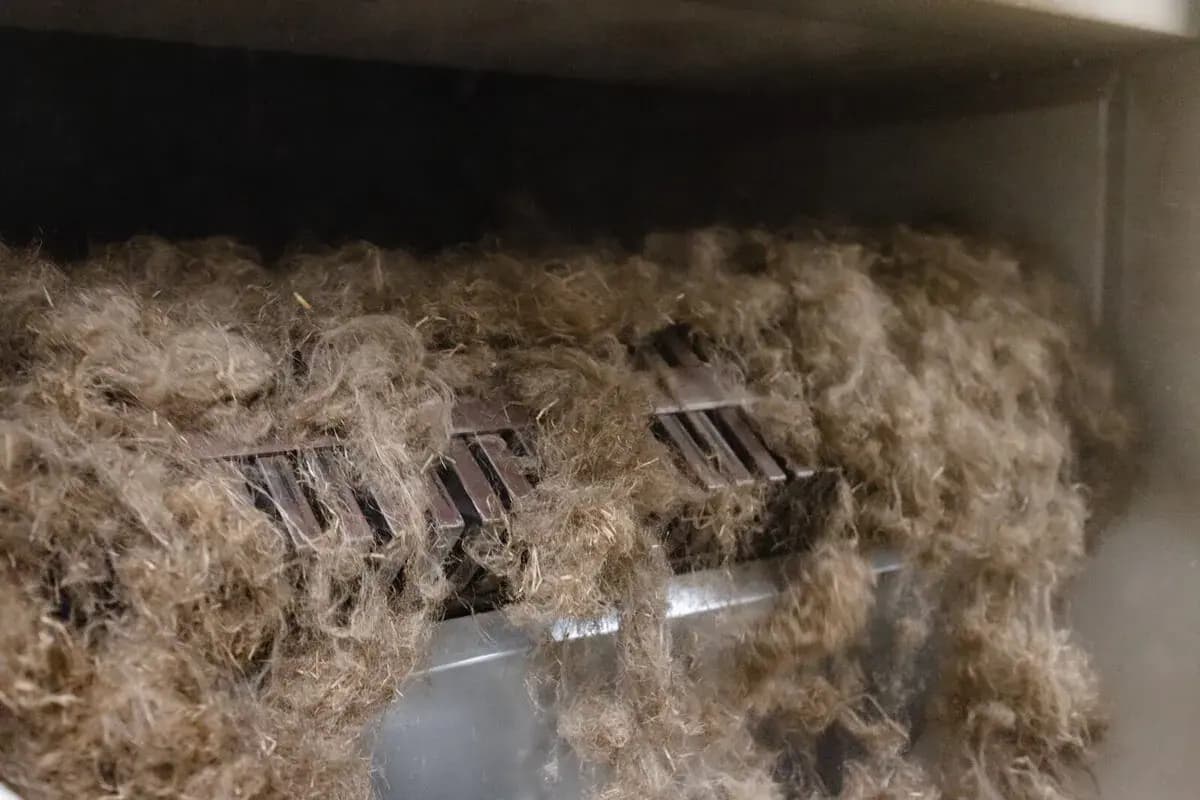
Beating and scutching separate the fibre from the woody part of the stem. Long fibre is produced, alongside short fibre and shives.
 09
Long fibre
Long fibre is the most valuable textile raw material from flax — it determines the value of the whole chain.
Yarn
Long fibre is spun into flax yarn. Poland remains a significant yarn producer — five spinning mills operate here.
Fabric
Yarn is used to make woven and knitted linen fabrics. Textiles account for around 90% of fibre flax uses; the rest goes to composites and technical materials.
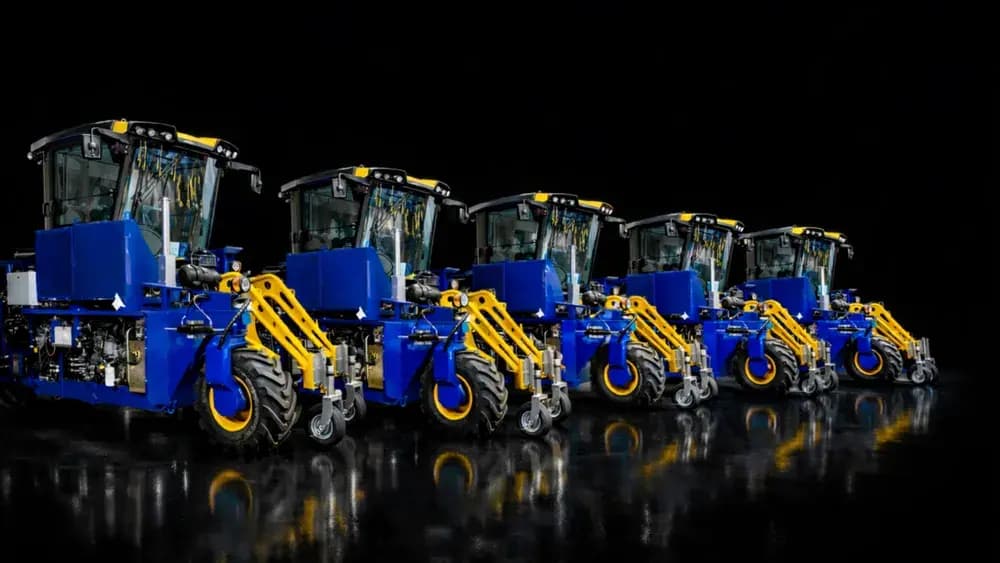
Let's talk about flax harvesting technology
We will select machinery for every stage of the chain and help plan processing, based on verified expertise.
Consult on technologySources: ARVALIS · Alliance for European Flax-Linen and Hemp / CELC · Polish Flax and Hemp Chamber · UNION technical documentation.