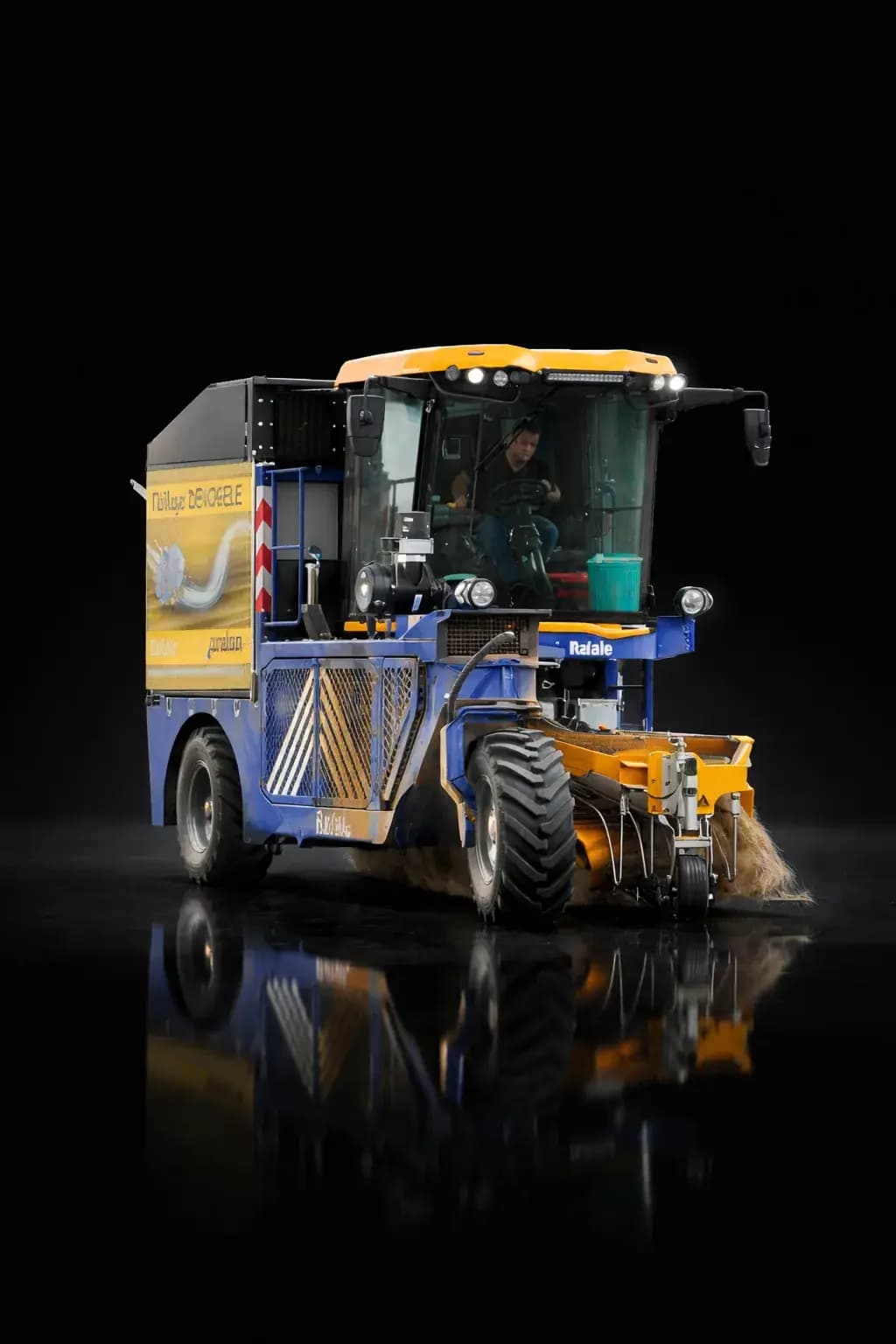
UNION GX255 Rafale
Self-propelled flax baler for retted flax straw — DEUTZ TIER 5, 143 hp
Retted flax straw in bales. Uniform.
Power — DEUTZ TCD 3.6/L4 TIER 5
Operating weight
Working speed of baling
Self-propelled flax baler for retted flax straw — DEUTZ TIER 5, 143 hp
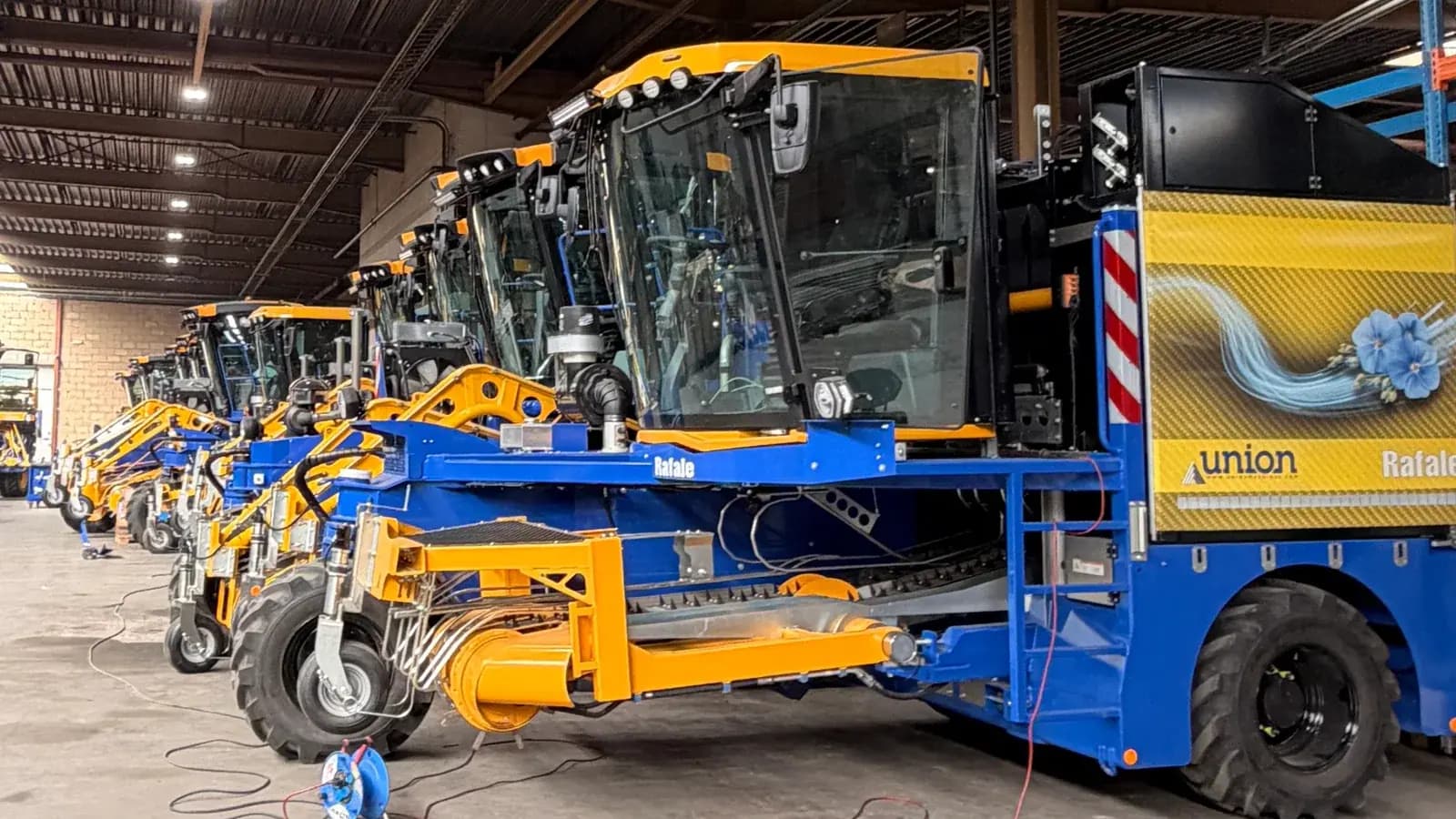
The GX255 Rafale closes the flax field cycle: it picks up retted flax straw swaths from the field and forms them into bales with a uniform structure, without delamination or local density variations. The pickup has been optimised for the properties of the flax stem after field retting, when the stem is brittle and vulnerable to mechanical damage, so the pickup geometry and gripping force differ from those of general-purpose balers. The machine is powered by a DEUTZ TCD 3.6/L4 TIER 5 engine rated at 105 kW (143 hp), on the same hydraulic 3-wheel platform as the GX220 and GX240. It can work in the full Union cycle (with swaths formed by the GX220 + GX240) or independently, with swaths formed by other manufacturers' equipment, provided the swath geometry is correct. The baler configuration can also form bales from hemp straw, depending on the harvesting technology adopted.
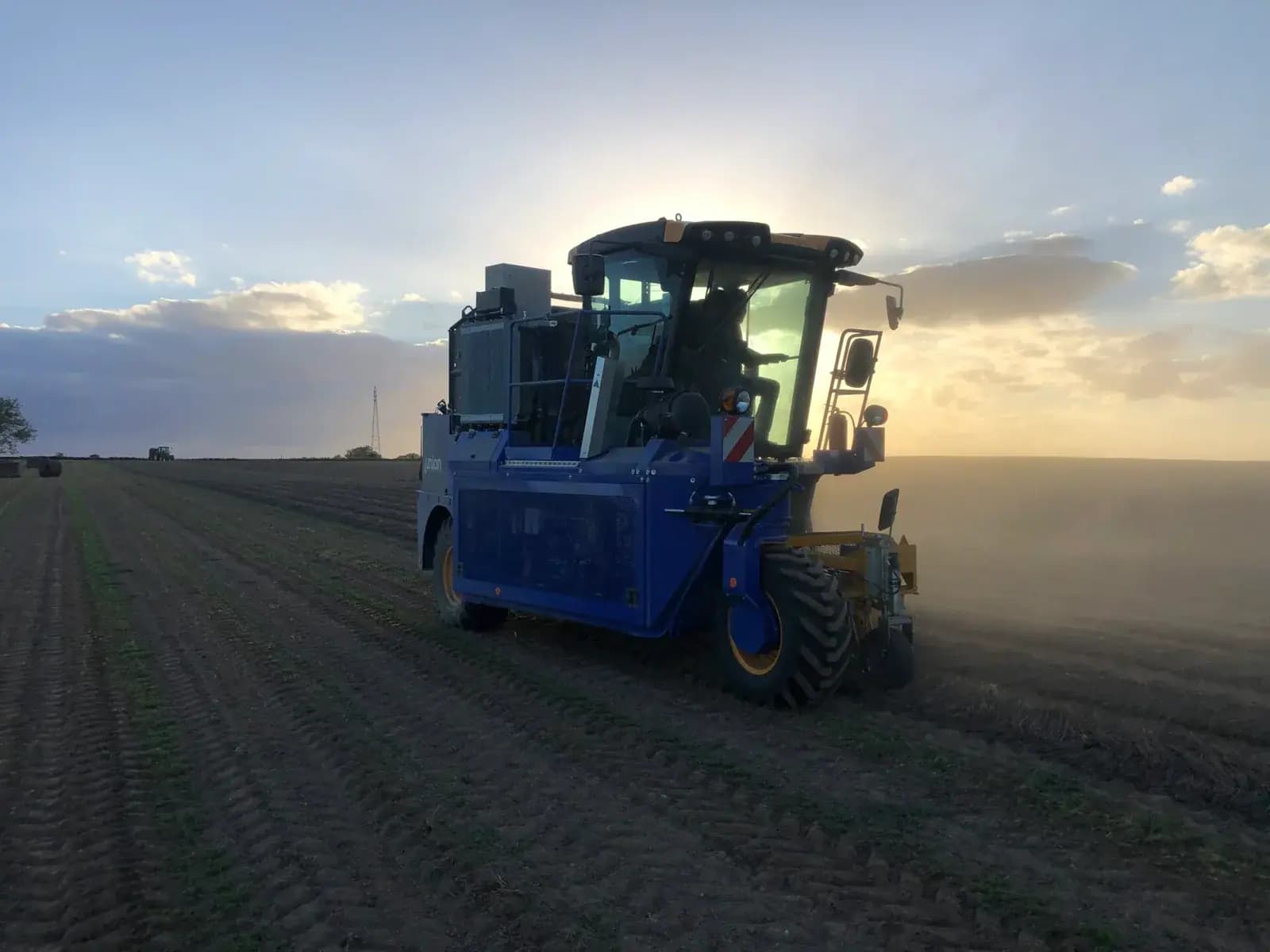
GX255 Rafale — pozycjonowanie
The value of a flax baler does not show up in a simple “bales per hour” metric. It shows up in the uniformity of the bales delivered to the flax processing plant, because the plant pays for predictable density and structure of retted flax straw. The GX255 Rafale was designed as part of a value chain in which the final judge of quality is the buyer at the point of purchase, not the field.
GX255 Rafale — specyfikacja
Dokumentacja — GX255 Rafale
Explore the whole UNION family
This model is part of the UNION manufacturer's range. The other machines address the next stages of the same technology.
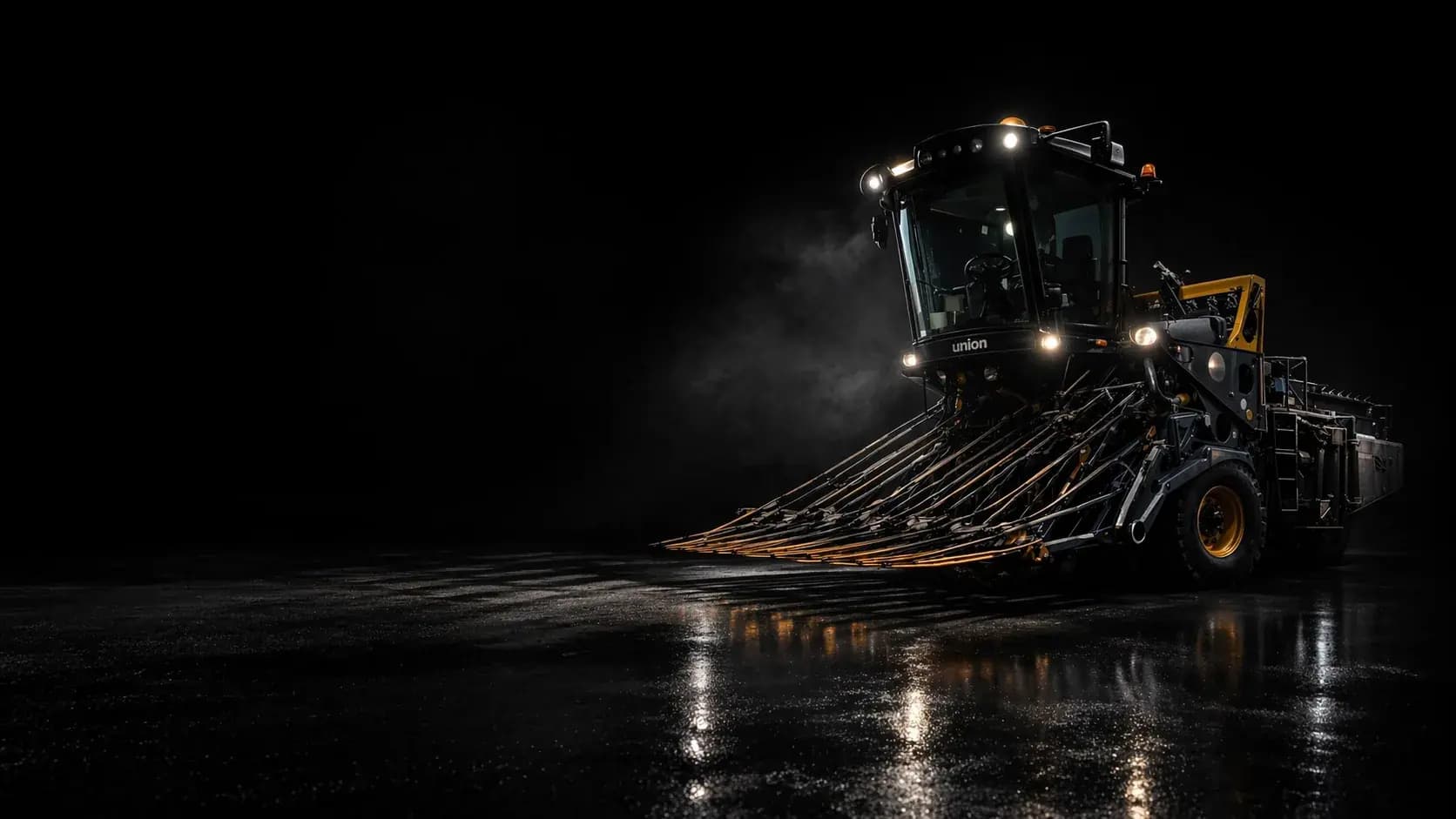 Natural fibres
GX220
Self-propelled two-row fibre flax puller — DEUTZ TCD 6.1/L6 TIER 5, 245 hp
View model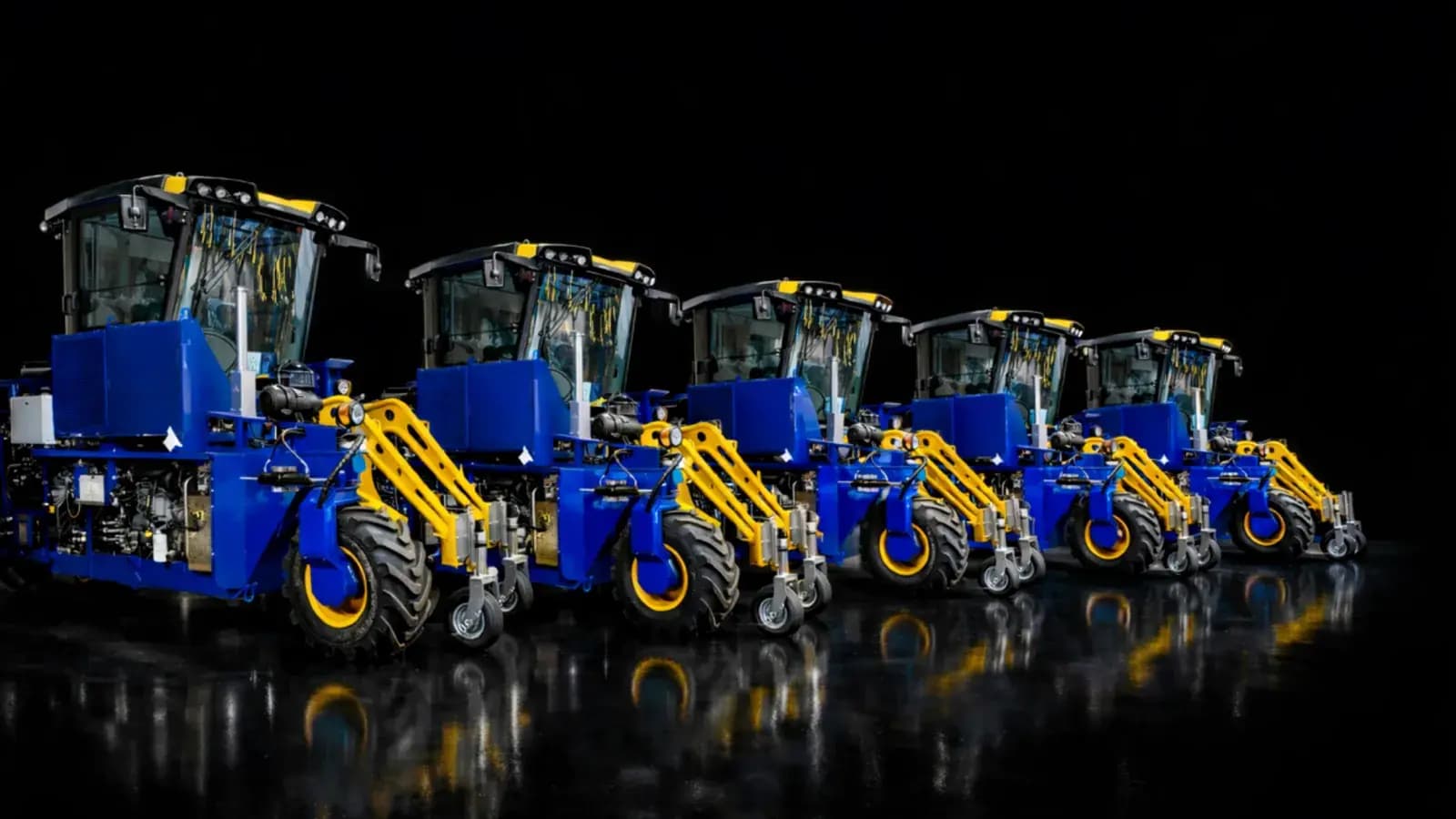 Natural fibres
GX240
Self-propelled two-row flax swath turner — DEUTZ TCD 3.6 TIER 5, 115 hp
View modelNatural fibresYou are currently viewingGX255 Rafale
Self-propelled flax baler for retted flax straw — DEUTZ TIER 5, 143 hp
Aktualny modelEuropean flax ecosystem
From seed, through harvesting and decortication, to industrial fibre processing — each brand serves one stage of the same chain.
- 01 · NasionaVan de BiltView
- 02 · HarvestingUNIONCurrent stage
- 03 · DekortykacjaCretesView
- 04 · ProcessingVanhauwaertView
GX255 Rafale on each side
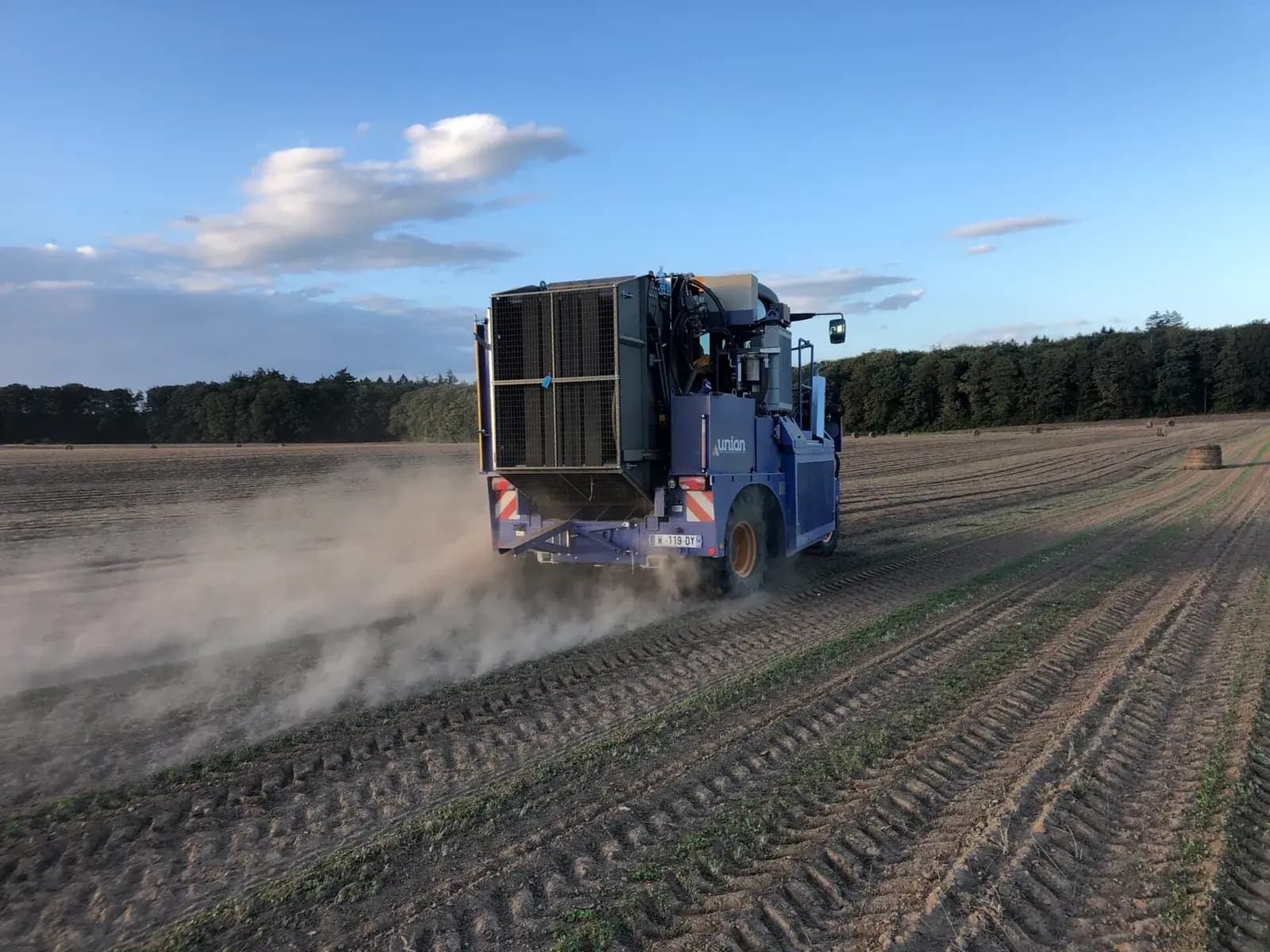
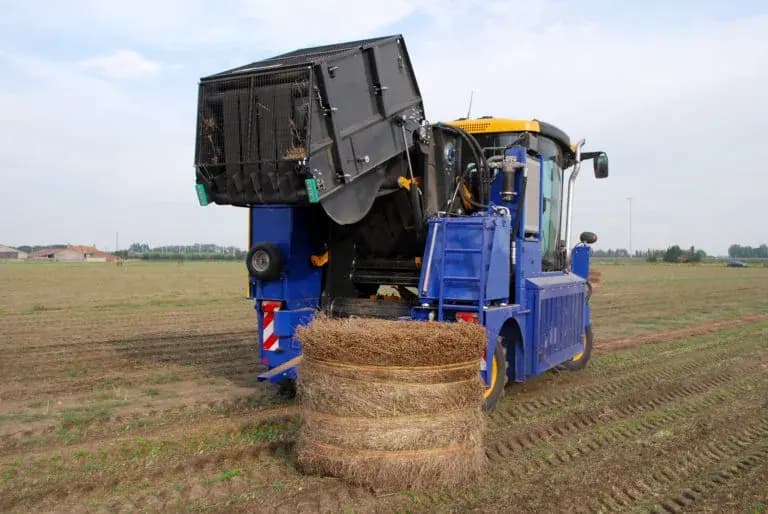
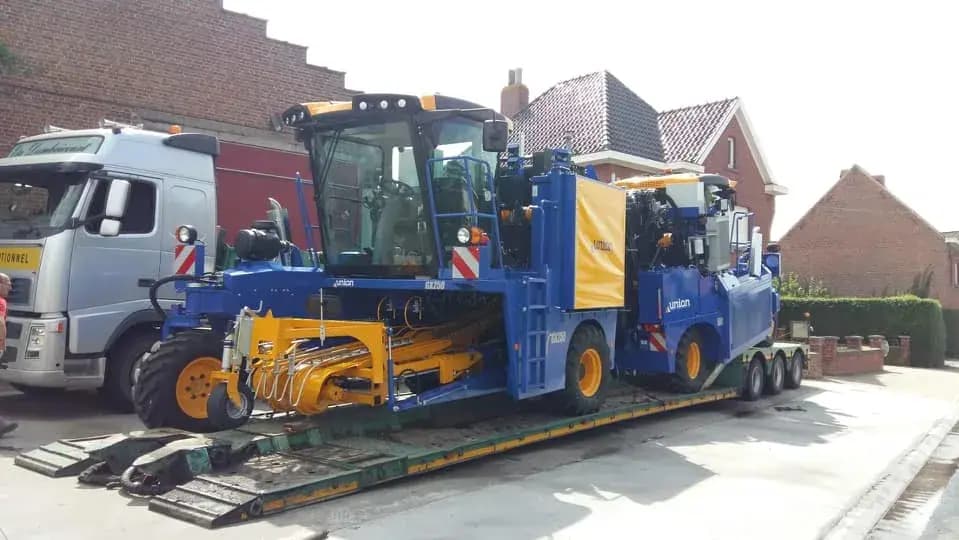
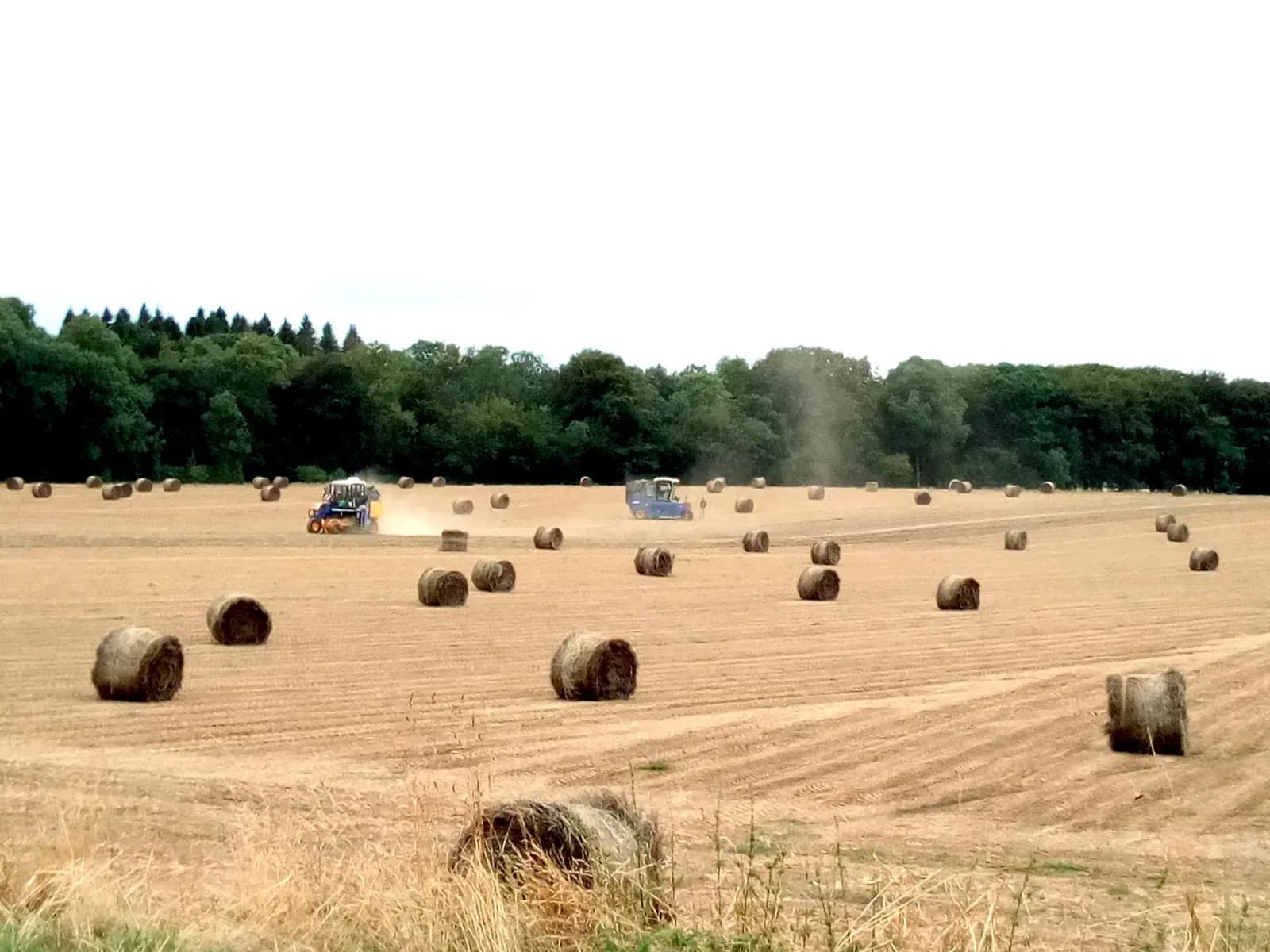
Kadr 0101 / 05
Conversation with an engineer.
The most common questions we hear from farms before purchase.
We have collected the questions we most often hear from farms before purchase — and the answers from our engineers. Every answer is based on verified knowledge of the machine.
- manufacturer's materials
- dokumentacji technicznej
- questions asked by farms
Answers based on the experience of thousands of farms in Europe.
No. The GX255 Rafale is a standalone self-propelled baler and can be bought separately, for example on a farm where the puller and the tedder come from another manufacturer. The machine works with any correctly formed swath of retted flax straw. Maximum consistency of the field cycle, meaning the best bale uniformity and the lowest fibre losses, is however achieved when the GX220, GX240 and GX255 work together, because pulling and turning the swaths directly affects the geometry that the GX255 picks up.
The GX255 Rafale is a specialised machine. The pickup design is matched to the flax stalk after field retting. At this stage the plant is fragile and sensitive to mechanical damage, and the stalk length (and therefore the fibre length) directly affects the price paid at purchase. The grip geometry, pressing force and baling chamber parameters are optimised for exactly these properties. A universal hay or straw baler does not deliver comparable density evenness or gentleness in pickup.
The GX255 has automatic bale density control. The system measures the material feed through the pickup in real time and adjusts the pressing force of the baling chamber so that the density remains stable along the entire length of the bale. Specific density values in kg/m³ depend on the degree of retting, moisture and the properties of the stalk in a given season. We discuss them individually when selecting the configuration for a specific flax processing plant.
Yes. The hydraulic three-wheel drive provides stability and manoeuvrability on fields with unevenness and variable moisture, typical of northern Poland, the Baltic states and parts of western Belgium. The single rear wheel on the hydraulic chassis adapts to the terrain independently. The Michelin 400/70R20 tyre configuration is a compromise between low ground pressure and manoeuvrability.
Yes. A spare parts warehouse for the GX255 in Poland: pickup belts and tines, three-wheel drive hydraulics, DEUTZ TCD 3.6/L4 engine parts, tyres. Commissioning service, warranty and after-warranty support are provided in the field. The field window for baling retted flax straw is short and narrow. It falls 3–6 weeks after retting, within a chosen weather window, which is why we maintain a local warehouse.
Retted flax straw in bales. Uniform.
We will prepare an offer matched to the equipment and the needs of your farm.