RUTHENIA ALBA · Knowledge centre
Fibre flax: cultivation, harvesting and processing
Fibre flax is one of Europe's oldest industrial crops, grown for the long fibre hidden in its stem. This guide explains what fibre flax is, how it differs from oilseed flax and what the full chain looks like, from field through harvesting and retting to fibre and fabric.
Basics
What is fibre flax?
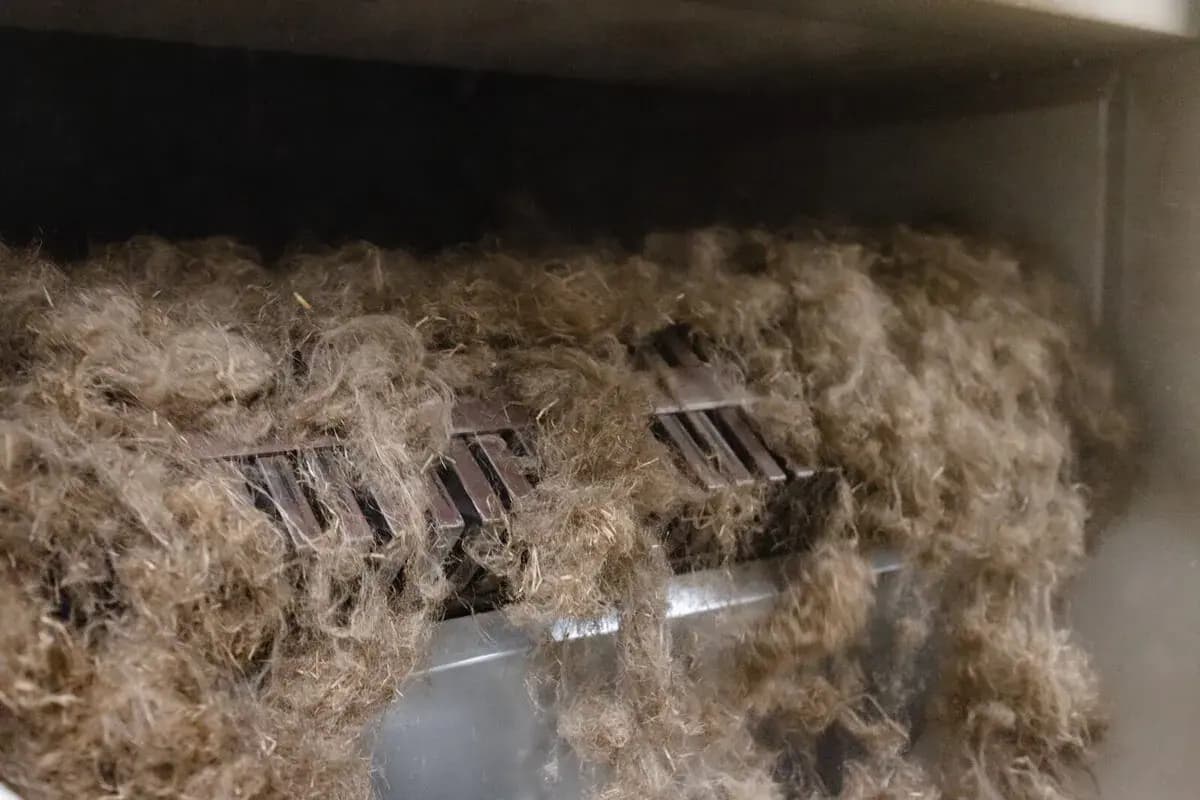
Fibre flax is grown for the fibre contained in the stem. The fibre runs the full length of the stem, from base to tip, so the longer and more uniform the stem, the more valuable the raw material. The most highly prized is so-called long fibre, which goes to the textile industry.
According to the European Confederation of Flax and Hemp (CELC), the vast majority, around 90%, of flax fibre uses are textiles (fashion and home furnishings); the remainder is technical applications and composites, whose share is growing.
The longer and more uniform the stem, the more valuable the raw material. The whole flax field works towards one goal: unbroken long fibre.
Two different crops
Fibre flax and oilseed flax
Flax is grown in two utilisation forms: fibre and oilseed. These are two different production paths: different purpose, different agronomy, different machinery.
Fibre flax
It is grown for fibre. It is sown densely: according to the institute ARVALIS, the target plant density is 1,500–1,800 plants per square metre, to obtain tall, sparsely branched stems with the longest possible fibre.
Oilseed flax
It is grown for seed (linseed) and oil; it has a different plant habit and a different growing cycle. For this reason fibre and oilseed flax are not interchangeable: they require different agronomy and a different machinery fleet.
European context
The role of flax in Europe
Western Europe is the world centre of fibre flax production, from the coastal belt stretching from Normandy through Belgium to the Netherlands.
According to the Alliance for European Flax-Linen and Hemp (formerly CELC), around three quarters of world long flax fibre production comes from France, Belgium and the Netherlands. The main French flax-growing regions are Brittany, Normandy, Hauts-de-France and Île-de-France.
This concentration of knowledge and technology in Western Europe is the reference point for rebuilding flax cultivation in Poland and Central Europe.
Poland
The role of flax in Poland
Poland has a long flax-growing tradition. The gap between demand and domestic fibre supply shows why fibre flax is returning to rotations as an alternative to cereals.
- Lata 70. XX w.
Over 130,000 ha
According to the Polish Flax and Hemp Chamber, flax and hemp were grown in Poland on over 130,000 ha.
- 2022
3,733 ha (≈400–430 ha of fibre flax)
According to ARiMR data, flax covered 3,733 ha, of which only around 400–430 ha was fibre flax (the remainder being oilseed flax).
- Today
400–500 t of fibre per year
Domestic production of flax fibre covers barely a few per cent of demand; two plants producing fibre and several smaller ones are in operation.
- Potential
Five spinning mills, demand ~8,000 t
Poland remains a significant producer of flax yarn: five spinning mills produce around 4,500–5,000 t of yarn per year against a demand of roughly 8,000 t of fibre (PILiK data).
Poland was a flax powerhouse, and it lost that position when the infrastructure disappeared, not the soil or the climate.
The timeline shows the scale of the gap: today domestic fibre supply covers only a fraction of demand, and Polish spinning mills buy raw material that is lacking in the country. This is not an agronomic problem but a technological and processing gap.
From field to bale
The harvesting chain
Flax is harvested differently from cereals. The fibre runs right down to the lower part of the stem, so the plant is pulled rather than cut; mowing would shorten the raw material and leave part of the fibre in the field (a principle confirmed by ARVALIS).
01Pulling
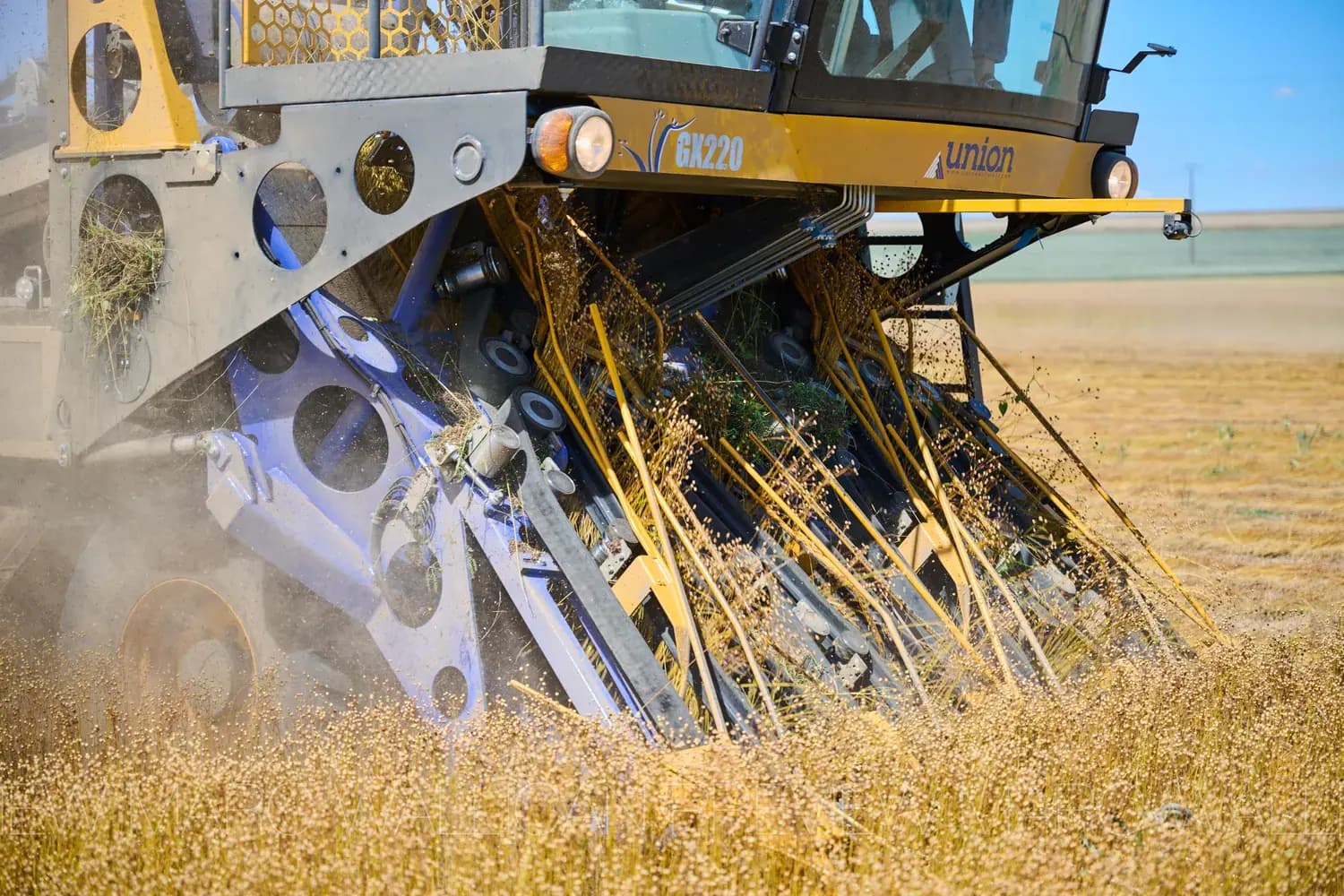
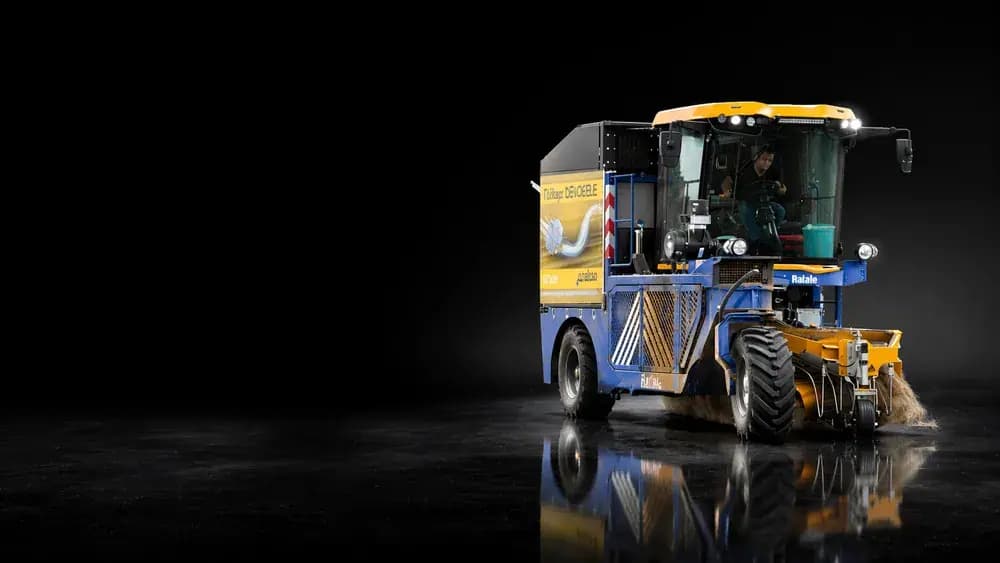
The self-propelled GX220 puller pulls flax with its roots at technical maturity (ARVALIS: 900–1000 °C cumulative temperature from sowing).
Wyrywarka GX220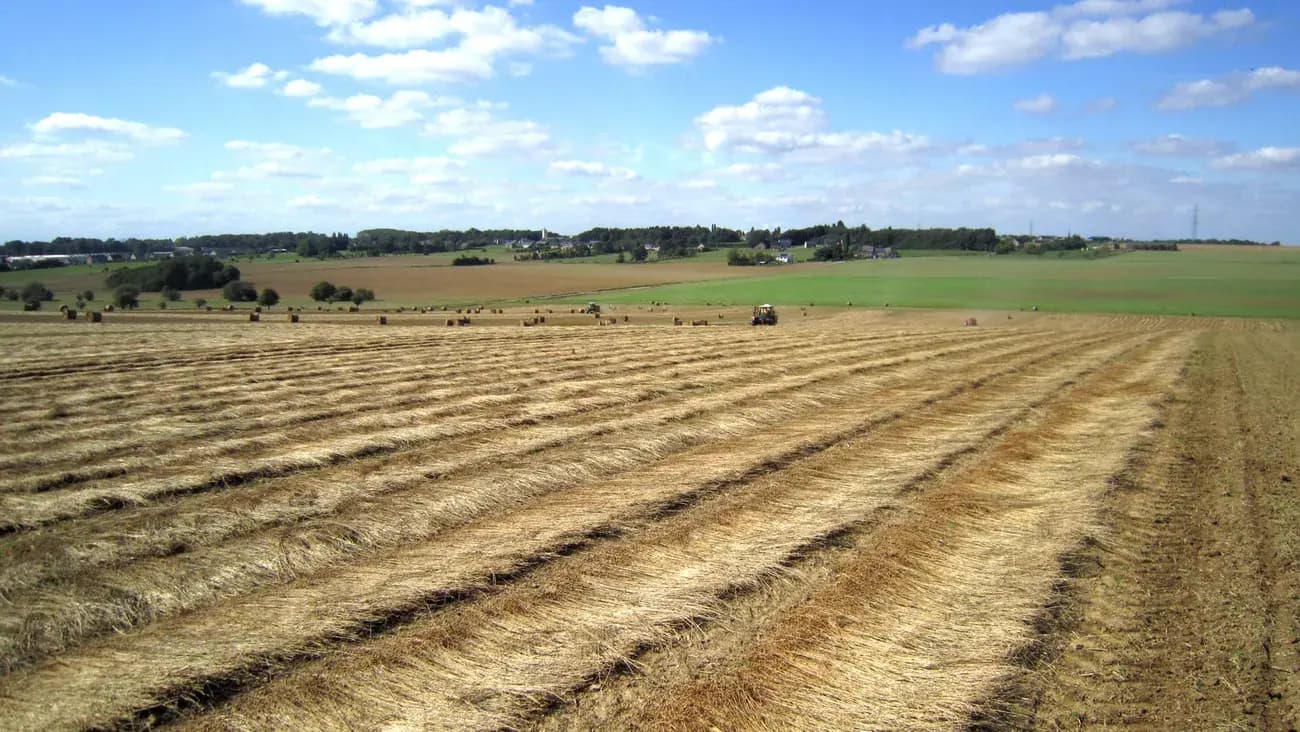 02
Turning the swaths
The GX240 tedder turns the swath so that field retting is even on both of its sides.
Odwracarka GX240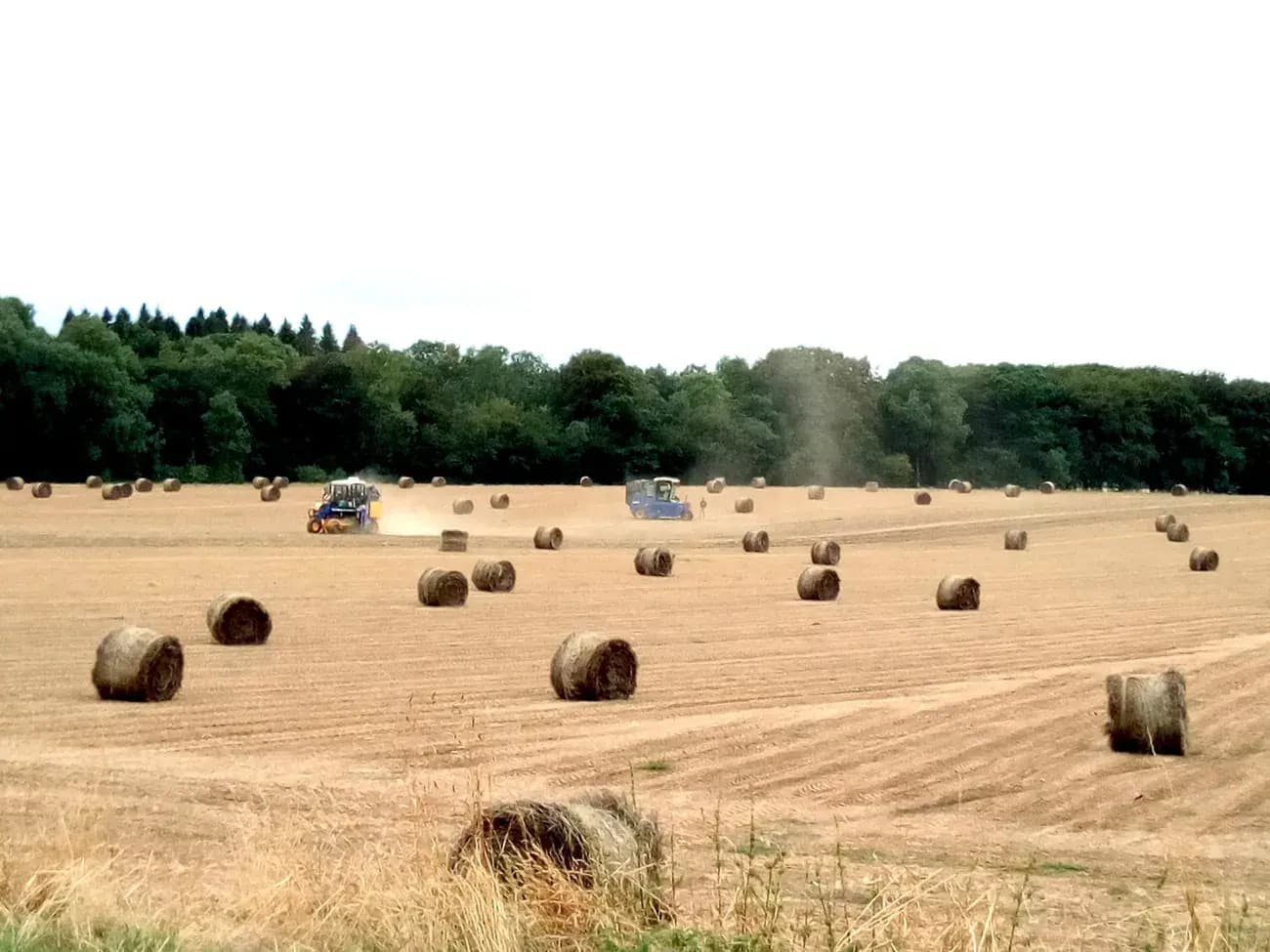 03
The field harvesting chain consists of the following successive stages:
- Pulling — the self-propelled GX220 puller pulls flax with its roots at technical maturity.
- Field retting — the swaths lie in the field, and micro-organisms break down the pectins binding the fibre to the woody part of the stem. This process depends on the weather.
- Turning the swaths — the GX240 tedder turns the swath so that retting is even on both of its sides.
- Baling — the GX255 Rafale roll baler forms bales from retted flax straw.
A complete line of field machinery is supplied by UNION (Wielsbeke, Belgium, since 1947). Full overview: natural fibre machinery.
Flax and hemp: the separation at field stage
The GX220 puller is for flax only: flax is pulled, while hemp is cut. The GX240 tedder and the GX255 Rafale baler can work with both flax and hemp, because they turn and bale an already formed swath, regardless of whether the stem was pulled or cut.From bale to fibre
Processing chain
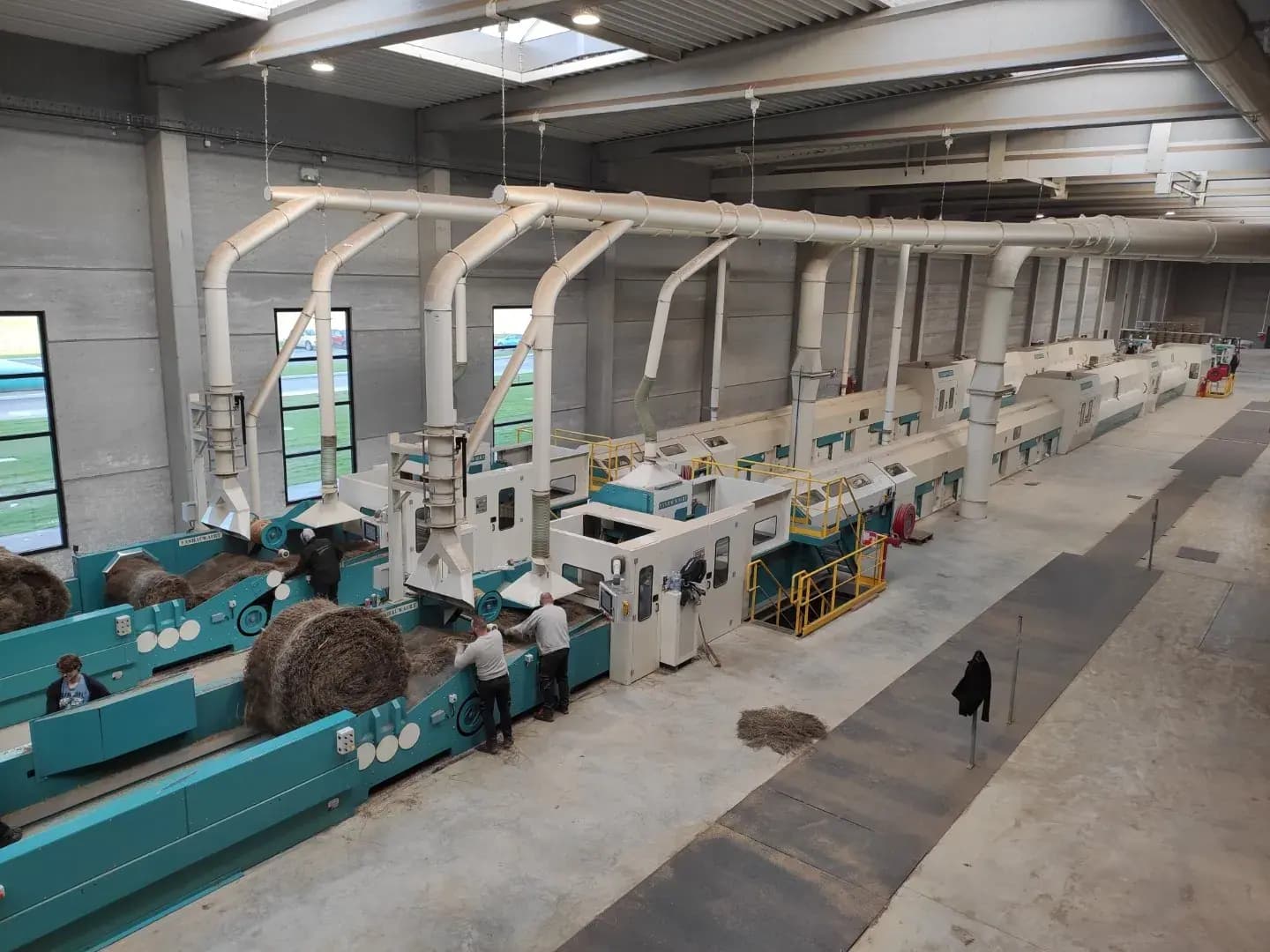
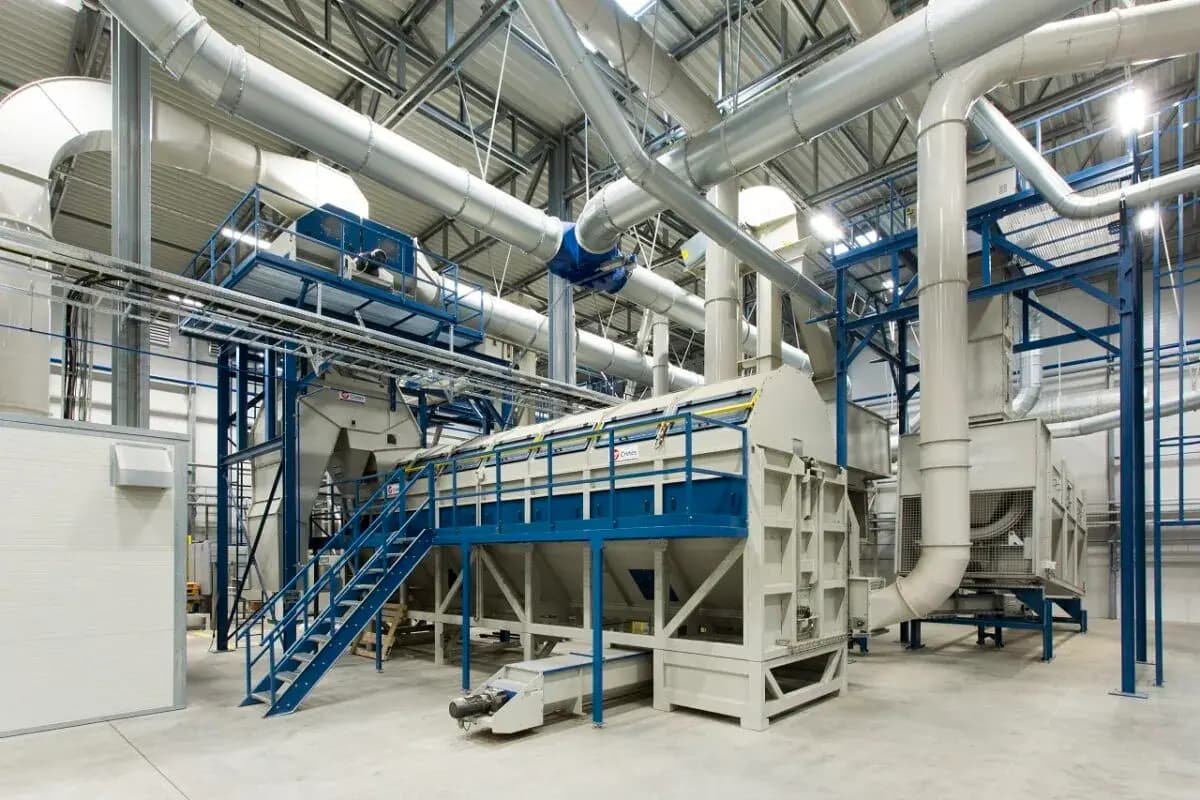
After harvesting, the bales of retted flax straw go to a processing plant (flax mill). In decortication, i.e. scutching and beating, the fibre is separated from the woody part of the stem. This produces long fibre (the most valuable textile raw material), alongside short fibre and shives.
The long fibre is then spun into yarn, from which linen fabrics are made. Processing lines are designed, among others, by Belgian manufacturers Cretes and Vanhauwaert.
This closes the value chain: field → pulling → retting → turning → baling → decortication → long fibre → yarn → fabric.
Technology ecosystem
Machinery and technologies for the flax chain
Three Belgian brands cover the full chain, from the field to finished fibre.
Questions and answers
Most frequently asked questions
How does fibre flax differ from oilseed flax?
These are two utility forms of the same plant. Fibre flax is grown for fibre: it is sown densely to obtain long, weakly branched stems. Oilseed flax is grown for seed (linseed) and oil. They differ in purpose, agronomy and machinery.
Why is flax pulled rather than cut?
The fibre runs along the whole length of the stem, down to its lower part. Pulling with the roots preserves the full length of the stem and therefore of the fibre; mowing would shorten the raw material and leave part of the fibre in the field. This principle is confirmed by the ARVALIS institute.
What is field retting?
This is the controlled breakdown of the pectins binding the fibre to the woody part of the stem. After pulling, the swaths lie in the field and micro-organisms gradually release the fibre. The quality of retting depends on the weather and on even exposure of both sides of the swath, which is why the swath is turned.
Which machines make up the flax harvesting chain?
The GX220 puller (pulling flax), the GX240 tedder (turning swaths during retting) and the GX255 Rafale roll baler (forming bales from retted flax straw). All come from UNION in Wielsbeke, Belgium.
How much fibre flax is grown in Poland?
According to ARiMR data, in 2022 flax covered 3,733 ha in Poland, of which around 400–430 ha was fibre flax (the remainder being oilseed flax). Domestic fibre production is in the order of 400–500 t per year and covers only a few per cent of demand (data from the Polish Flax and Hemp Chamber).
Are flax and hemp harvested with the same machine?
Not in the case of the GX220 puller: flax is pulled with its roots, while hemp is cut. The GX240 tedder and the GX255 Rafale baler, however, can work with both raw materials, because they turn and bale an already formed swath.
Go further
Related machines and solutions
Are you considering fibre flax on your farm?
We will help you assess the crop, select harvesting machinery and plan processing, based on verified knowledge, not promises.
Consult on flax cultivationSources
Figures are quoted from the sources indicated and may change in subsequent seasons.