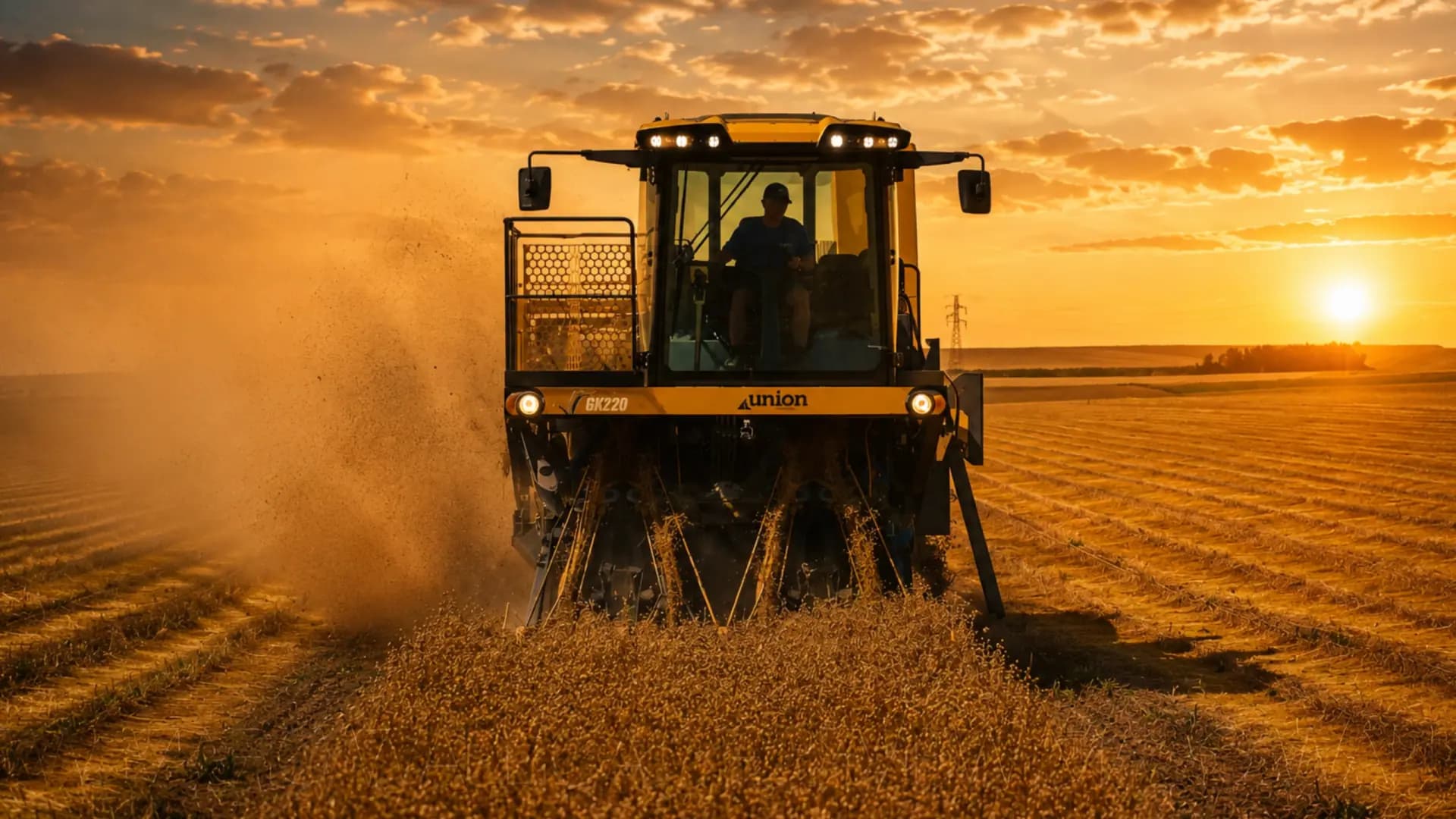
Union GX220 — self-propelled two-row fibre flax puller
Almost any crop can be mowed.
Almost any — except flax. Flax is pulled.
Why does one plant require a completely different machine?
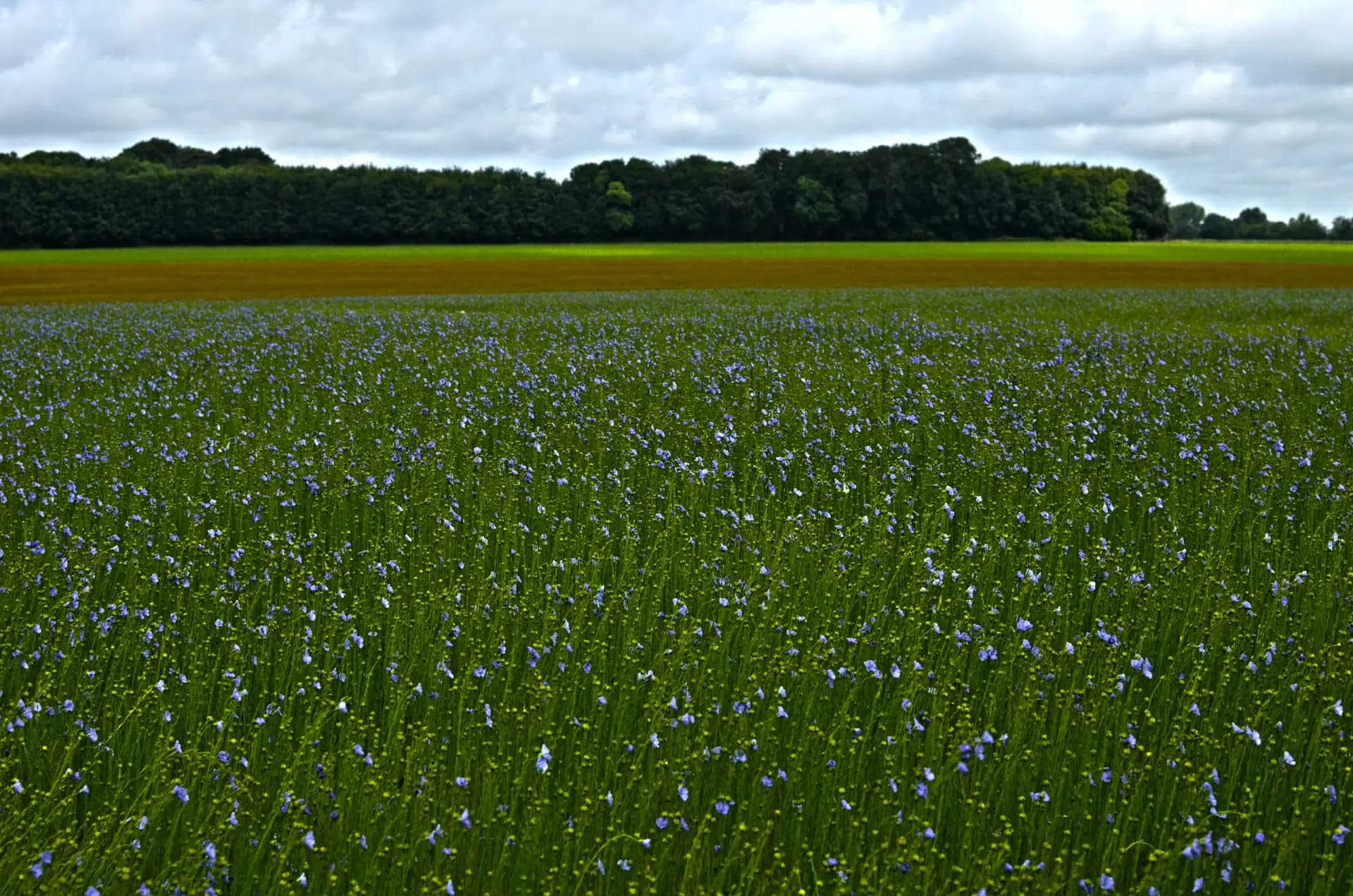
The flax fibre runs along the whole stem — from the crown of the root to the tip.
The cutting bar stops above the ground. It leaves the lower section of the stem — and with it the lowest fibre — in the field, and shortens what it takes. With flax, a shortened stem means a lower grade and a lower raw material price.
That is why flax is not mown. It is pulled — with the root — to keep the fibre at full length.
Cut the stem a few centimetres short and you shorten the fibre that comes from it.
Flax has to be pulled with the root — and laid straight away in an even swath for retting.
Pulling without an even swath spoils retting. An even swath without full length has nothing to ret. Both conditions must be met in one pass — and no general-purpose machine will do that.
This is a job for a machine built exclusively for flax.
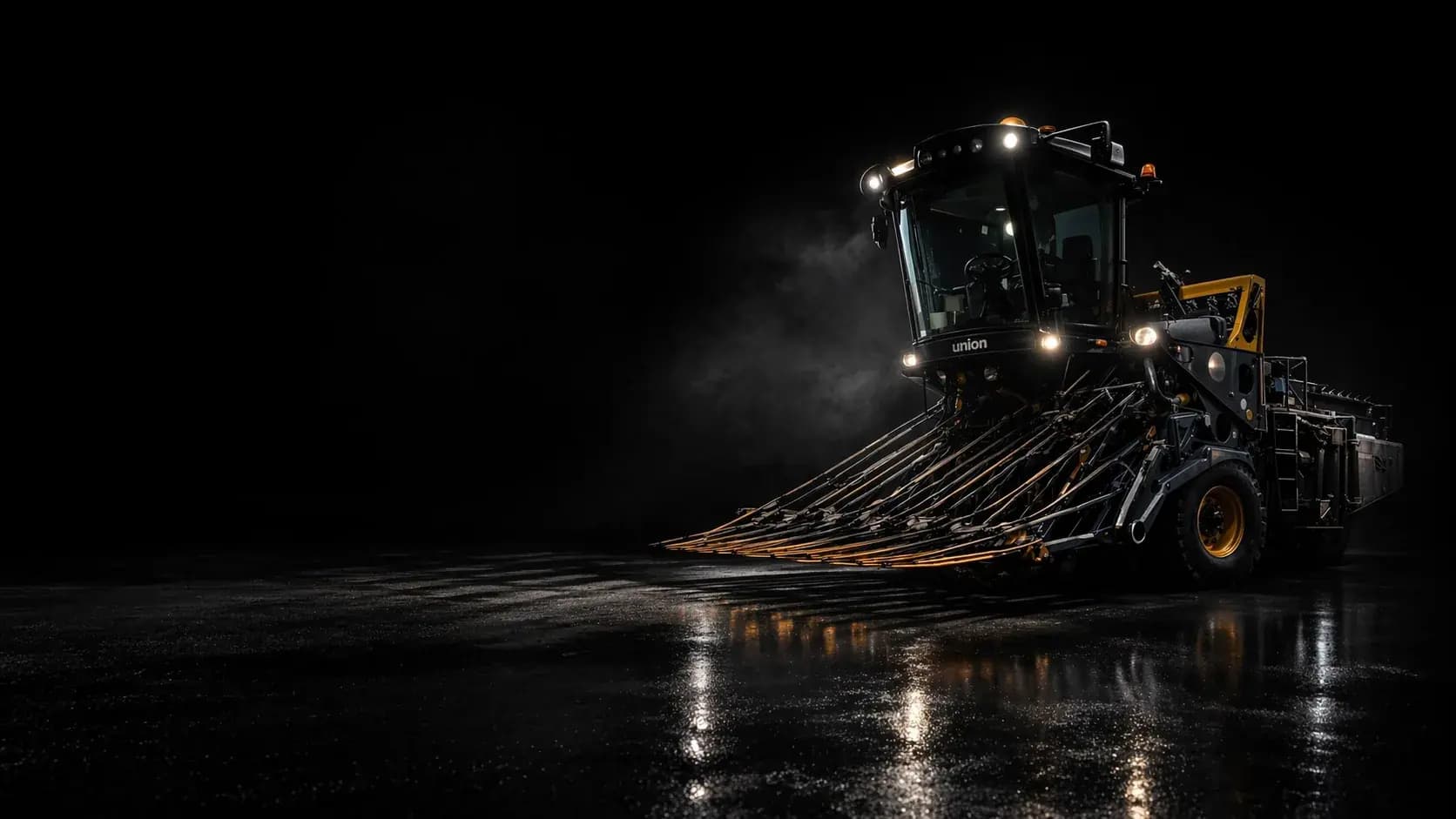
Union GX220
Self-propelled two-row puller — one product, one task: pull the flax with the root and lay an even swath.
Below: how the GX220 meets each of the two conditions, and what drives it.
01 · How it pulls
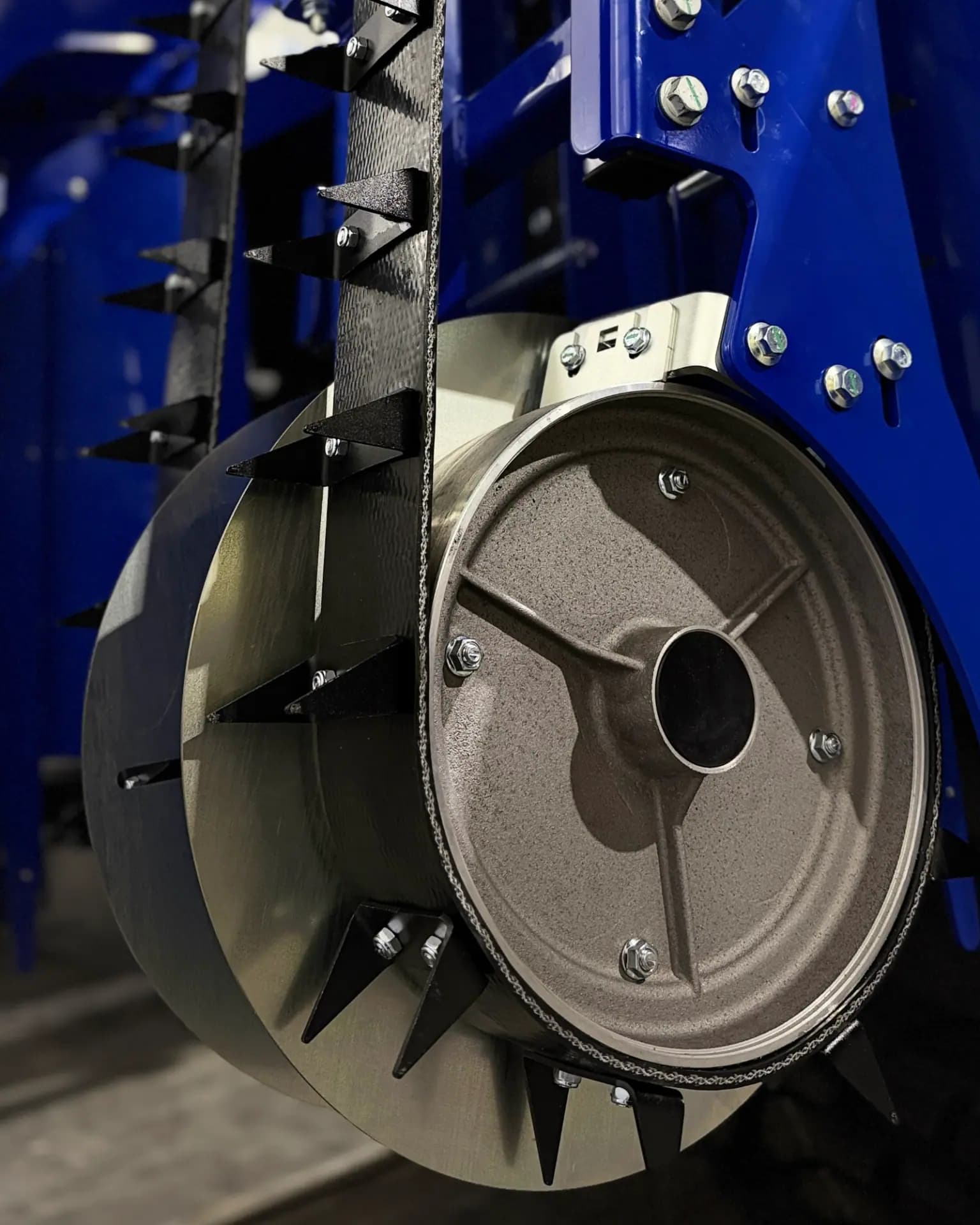
The GX220 does not cut. Two pulling sections lift the flax from the soil together with the root, row pair by row pair, keeping the full stem length and therefore the full fibre length.
- Pulling wheel suspended on nitrogen cushion — softens impacts at road speed and at the end of rows, extending the life of working parts.
- Hardox scrapers with sintered carbide — resistant to abrasion in constant contact with the soil.
- Overpressure alarms on the puller engine and drive wheels — the operator knows about a snag before damage occurs.
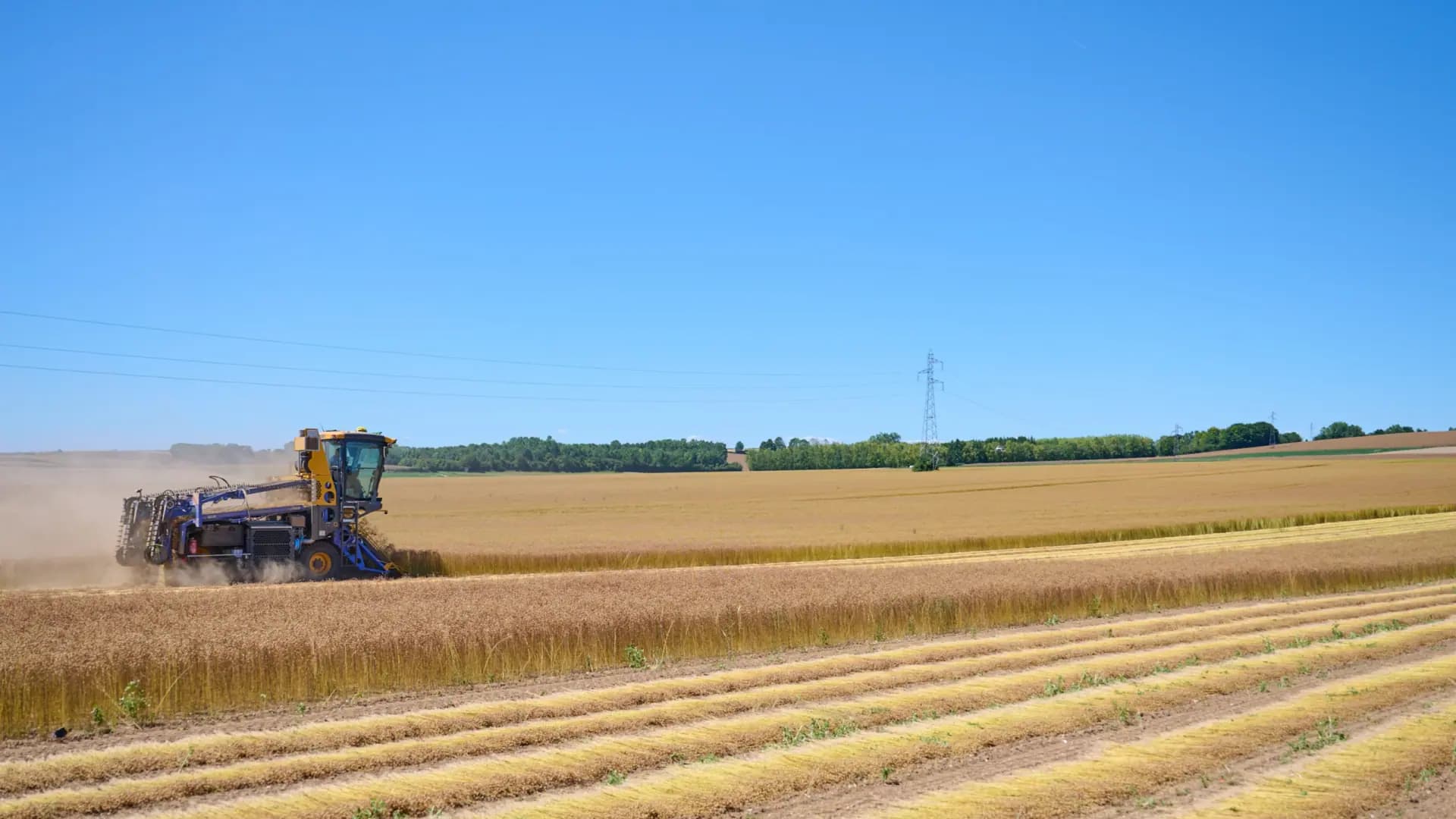
02 · Even windrow
Pulled plants must be laid evenly, in one direction, because an uneven windrow retts unevenly. The evenness of the windrow is determined by the running gear.
- Hydraulic drive on three wheels (3-wiel aangedreven & gestuurd) — short turning radius and even laying of windrows, without disturbing the geometry at headlands.
- Programmable flax spreading tables — windrow geometry set for the field and for the next retting stage.
- Rear 720/55R26.5 tyres filled with water — ballast for stability and even tracking of the machine.
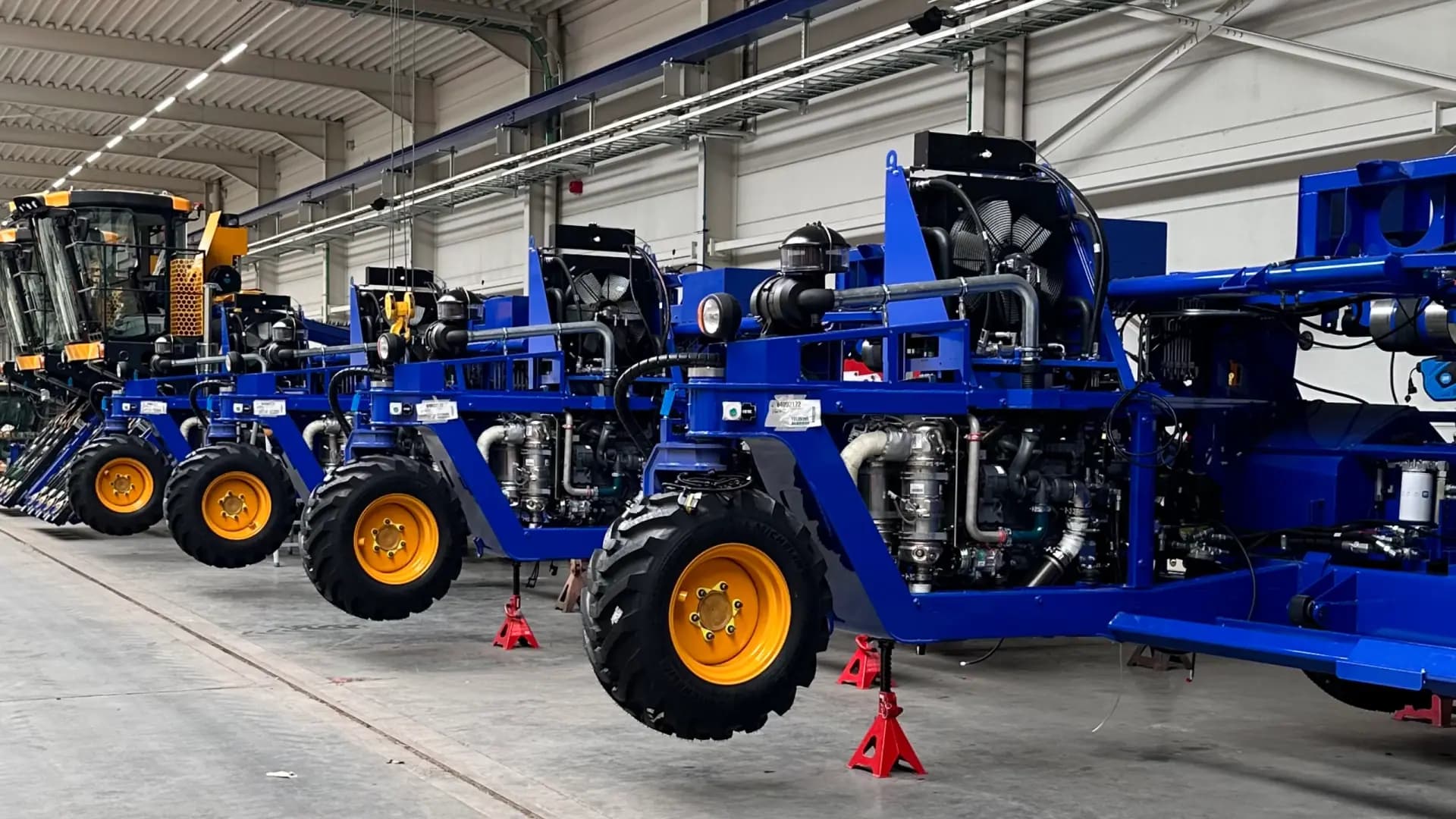
03 · Drive and platform
A single engine drives all the hydraulics — wheels, pulling mechanism and spreading tables. It is a self-propelled machine: no tractor needed, designed for 10+ hours of work a day in a short pulling window.
- DEUTZ TCD 6.1/L6 in the TIER 5 / Stage V class — 180 kW (245 hp).
- Air filter with cyclone and dirt indicator in the terminal — less maintenance between seasons.
- Cab: joystick armrest, smartphone holder with screen, air conditioning, pneumatic seat, reversing camera and a camera on the puller.
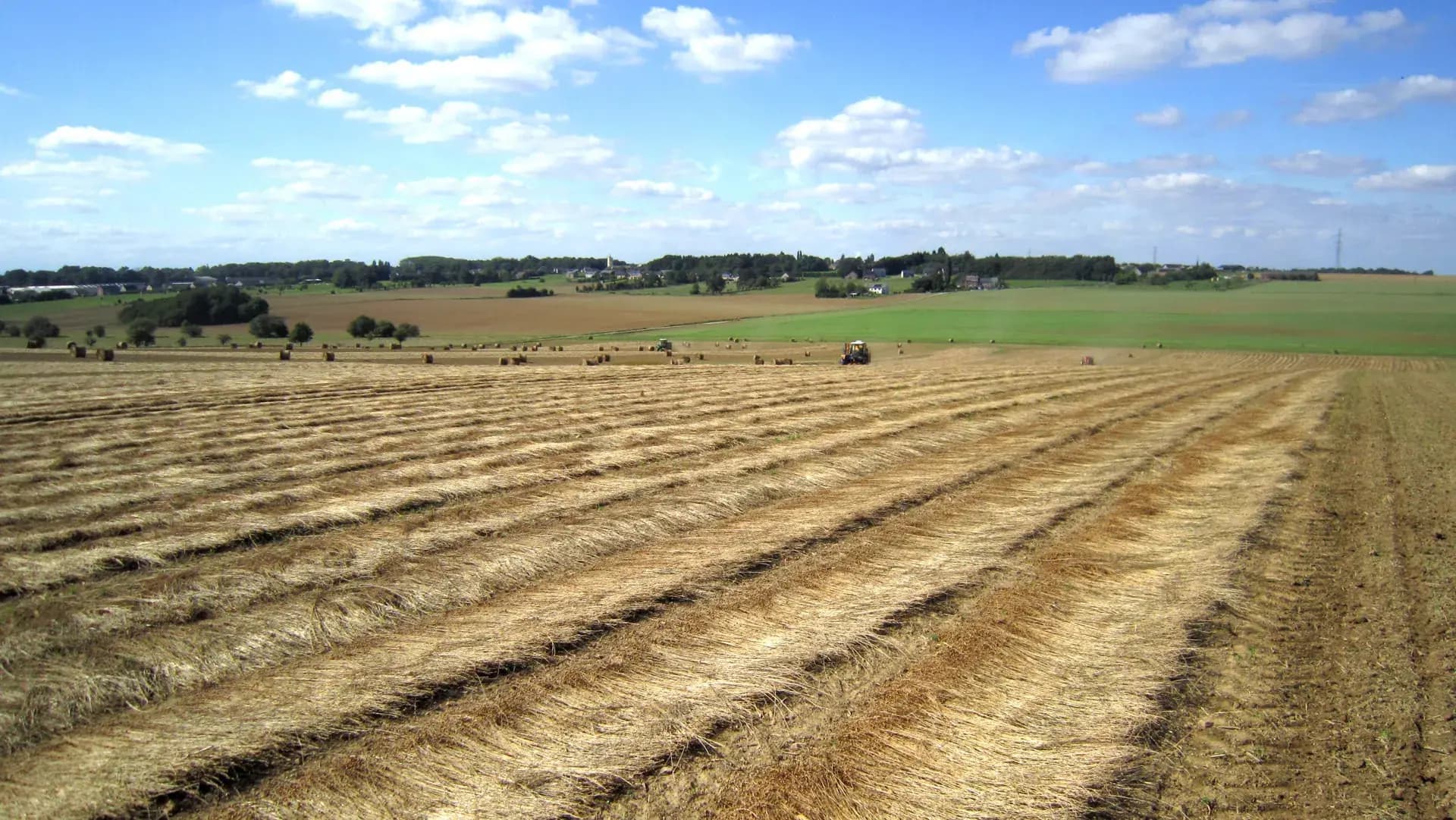
An even swath is not a matter of appearance. It is the condition for even retting.
The structure and length of the fibre, for which the flax mill pays, depend on retting. The GX220 is the first link in the season — the quality it sets in the field carries through to turning, baling and the whole value chain.
Power — DEUTZ TCD 6.1/L6 TIER 5
Operating weight
Hydraulic 3-wheel drive
Working speed for pulling
Union GX220 — specyfikacja
Conversation with an engineer.
The most common questions we hear from farms and flax mills before buying a GX220.
We have collected the questions we most often hear from farms before purchase — and the answers from our engineers. Every answer is based on verified knowledge of the machine.
- manufacturer's materials
- dokumentacji technicznej
- questions asked by farms
Answers based on the experience of thousands of farms in Europe.
Flax fibre lies in the stem, along its entire length — from the root crown to the tip. The longer and more uniform the stems in the swath, the higher the market value of the raw material delivered to the flax mill. Pulling preserves the full length of the plants; cutting shortens them at the cutting point and leaves part of the fibre in the field. The GX220 works on the same principle on which Belgian and French flax processing has been built for over a hundred years — pulling with the root.
No. The GX220 is a flax pulling machine: the flax is pulled from the soil together with its root, so that the full stem length and fibre are preserved for later field retting. Industrial hemp is cut, not pulled, because the hemp stem has a completely different structure and a much thicker, woodier profile, so harvesting it requires cutting technology rather than pulling technology. In no configuration is the GX220 a hemp machine. RUTHENIA ALBA is developing hemp harvesting as a separate technical direction, based on cooperation between CRETES and UNION, with a mounted hemp harvester as the lead machine. Within the Union range, however, the GX240 tedder and the GX255 baler can work with both flax and hemp, because they handle an already formed swath, whether the stem was pulled or cut.
The current cab configuration includes a joystick armrest, a smartphone holder with a dedicated information screen, and an automatic battery switch. Optionally available are a mechanical cab suspension and preparation for the SolSteer hydraulic GPS. The full equipment specification is in the current Union GX220 catalogue, available to download on this site.
Yes. As a UNION partner, RUTHENIA ALBA runs a spare parts warehouse in Poland for the GX220, covering belts, pulling wheel pulleys, hydraulics, DEUTZ engine parts, tyres and tungsten carbide scrapers. Commissioning service, warranty and post-warranty support are carried out in the field. The flax pulling field window is short (typically 2–3 weeks), so we keep a local parts stock to avoid losing the season to transport from Belgium.
Your field has its own pulling date, its own flax and its own retting logistics. Let's match the Union GX220 to them.
Let's work out the right configurationPulled and in the swath — now the swath has to lie down evenly.
Turning swaths — GX240 →Before you pull — fibre length is decided by the variety, years in advance.
Flax variety — Van de Bilt →The whole journey of a single stalk — from the field to the fibre.
From field to fibre →