Güstrower GTU — harvest logistics, grain cart and combine
Güstrower · Grain cart

Güstrower GTU — grain cart for harvest, seeding and fertilising

A combine costs the most when it stands still.

The same combine, the same acreage — yet harvest can run three days longer. The difference is not in the machine. It is in the rhythm.

Where does that rhythm break?

We most often look at the combine, the seed drill and the spreader.

But the operation does not slow where the machine works — it slows where the machine waits.

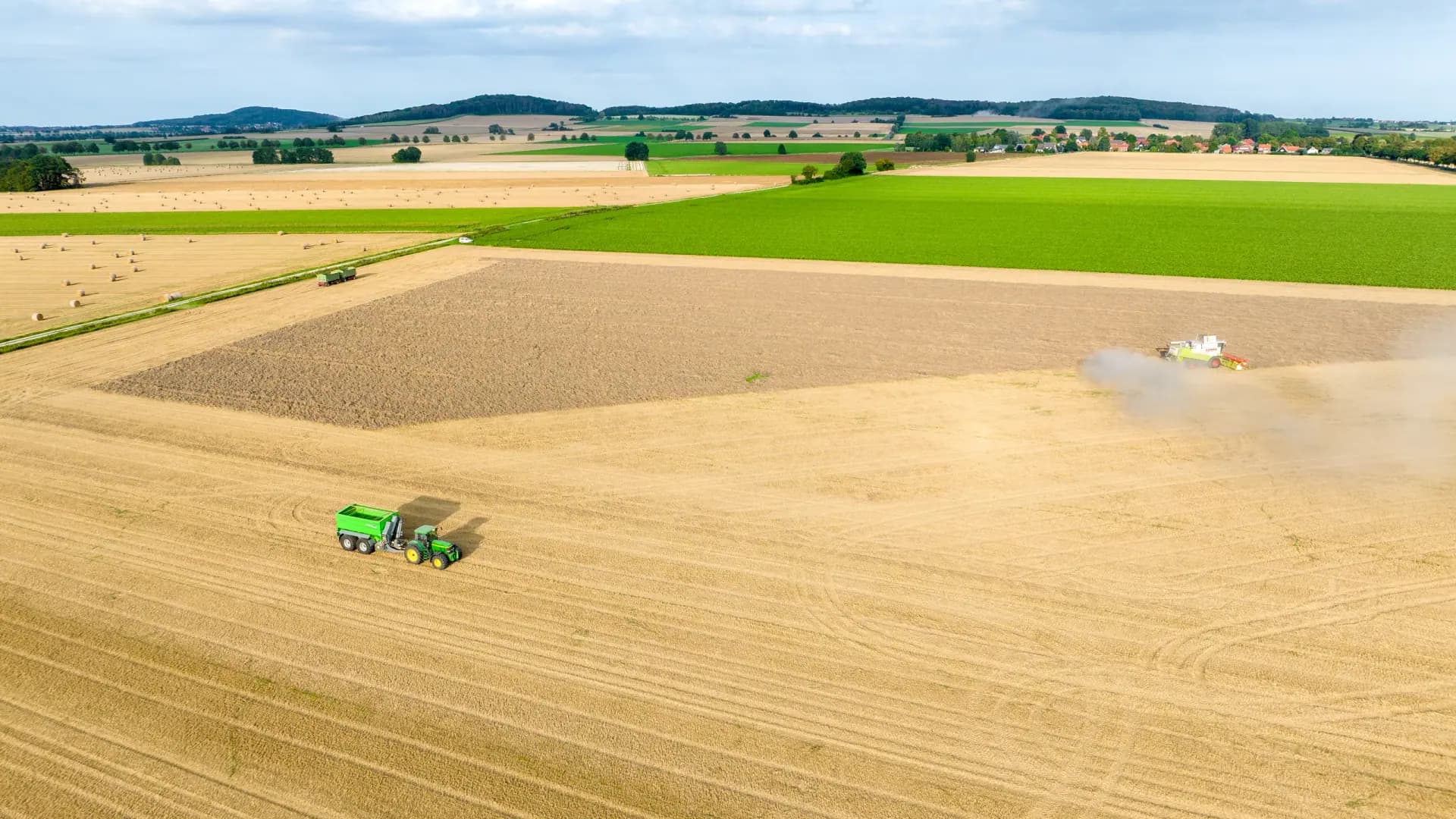
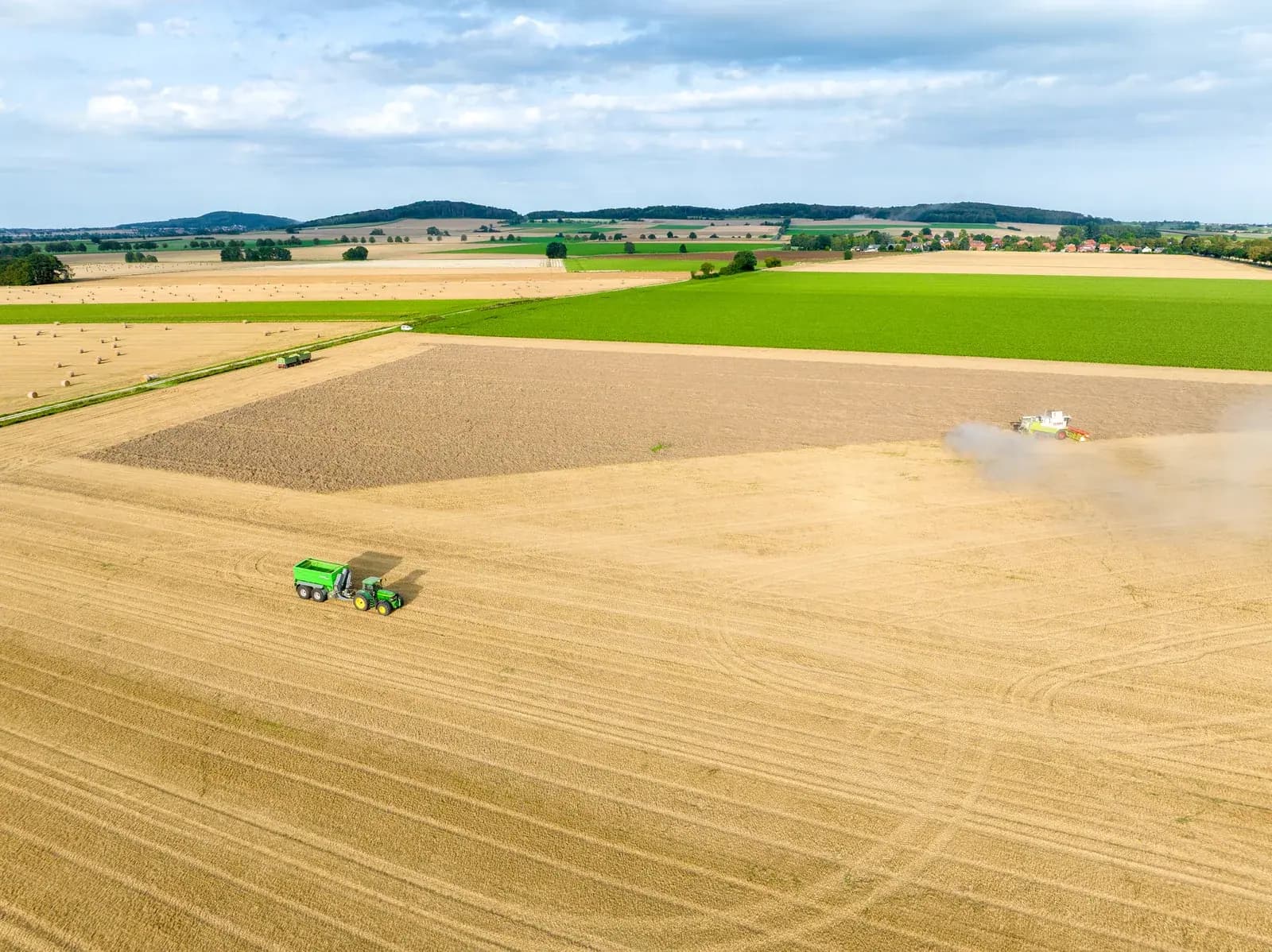
Güstrower GTU — harvest from above, grain cart alongside the combineHarvest · window measured in days

Output is not a feature of a single machine.

It is a feature of the slowest link in the chain.

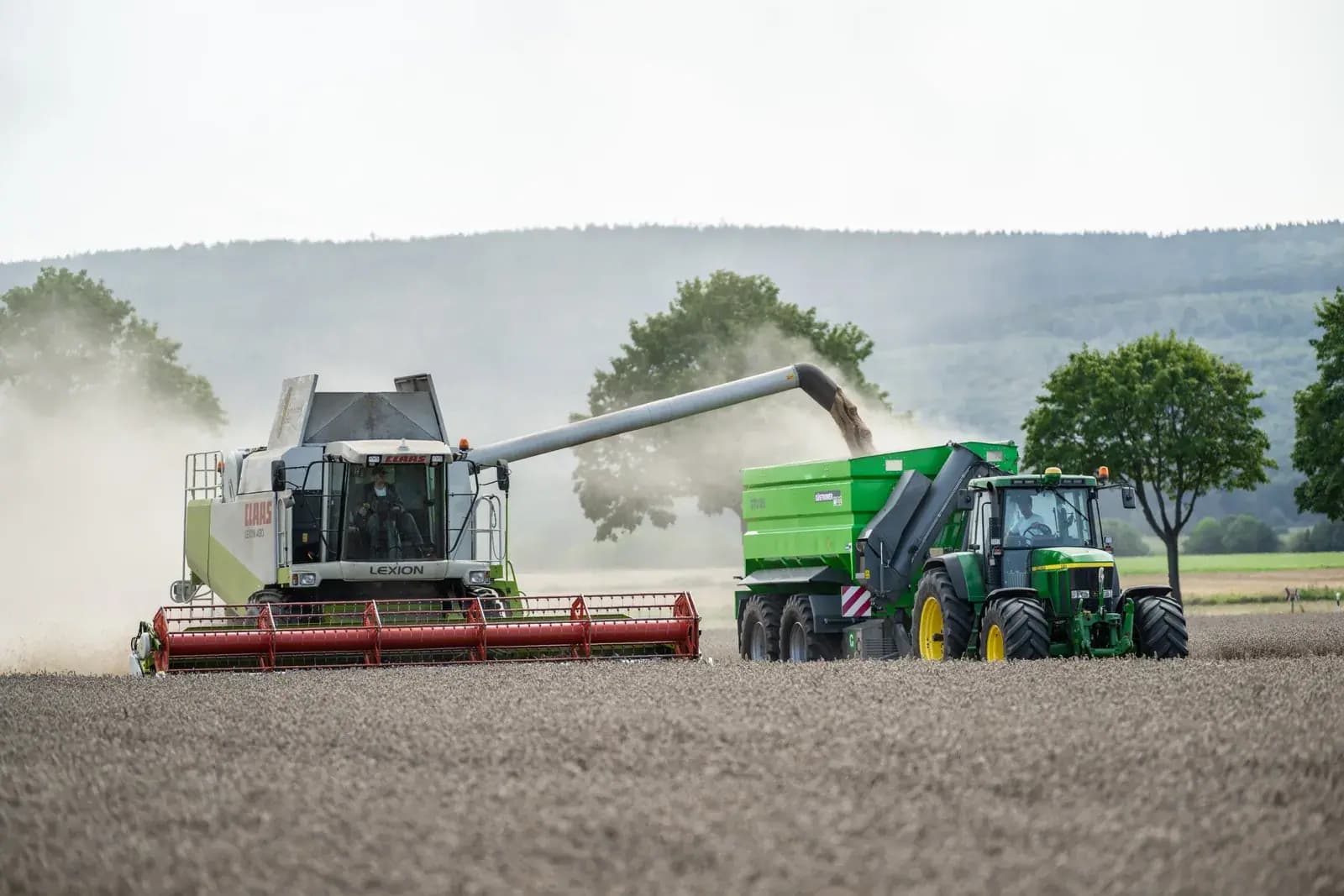
Güstrower GTU — combine transfers grain to the cart on the move
Rhythm 1 · Harvest

The combine's tank fills every dozen or so minutes. Without a cart, the combine stops or drives to the field edge.

On-the-go transfer — up to 15 m³/min — keeps the combine in continuous motion. Harvest does not stop for transferring.

Rhythm 2 · Distance

When the field lies far from the store, a combine waiting for lorries loses hours of the window.

GTU separates two rhythms: the combine harvests without pause, the cart buffers grain and carries it to the field edge, and the lorry hauls along the road.

Rhythm 3 · Soil

A heavy lorry on a wet stubble field compacts the soil for whole seasons.

GTU collects grain in the field, while the lorry stays on the hardened road. Less soil compaction, fewer heavy-transport passes into the cultivated land.

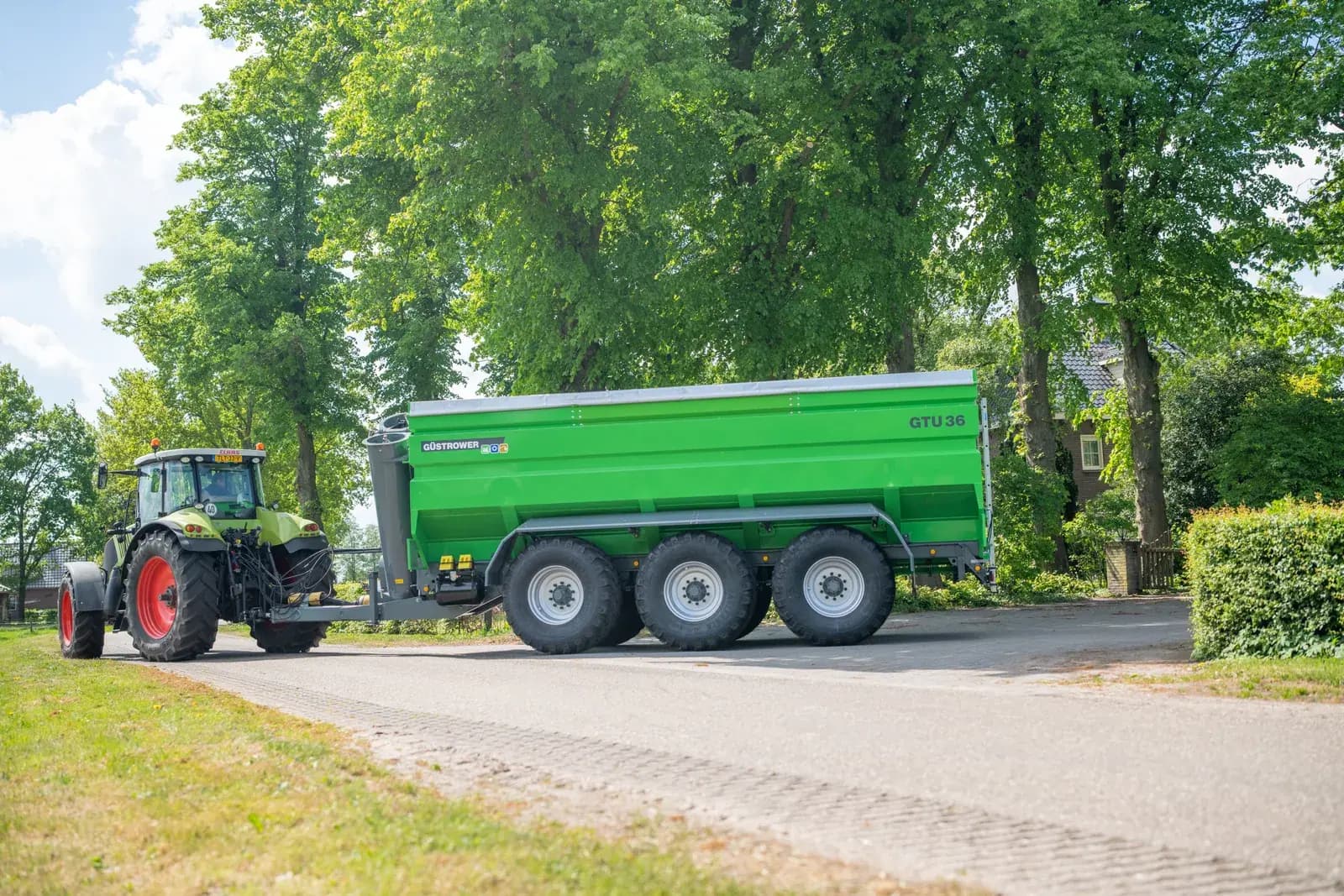
Güstrower GTU — grain cart in transport on the road
Heavy transport stays on the road — not in the field
Rhythm 4 · Seeding and fertilising

The rhythm breaks not only at harvest.

An empty seed drill or spreader that drives back to base for material also stands still.

Divided compartments with independent unloading allow seed and fertiliser to be brought to the field and machines refilled in sequence — without returns to base.

Combine harvesterGTU · bufferRoad transport
When transfer can't keep up — the combine waits, and the transport is too far away.
Rhythm 5 · Bottleneck

If transfer slows, the whole operation slows.

That is why this link must keep up and be manoeuvrable at the headlands:

Capacity
28–40 m³ (up to 43 m³ with extension)
Transfer
do 15 m³/min
Discharge
do 4,7 m
Podwozie
steering axle — GTU 25 and 36

It is not the combine that sets the pace. Transfer does.

Five places where the rhythm breaks. One link.

  1. 01Harvest
  2. 02Distance
  3. 03Gleba
  4. 04Sowing and fertilising
  5. 05Bottleneck

The GTU does not carry grain. It protects the work rhythm of the whole operation.

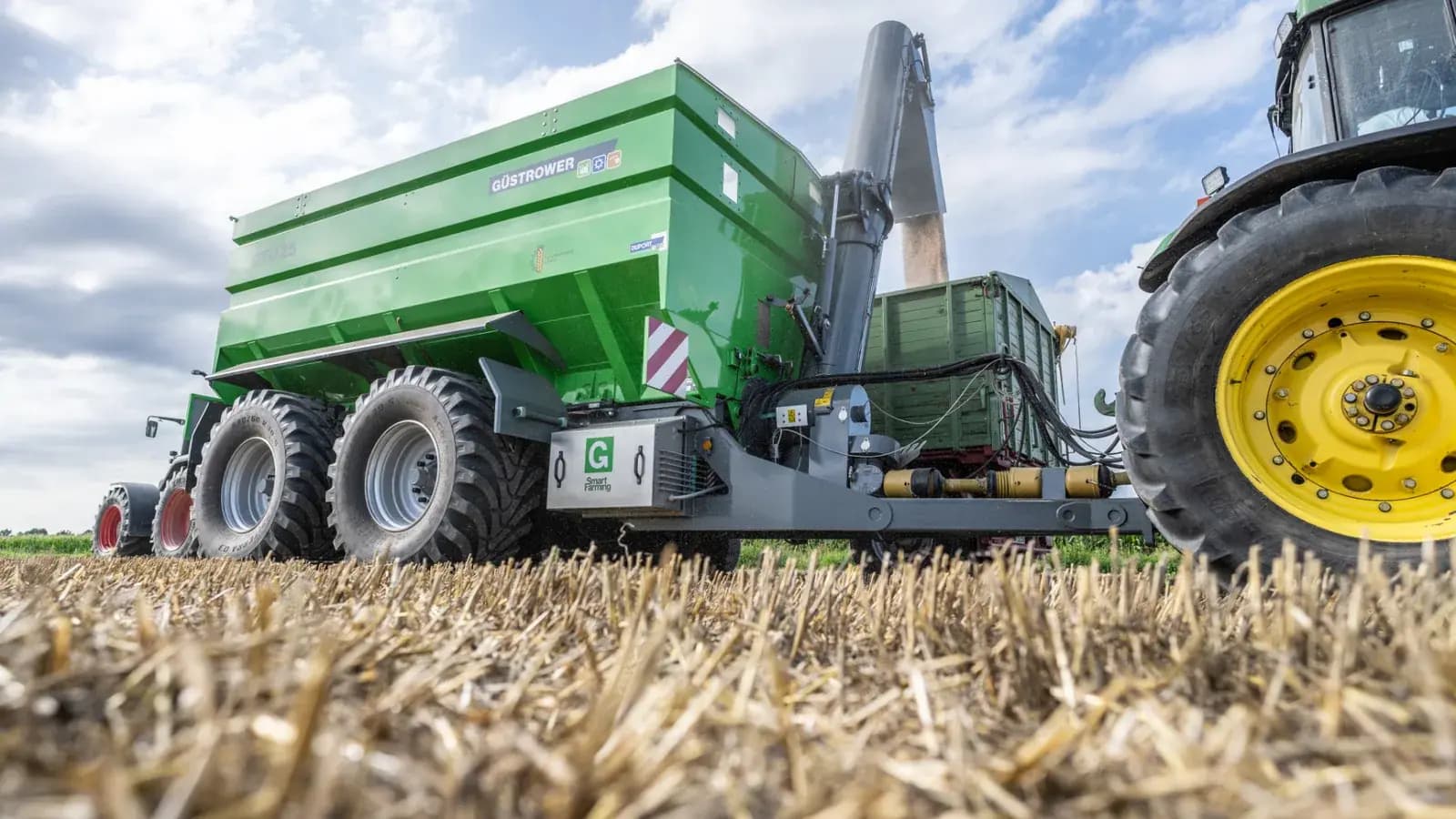
Güstrower GTU — transfer wagon at work

The link that keeps this rhythm looks like this.

Güstrower GTU

Its design is the answer to what you have just seen:

Harvest
unloading up to 15 m³/min
Distance
buffer between field and road
Gleba
grain collection in the field
Siew
podzielone komory
Tempo
28–40 m³ · steering axle
Technical data

Two machines, two different roles

The GTU 25 and GTU 36 are not the same grain cart in two sizes. They differ in running gear, transfer capacity, payload and the list of available options. Below, each parameter is listed separately for both models.

Tandem · 2 osie

Güstrower GTU 25

One combine that should not stand idle — and a wagon that carries seed and fertiliser after harvest.

GTU 25 is a tandem layout: two axles on parabolic springs, the second axle steering and hydraulically locked. The 25 m³ tank (28 m³ with extension) and unloading up to 12 m³/min are enough to keep one combine running on a medium-sized area. A road load of 14.5 t means the machine returns from the field to the farm without splitting the load. The tank can be ordered with compartments and separate unloading — then one trip serves two materials during sowing and fertilising.

25m³
Capacity (28 m³ with extension)
12m³/min
Transfer capacity
180KM
Recommended tractor power, from

Capacity and output

Hopper capacity
25 m³
Capacity with extension
28 m³
Transfer capacity
do 12 m³/min
Emptying of residues along the full length
tak
Compartments in the tank
opcja

Separate unloading of each compartment — two materials in one trip.

Weights and payload

Unladen weight
7 840–8 400 kg

Depending on tyres and equipment; additional equipment increases tare weight and reduces payload.

Payload on public roads
14,5 t
Technical payload in the field
18,6 t (22,4 t przy 28 m³)

Technical payload calculated at a speed of 10 km/h.

Dimensions

Overall length
8 200 mm
Tank length
5 206 mm
Tank width
2 500 mm
Overall width
2 880 mm

With 650/65 R30.5 tyres. Wider tyres increase overall width — see tyre table.

Wheel track
2 225 mm
Side wall height
3 500 mm
Filling height
3 700 mm

Without weighing cell. With weighing system the machine is 20 mm higher.

Transport height
3 700 mm
Unloading height
do 4,8 m

Unloading and drive

Vertical transfer auger
Ø 450 mm
Horizontal (floor) auger
Ø 350 mm
Auger drive
PTO 540 or 1000 rpm
Recommended tractor power, from
132 kW / 180 KM

Chassis, brakes, hitch

Number of axles
2 (tandem)
Suspension
paraboliczne
Steering axles
2nd axle
Standard tyres
650/65 R30.5
Hitch
dolny, kula K80
Hydraulic drawbar suspension
opcja
Brakes
two-line pneumatic + parking brake

Standard equipment

GTU 25

  • 25 m³ tank — auger design for bulk materials: grain, maize and granulated mineral fertiliser
  • Tank filling height 3.70 m (without weighing cell)
  • Discharge height of the angled, folding unloading auger — 4.85 m
  • Auger drive via intermediate gearbox with overload friction clutch, PTO 540 or 1000 rpm
  • Unloading capacity up to 12 m³/min, stepless
  • Oscillating axle unit with parabolic springs
  • Rear steering axle, hydraulically locked
  • Two-line pneumatic brake system
  • Drawbar designed as a bottom hitch
  • Entry ladder and fill-level sight glass
  • Residue emptying by flap along the full length of the tank, manually operated
  • Zaczep kulowy K80
  • Walterscheid PTO shaft with freewheel and overload protection
  • Unloading of fertiliser and seed material possible at an economical 540 rpm
  • LED lighting
  • Roll tarpaulin with spring mechanism
  • Opony 650/65 R30.5
  • DEKRA inspection
GTU 25 — weights and payloads by fitted tyres(overall width 2.88–2.99 m)
TyresUnladen weightWidthHeightField 25 km/hRoad 25 km/hRoad 40 km/h
650/60-30,57 840 kg2,88 m3,72 m18,6 t14,5 t14,5 t
650/65 R30,5in the range7 840 kg2,92 m3,72 m18,6 t14,5 t14,5 t
680/60 R30,57 860 kg2,99 m3,72 m18,6 t14,5 t14,5 t
750/60-30,5in the range7 900 kg2,99 m3,72 m18,6 t14,5 t14,5 t

The current factory range still includes the 650/65 R30.5 and 750/60 R30.5 sizes (from four brands — Alliance, BKT, Ceat, Michelin); the other rows are given for machines already in operation. Optional equipment increases the kerb weight and reduces payload. Payload on public roads depends on approvals and the tyre pressure of each machine. Data according to the manufacturer's documentation — the manufacturer reserves the right to make technical changes.

The range also includes the smaller GTU 21 — technical data available on request.

GTU close up
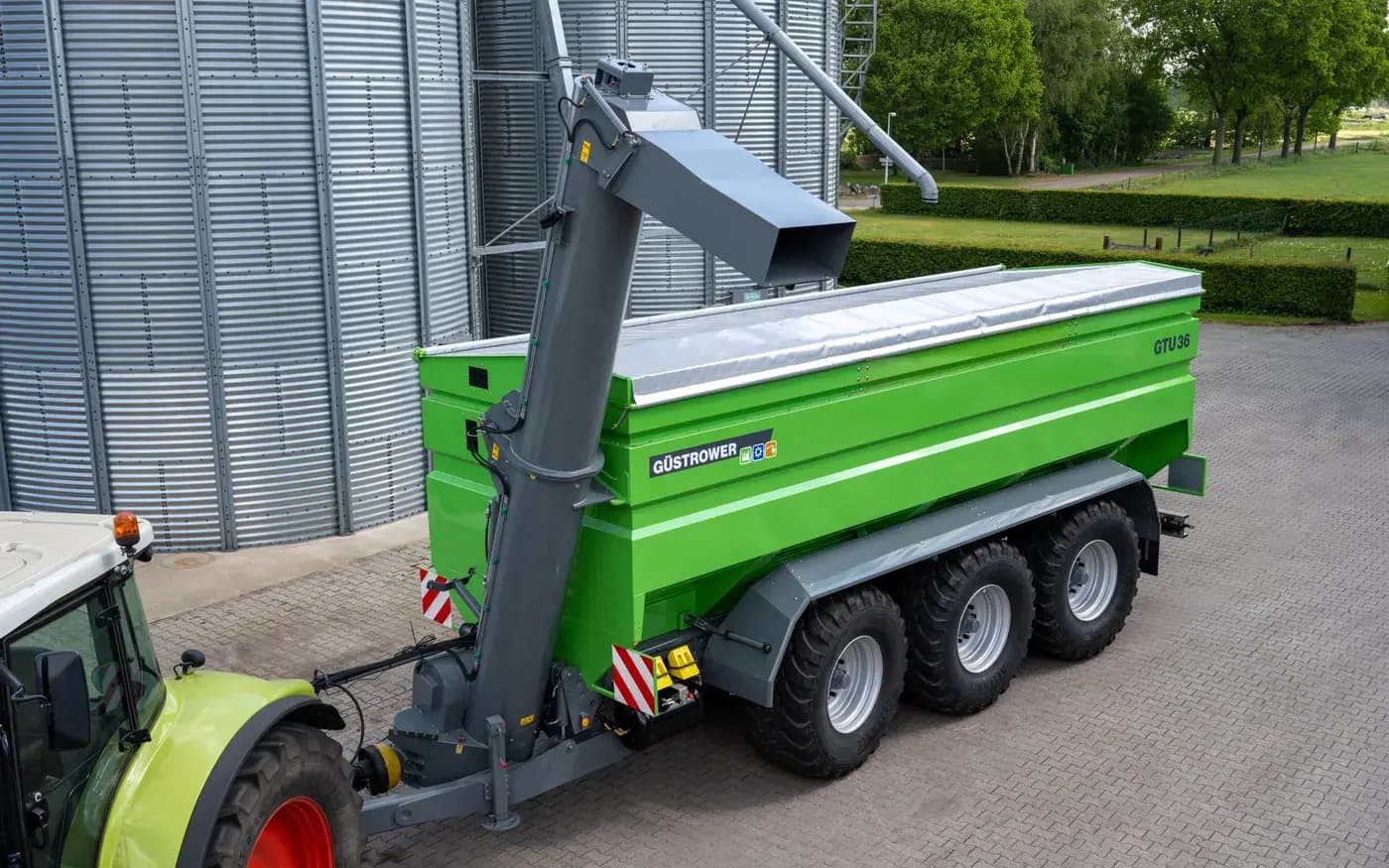
Güstrower GTU — Auger unloading — from field to trailer or silo
Auger unloading — from field to trailer or silo
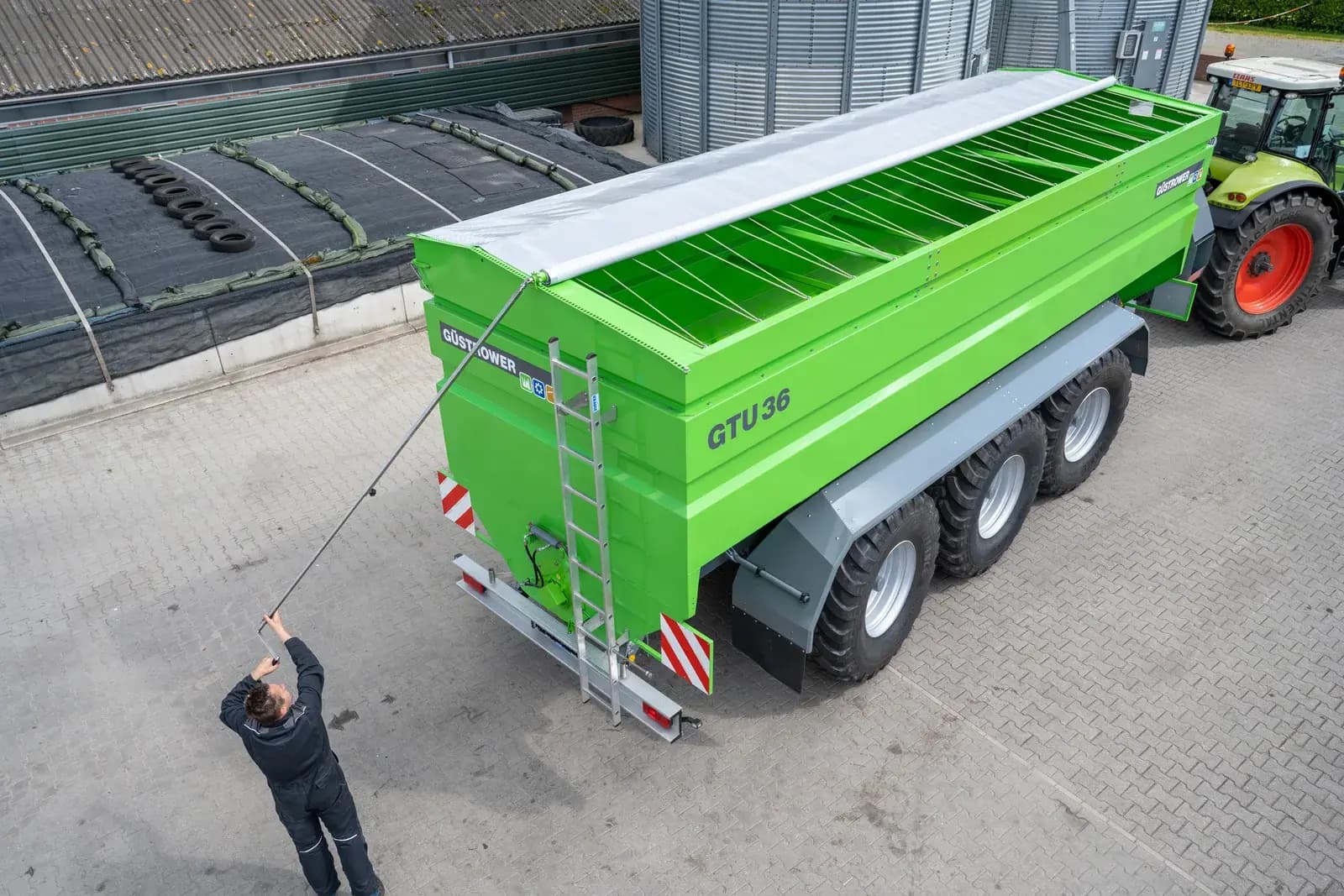
Güstrower GTU — Tarpaulin and operation — logistics between field and store
Tarpaulin and operation — logistics between field and store
Configurator

Assemble your GTU

The same questions and the same answers as in the Güstrower factory configurator — only in Polish and without logging in. We transfer the finished list straight into the order. Questions that do not apply to the chosen model do not appear at all.

Model

One combine that should not stand idle — and a wagon that carries seed and fertiliser after harvest.

General

General characteristics
Technical inspection

Road approval in the machine's country of registration. Does not affect the machine price.

1 / 10
Güstrower GTU 25 — grain cart

Tandem · 2 osie

Güstrower GTU 25

Quotation

Individual — on request

25m³
Capacity (28 m³ with extension)
12m³/min
Transfer capacity
180KM
Recommended tractor power, from

Your configuration

Güstrower GTU 25

Technical inspection
No inspection
Drawbar support
Mechanical
Hitch type
Ball K80
Axle steering
Castor axles (self-steering)
Wheels and tyres — tandem axle
Alliance 650/65 R30.5
Mudguards
With mudguards
Extension — increased capacity
Without extension
Compartments in the tank
No compartments
Cover system
Roll-up tarpaulin, manual
Grain chute
Without chute
Flexible spout
Without flexible spout
ISOBUS operation
Without ISOBUS operation
Weighing system
No weighing system
Moisture sensor
No moisture sensor
Camera type
Without camera
Number of cameras
Camera at the outlet
Work light on the auger tube
No work light
Warning lamp
No warning lamp
Cleaning kit
No cleaning kit

Pricing is always individual — it depends on the model, equipment and delivery time. Ask us, and we will prepare an offer and check subsidy options.

Before you decide

Conversation with an engineer.

The most frequent questions we hear from farms before buying a GTU.

We have collected the questions we most often hear from farms before purchase — and the answers from our engineers. Every answer is based on verified knowledge of the machine.

Based on
  • manufacturer's materials
  • dokumentacji technicznej
  • questions asked by farms

Answers based on the experience of thousands of farms in Europe.

An engineer answers

The GTU 25 and GTU 36 — these two are described in detail. The factory configurator also offers the smaller GTU 21; technical data available on request. (There is no GTU 32 in the range.)

An engineer answers

GTU 36 with extension up to 43 m³, GTU 25 up to 28 m³. The extension is a single step — the factory does not offer intermediate capacities.

An engineer answers

The horizontal auger feeds material to the vertical discharge auger, driven by the PTO, which folds hydraulically.

An engineer answers

Up to 15 m³/min.

An engineer answers

Do 4,7 m.

An engineer answers

Yes, on the GTU 25 and GTU 36.

An engineer answers

650/65-30.5.

An engineer answers

Yes, as an option.

An engineer answers

GTU 25: 22 t; GTU 36: 33 t (road load capacity depends on approvals and tyre pressure).

An engineer answers

A transfer cart that receives grain from the combine on the move and passes it on for transport, keeping the combine working and protecting the soil from lorries.

An engineer answers

Yes, compartments in the tank are an option on both models, the GTU 25 and GTU 36, and each compartment can be ordered with a separate unloading system. This allows two materials to be carried in one trip: two seed varieties, or seed and fertiliser.

An engineer answers

GMB Güstrower Maschinenbau (Duport group), Dedemsvaart (Netherlands).

An engineer answers

Hawe (ULW 16–25 m³), Bergmann (GTW 430 ≈ 38.5 m³), Annaburger (HTS), Perard (Interbenne 27/38/46 m³), Horsch (Titan UW 34 m³).

Have another question?Talk to an engineer

Your harvest and sowing have their own rhythm. Let’s match a GTU to it.

And in spring, when it needs to be spread evenly?

GDK path — precision spreading →

Want to see the manufacturer’s whole logic?

Güstrower — two working modes in the field →