Güstrower GDK — lime spreader in the field
Güstrower · Rozsiewacz

Lime and fertiliser spreader — Güstrower GDK

Two fields. The same rate. The same day.

After a month one looks even. The other shows tracks.

Why?

Most often it starts with a question about the spreader.

But on the farms we know, the answer almost always started earlier — before anyone started the PTO.

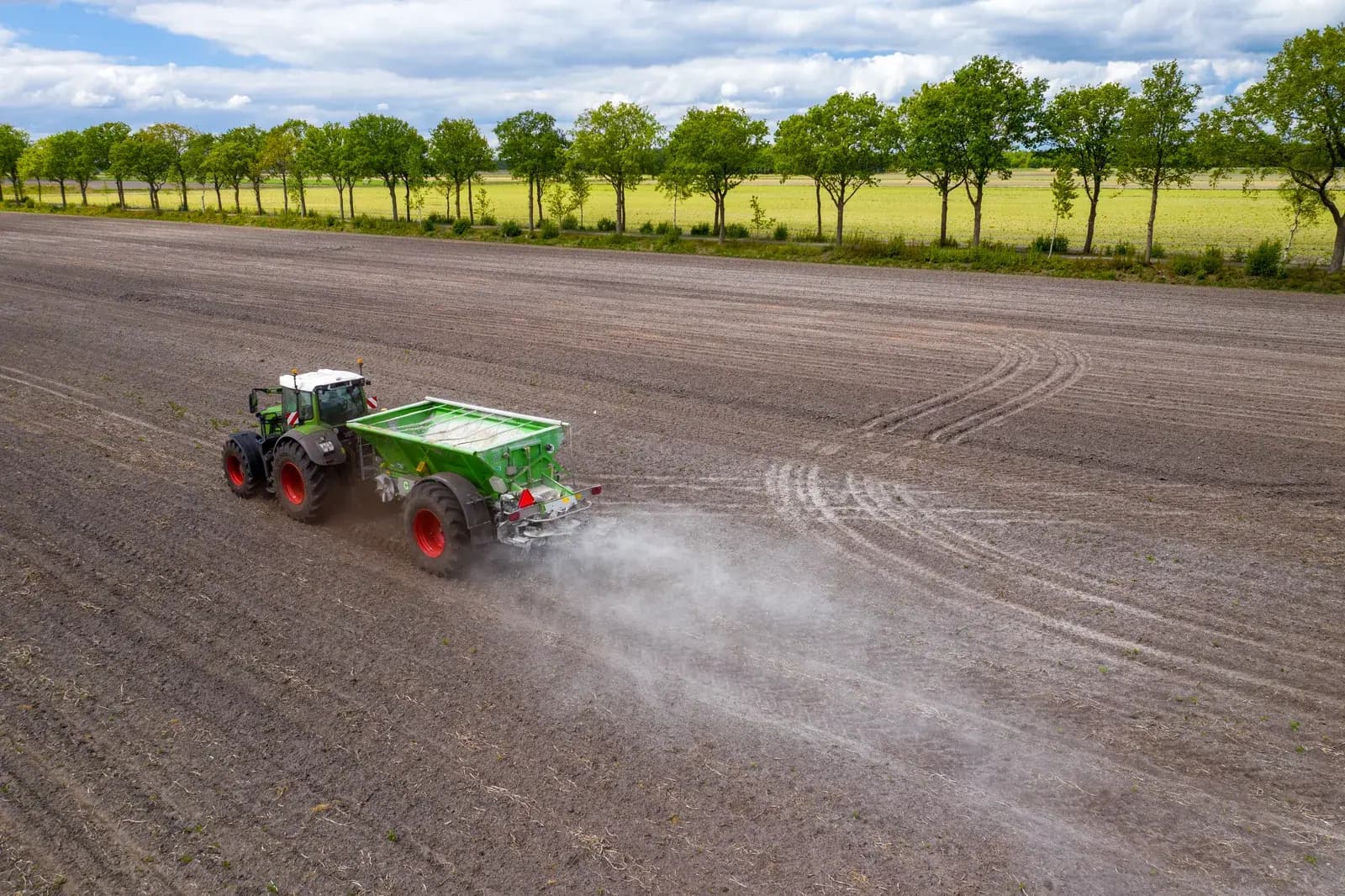
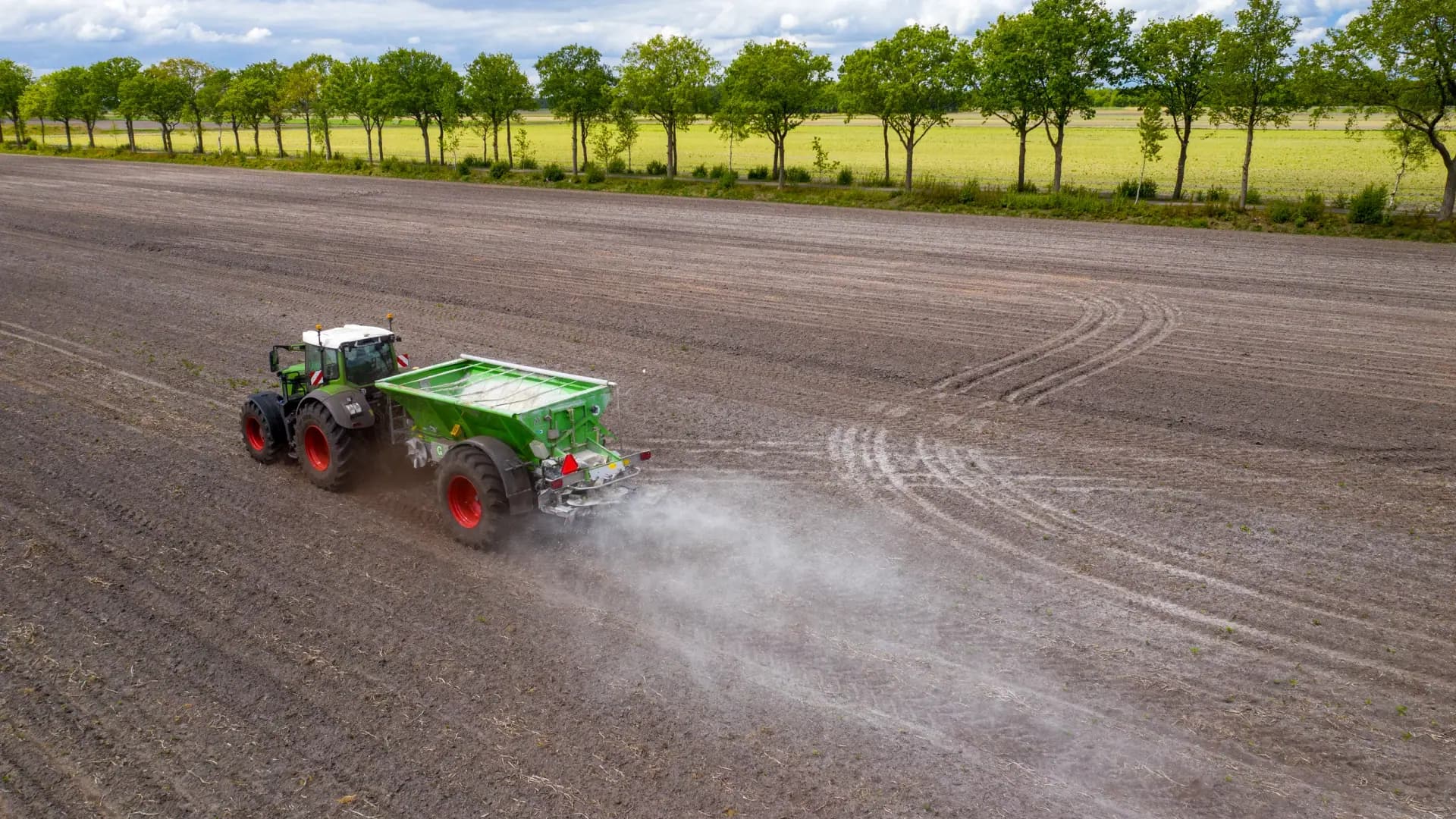
Güstrower GDK — spreader in the field in spring, aerial viewSpring · window: three days without rain

Even fertilising does not start with the spreader.

It starts with five decisions made in a single day.

Decision 1 · Timing

Forecast: three days without rain, then a front. Winter crops are starting growth — nitrogen needs to go on now.

A week's delay means yield loss. Driving into mud means ruts.

From experience: the costliest spring mistake happens over breakfast — in the arithmetic, not in the spreading.

Decision 2 · Logistics

capacity × width = how many ha per pass and how many trips to refill.

A narrow machine with a small hopper means dozens of runs — one operator cannot keep up within the window.

At larger scale, on-the-move transfer saves time — the GTU cart (up to 40 m³, unloading up to 15 m³/min).

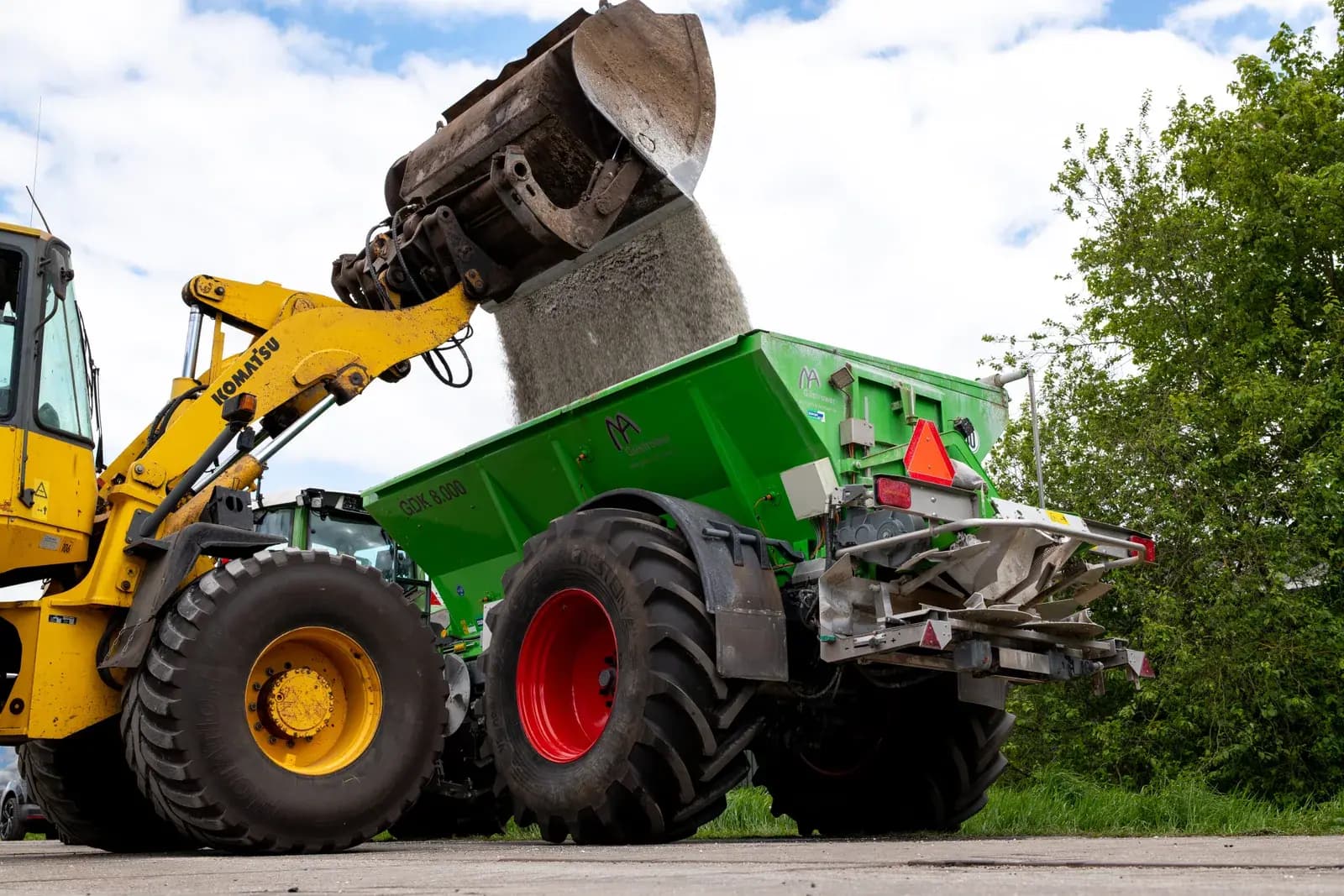
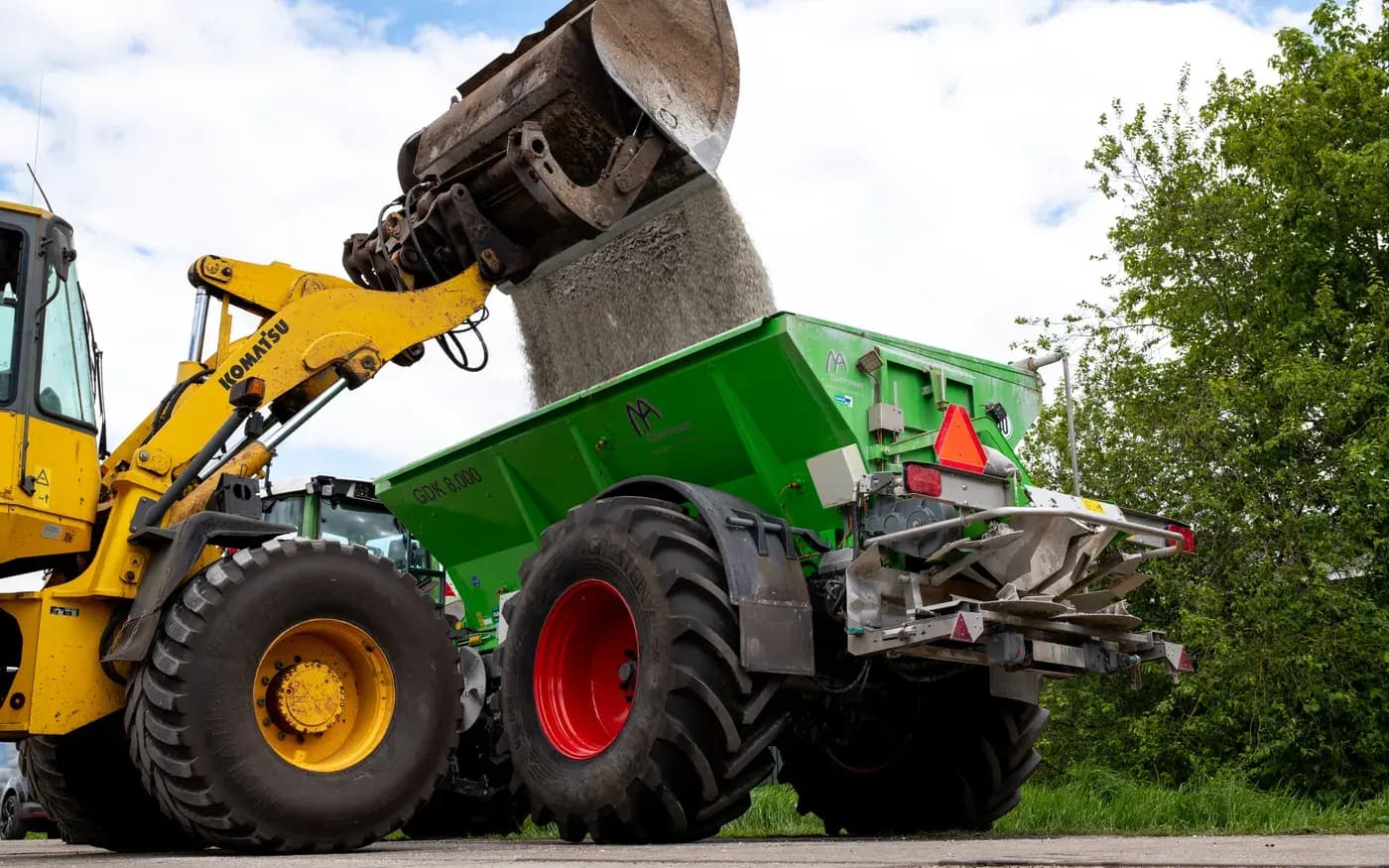
Güstrower GDK — filling the hopper with lime using a loader
Filling the hopper — every stop costs minutes from the window

GDK: working width up to 42 m · capacity up to 16 m³ — fewer trips, more ha per window

Güstrower GDK — passes converge at the field boundary
Spreader tracks converge at field boundaries — this is where overlaps and gaps occur
Straight — even rateOverlap — double rateGap — under-application
Decision 3 · Field shape

You already have capacity and width. But a field is not a rectangle.

Losses don't arise on straight runs. They arise on wedges and headlands — where tramlines converge.

Rate doubles in overlaps and drops to zero in gaps: over-application and under-application in the same field.

From experience: an irregular field costs more every year — at the same corners. The answer: Section Control and variable rate (VRA).

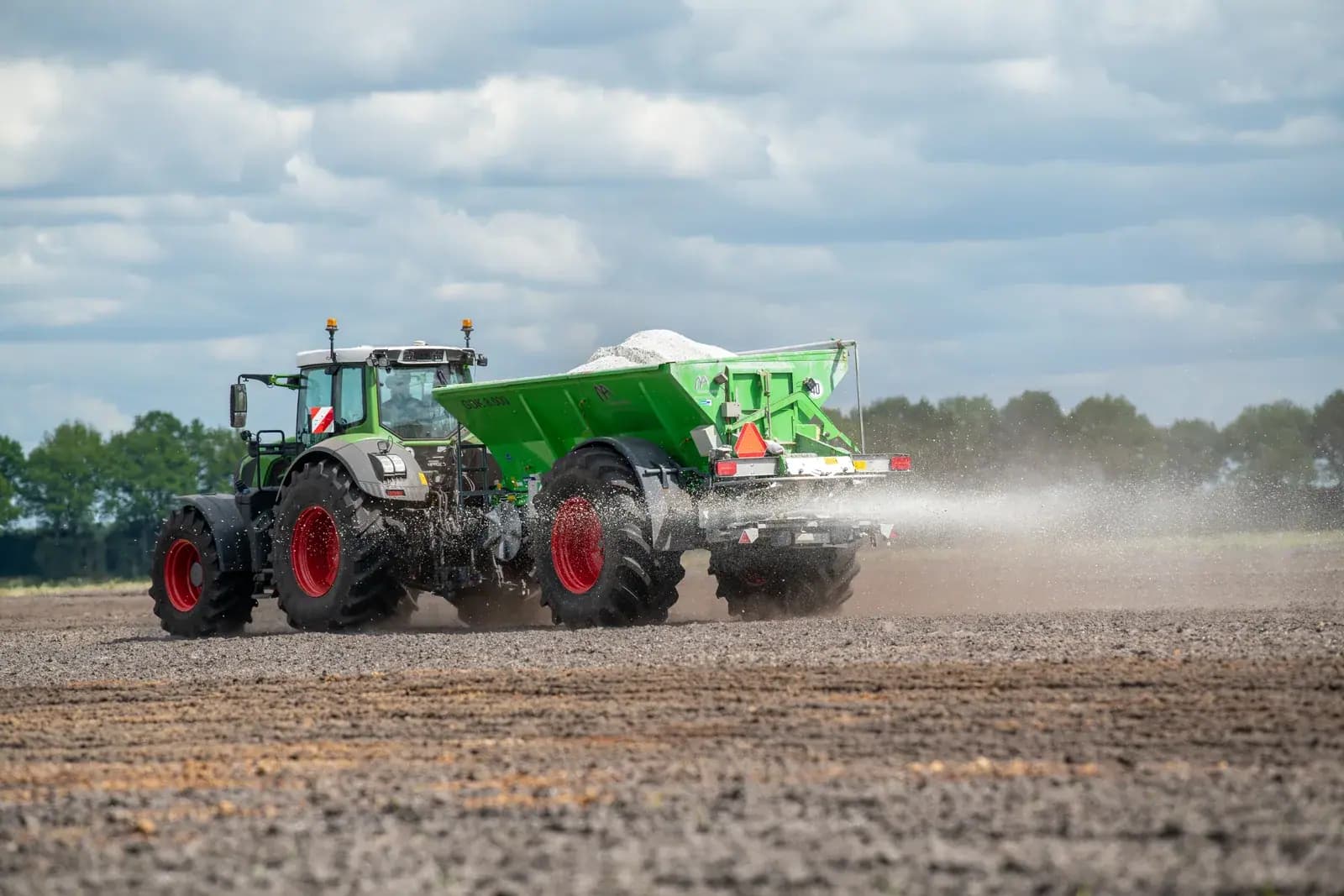
Güstrower GDK — spreading on the move, a fan of material behind the discs
Decision 4 · Wind

In the afternoon the wind picks up. And now 42 m becomes a test.

What matters most in spreading never touches the soil — it happens in the air, between disc and ground. If disc speeds “wander”, the error spans the full 42 m.

Decision 5 · Material

Wind was not the last variable. One more remains — in the hopper itself.

Lime that fell yesterday becomes sticky and bridges over the floor with the belt — lumps, uneven discharge, downtime.

For damp lime, evenness is decided by the floor, not the discs. The chain conveyor with scrapers moves the material “positively” and cleans the floor.

Five decisions. One field.

  1. 01When to drive in
  2. 02How to load
  3. 03How on slopes
  4. 04Co z wiatrem
  5. 05What material

Evenness is not a feature of the spreader. It is the sum of these five decisions.

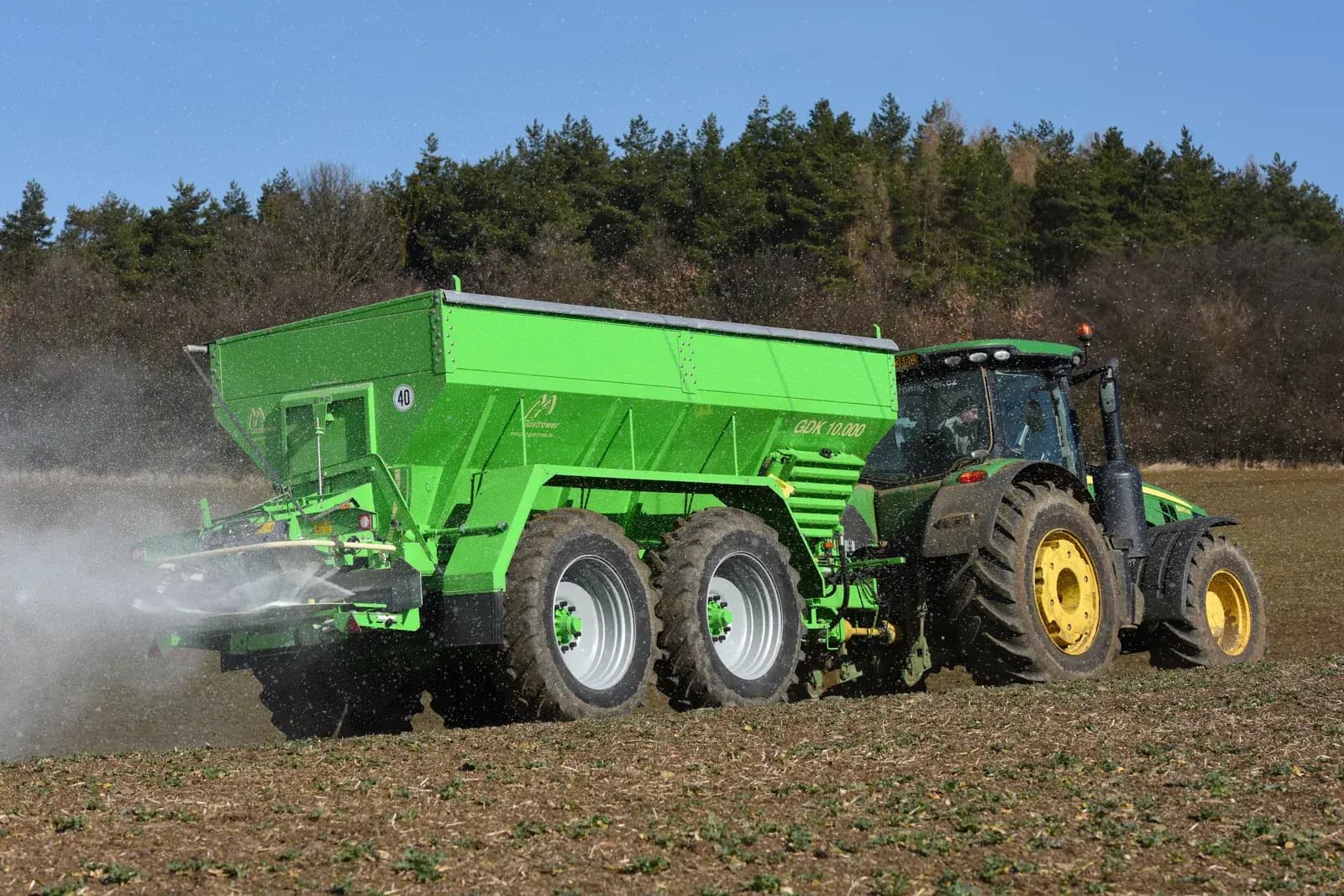
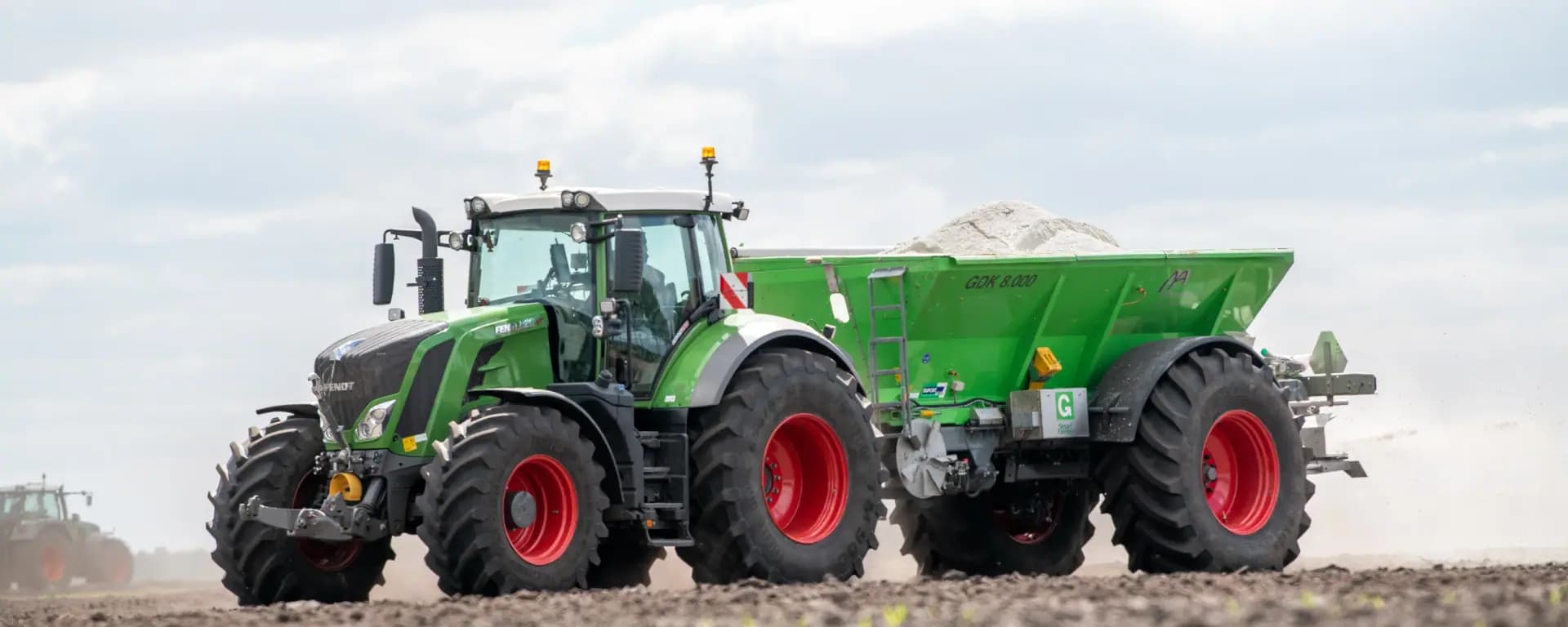
Güstrower GDK — fertiliser and lime spreader in the field

A machine that does not undermine these five decisions looks like this.

Güstrower GDK

Its design is the answer to what you have just seen:

Czas
42 m / 16 m³
Shape
Section Control + VRA
Wiatr
constant disc drive hydraulics + limit work
Material
chain conveyor
Technical data

Four machines, two design thresholds

GDK 6000 and 8000 are single-axle chassis with 12 t permissible gross mass. GDK 9000 and 10000 are tandem with 22.4 t — and that is a real step up, not just another tank size. Each parameter for all four is listed separately below.

Tandem ADR · 22,4 t

Güstrower GDK 9000

A step up in class: tandem axle and 22.4 t — this is where liming of large areas and contract work begins.

The first model on a tandem chassis (bogie axle, steered, sprung, ADR, track width 2.225 m) and a permissible gross mass of 22.4 t. Road payload rises from 8 to 15.7 t — almost double, while capacity rises from 8 to 9 m³. This means the GDK 9000 is bought for payload, not volume: with lime and compost, where mass is the limit, it makes a real difference. With extensions 12.5 or 14.5 m³.

14,5m³
Capacity with 450 mm extension
15,7t
Payload on the road
110kW
Tractor power, from

Capacity

Hopper capacity
9 m³
With 300 mm extension
12,5 m³
With 450 mm extension
14,5 m³

The GDK 6000 is the only model without extensions — its capacity is fixed.

Weights and payload

Permissible gross mass
22 400 kg
Payload on public roads
15 700 kg
Technical payload
19 100 kg
Unladen weight
6 200–6 300 kg

Depends on tyres and specification. Optional equipment increases kerb weight and reduces payload.

Dimensions

Overall length
8,05 m
Hopper (length × width)
5,36 × 2,28 m
Disc throw height
0,95–0,99 m

Depends on the fitted tyres.

Drawbar hitch adjustment
+70 mm

Hitch height = tyre radius + 0.22 m (single-axle models) or + 0.20 m / + 0.28 m (tandem GMB / ADR).

Chassis and tractor

Podwozie
tandem, bogie ADR axle

The tandem axle is steered and sprung.

Wheel track
2,225 m
Opony zalecane
650/65 R30,5
Recommended tractor power, from
110 kW / 150 KM
Permissible speed
25 km/h

Version for 40 km/h available as a factory option.

Standard equipment — common to all models

  • Simple drawbar for transport hitch, support with height adjustment
  • Two-line pneumatic brake system and parking brake
  • Rate independent of forward speed — electro-hydraulically controlled floor conveyor speed
  • ISOBUS control (AEF working computer): Section Control and VRA application maps
  • Preparation for DGPS and nitrogen sensor (N-Sensor)
  • LED lighting
  • Twin-disc spreading unit drive from tractor hydraulics (90 l/min)
  • Floor conveyor drive from tractor hydraulics (60 l/min), max. 200 bar, 10 µm filtration
  • Universal wing-disc set; working width up to 42 m with H unit
  • Rate from approx. 40 to 16,000 kg/ha, stepless
  • Regulating hydraulics equalising disc rotational speed
  • Mechanical left-side edge spreading, with Abweiser II deflector
  • Material divider — even spreading also on slopes
  • Measuring set for determining fertiliser density
  • Stainless steel guides and impact plate
  • DEKRA acceptance inspection 25 km/h

The earlier TJ 500 on-board computer from the 2022 price list has been discontinued — control is now exclusively via ISOBUS. The GDK-A variant (mounted on a self-propelled chassis or lorry) and the GDB 6000 belt spreader are available on request.

Configurator

Configure your GDK

The same questions and the same answers as the Güstrower factory configurator — in Polish and without logging in. We start with the type of machine, because that determines which models are in play.

Machine

GDK general features
Machine type

Trailed is a classic spreader on its own chassis. Truck-mounted is a unit fitted to a vehicle — a lorry or tool carrier.

Model
Model

Available after selecting: Machine type → “Truck-mounted”.

Technical inspection
1 / 9
Güstrower GDK — fertiliser and lime spreader

Güstrower

GDK 6000

Quotation

Individual — on request

Your configuration

Güstrower GDK 6000

Machine type
Trailed
Model
GDK 6000
Technical inspection
No inspection
Tractor hitch
Lower hitch
Type of towing eye
Ball K80
Drawbar support
Mechanical
Axle steering
No steered axle
Suspension
Unsprung axle
Wheel track
1,80 m
Brakes
Pneumatic, two-line
Tyre size
VF800/65 R32 ET-75
Tyre brand
Alliance
Mudguards
With mudguards
Tyre pressure regulation
No adjustment
Weighing system
Without weighing
Hopper extensions
Without extensions
Sieve grid 80 × 80 mm
Without grid
Cover system
Without cover
Outlet cover
Without guard
Width marking
Without marking
On-board hydraulics
Without own hydraulics
Oil cooler
Without oil cooler
Spreading unit
Spreading discs
Section Control
Without Section Control
Edge spreading
Without edge spreading
Crushing roller
Without crushing roller
Spread pattern test kit
Without kit
ISOBUS operation
Without ISOBUS operation
Camera type
Without camera
Marker lights
Without marker lights
Working lights
Without work lights

Pricing is always individual — it depends on the model, equipment and delivery time. Ask us, and we will prepare an offer and check subsidy options.
GDK up close
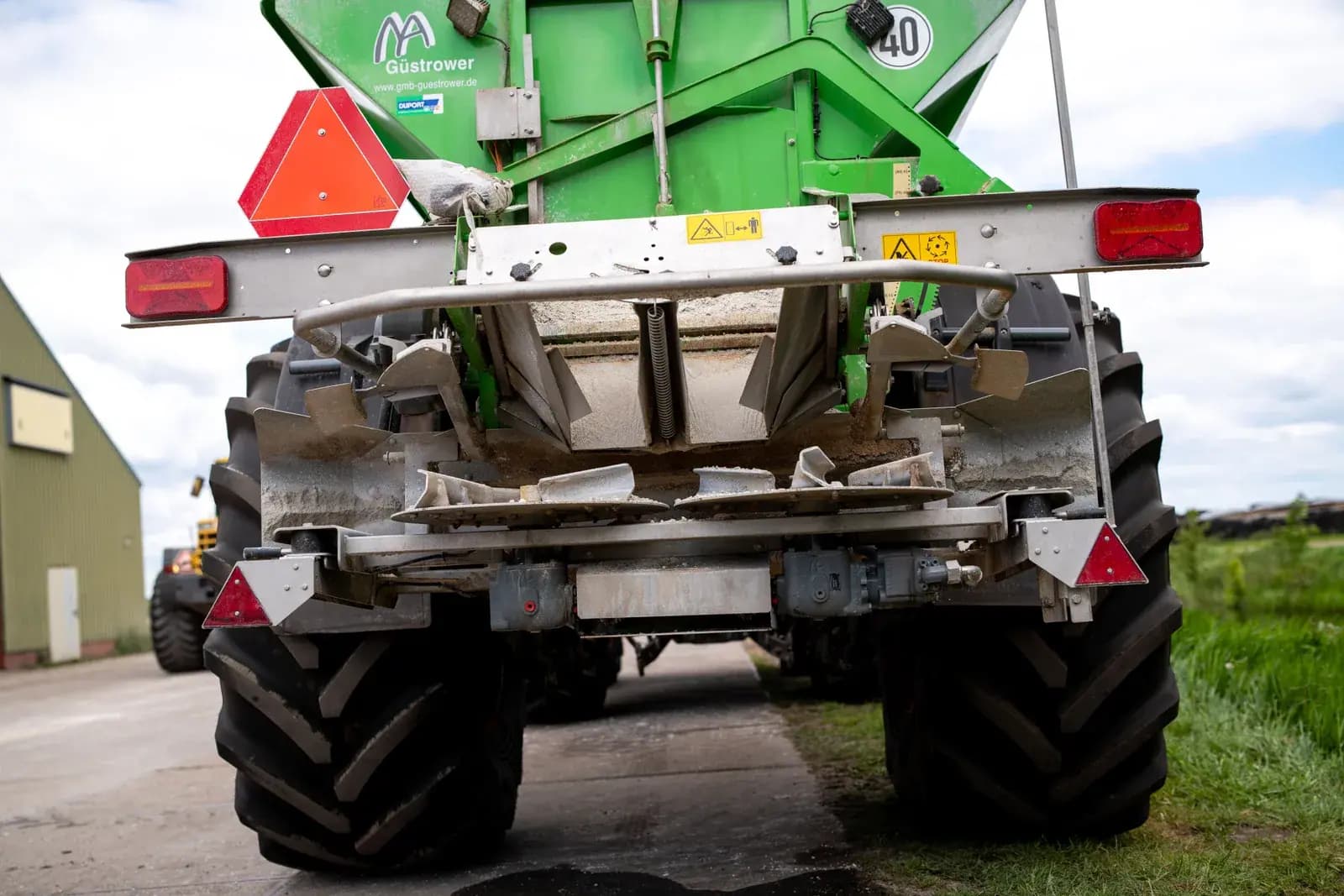
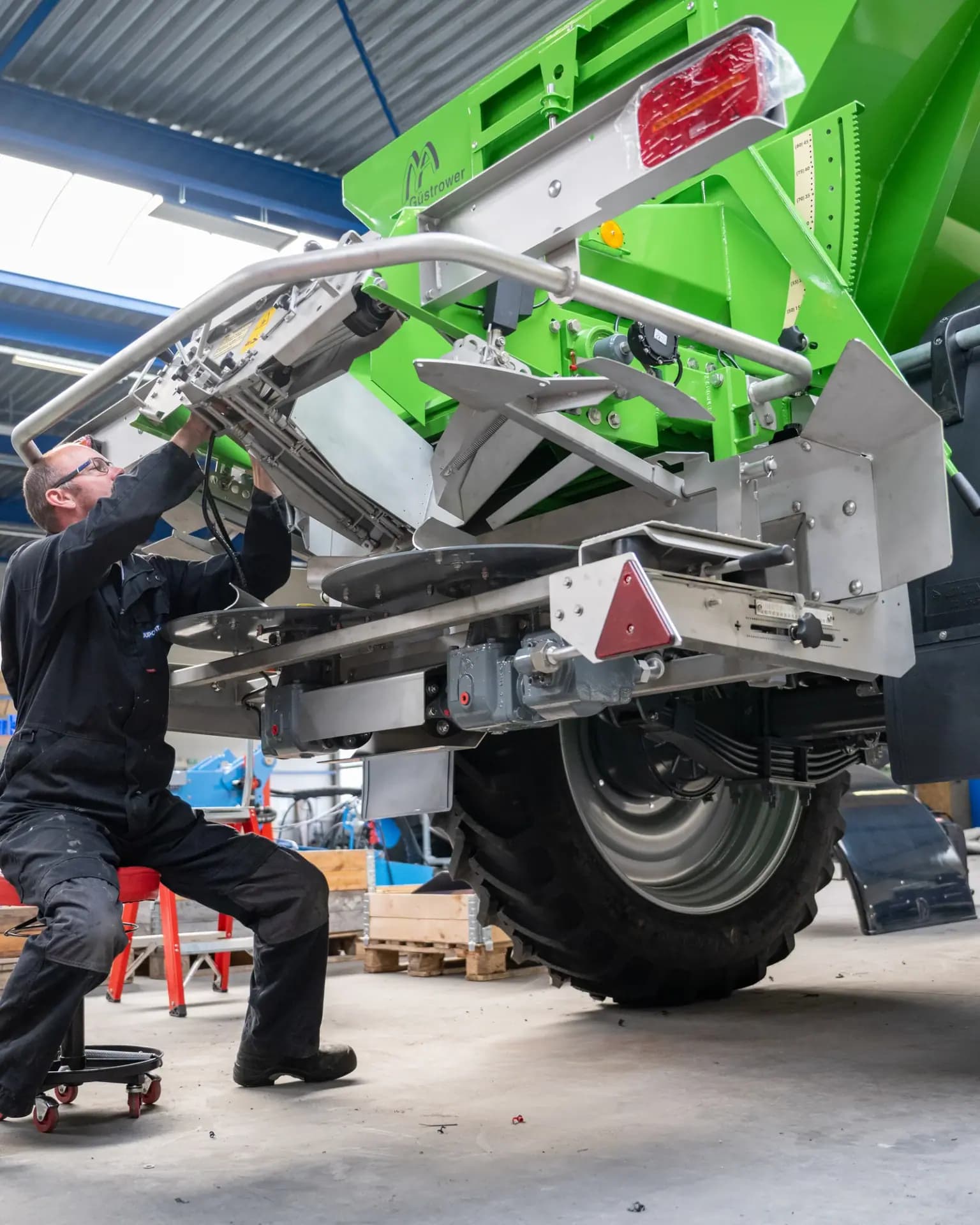
Güstrower GDK — Spreading discs — close-up from behind
Spreading discs — close-up from behind
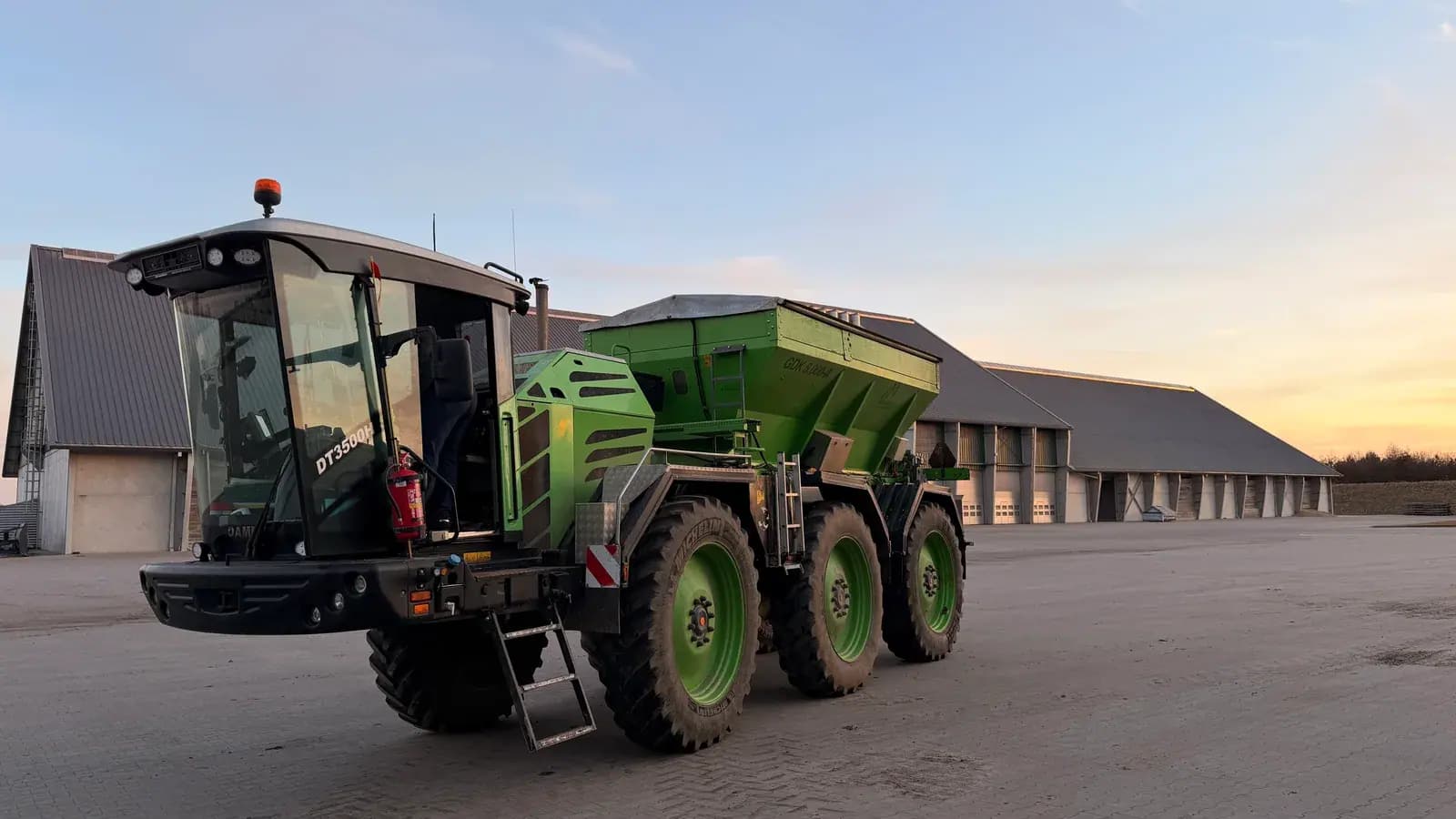
Güstrower GDK — Self-propelled variant GDK-A (Trac)
Self-propelled variant GDK-A (Trac)
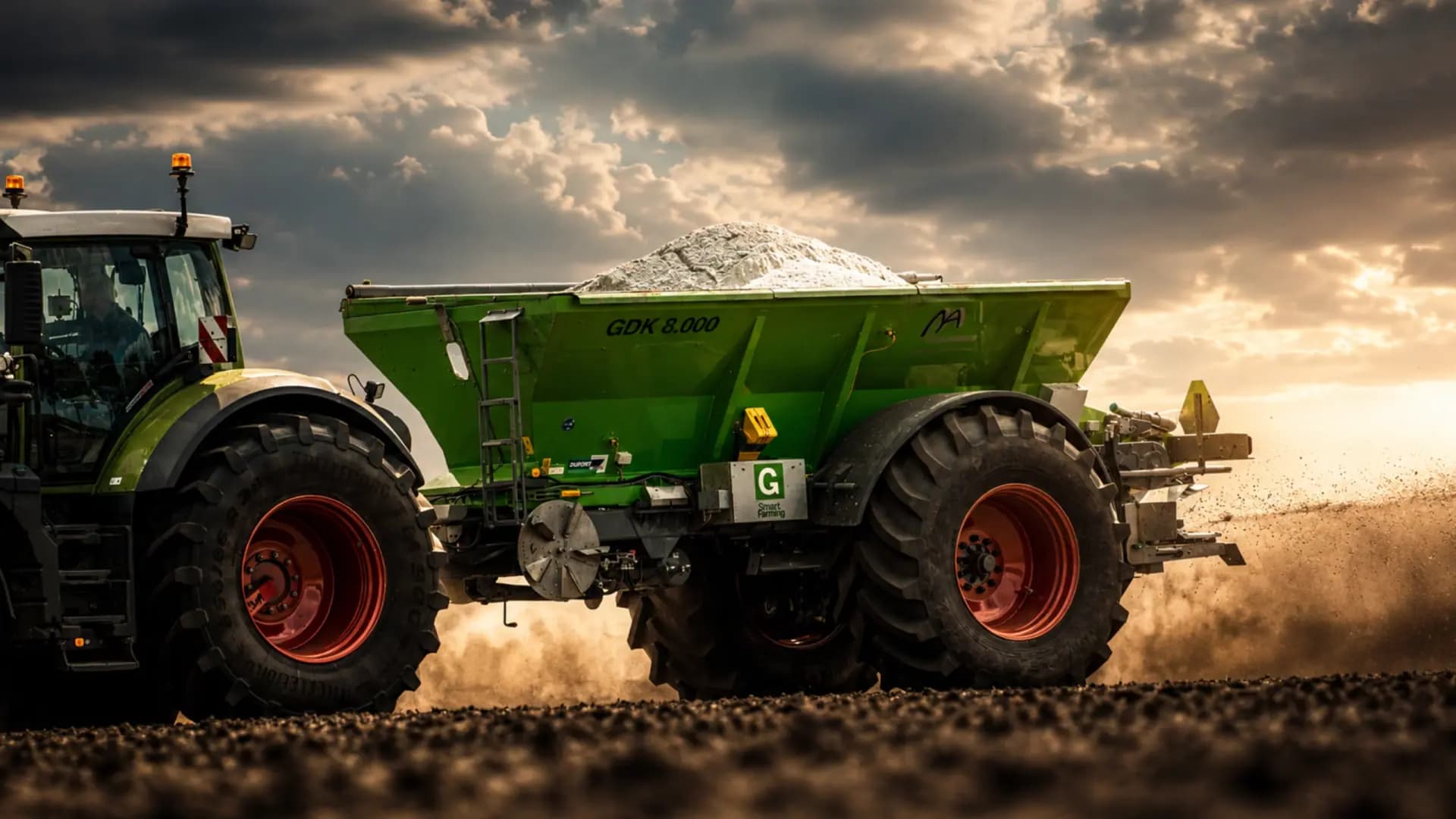
Güstrower GDK — Lime across the full working width
Lime across the full working width
Before you decide

Conversation with an engineer.

The most common questions farms ask us before buying a GDK.

We have collected the questions we most often hear from farms before purchase — and the answers from our engineers. Every answer is based on verified knowledge of the machine.

Based on
  • manufacturer's materials
  • dokumentacji technicznej
  • questions asked by farms

Answers based on the experience of thousands of farms in Europe.

An engineer answers

GDK 6000, GDK 8000, GDK 9000 and GDK 10000. The GDK 5000 and 7000 models have been discontinued.

An engineer answers

16 m³ — GDK 10000 with a 450 mm extension side. GDK 8000 reaches 12.5 m³, GDK 9000 — 14.5 m³.

An engineer answers

Do 42 m.

An engineer answers

12–15 m — this results from the physics of the material, not from the design of the machine.

An engineer answers

Yes. The chain conveyor and interchangeable spreading units handle mineral fertiliser, lime, compost and dry poultry manure on one machine.

An engineer answers

ISOBUS (AEF Working Set computer) with Section Control and application maps (VRA). The earlier TJ500 system has been discontinued and replaced by ISOBUS.

An engineer answers

From 66 kW (GDK 6000) to 130 kW (GDK 10000).

An engineer answers

Floor 60 l/min, discs 90 l/min, maximum pressure 200 bar, filtration 10 µm.

An engineer answers

12,000 kg (GDK 6000/8000) and 22,400 kg (GDK 9000/10000).

An engineer answers

The GDK uses a chain conveyor with scrapers instead of a floor belt — the chain does not slip or bridge with damp lime or compost.

An engineer answers

Yes, as an option.

An engineer answers

Yes — in variants of the offer “mit/ohne TÜV”.

An engineer answers

Yes — the GDK-A variant for a self-propelled chassis (Trac).

An engineer answers

GMB Güstrower Maschinenbau (Duport group), plant in Dedemsvaart (Netherlands).

Have another question?Talk to an engineer

Your fields have their own shape, their own wind, their own window. Let’s match a GDK to them.

And when harvest comes, how do you avoid stopping the combine?

GTU path — field logistics →

And if you apply not granules but liquid?

Duport — liquid fertilisation / CULTAN →