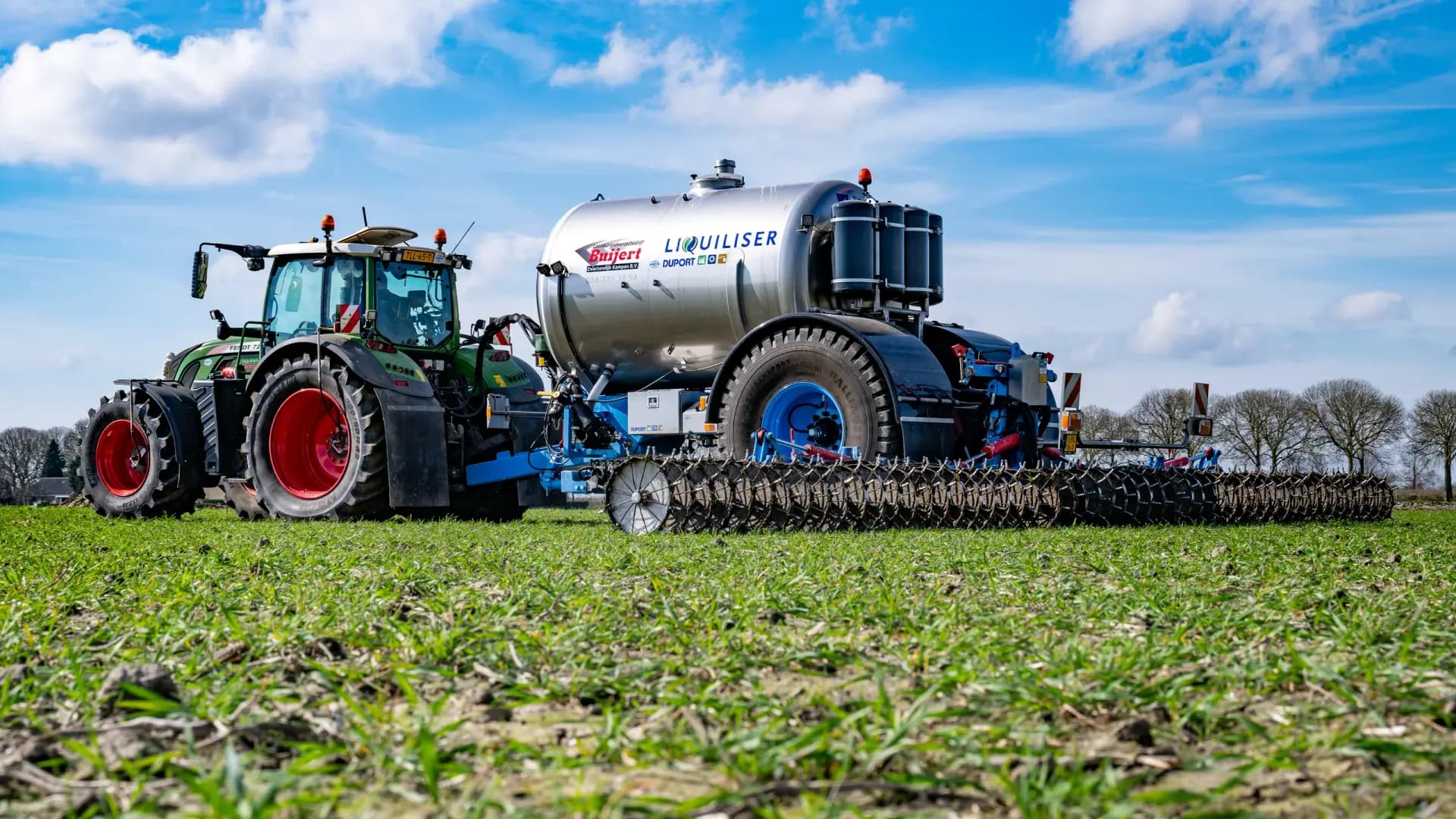

Duport
Duport — fertilising technology: RSM injection (CULTAN) and slurry application
Fertiliser does not work in the tank. It only works once it reaches the root.
Everything that happens between the tank and the root determines how much of the nutrient actually works.
Duport designs the route of nutrients into the soil.
Liquiliser configurator →Slurry tanker configurator →The fertiliser follows one route — from the tank to the root.
- 01
Zbiornik
Full, and still useless.
- 02
Transport
The road to the field; this is where the soil can be compacted.
- 03
Pole
The right field, the right moment.
- 04
Gleba
This is where nutrients are most often lost — to the air and to water.
- 05
Root
The only place where it starts to work.
Duport does not build "fertilising" machines. It designs the successive sections of this one route.
The plant never sees the fertiliser. It only sees the nutrients that have reached it.
Only now does the route split — because not every nutrient travels the same way.
Liquid mineral fertiliser (RSM) is mobile and chemically aggressive. Slurry is thick, heavy and loses ammonia. Two routes not because Duport wants two lines, but because the material requires it.
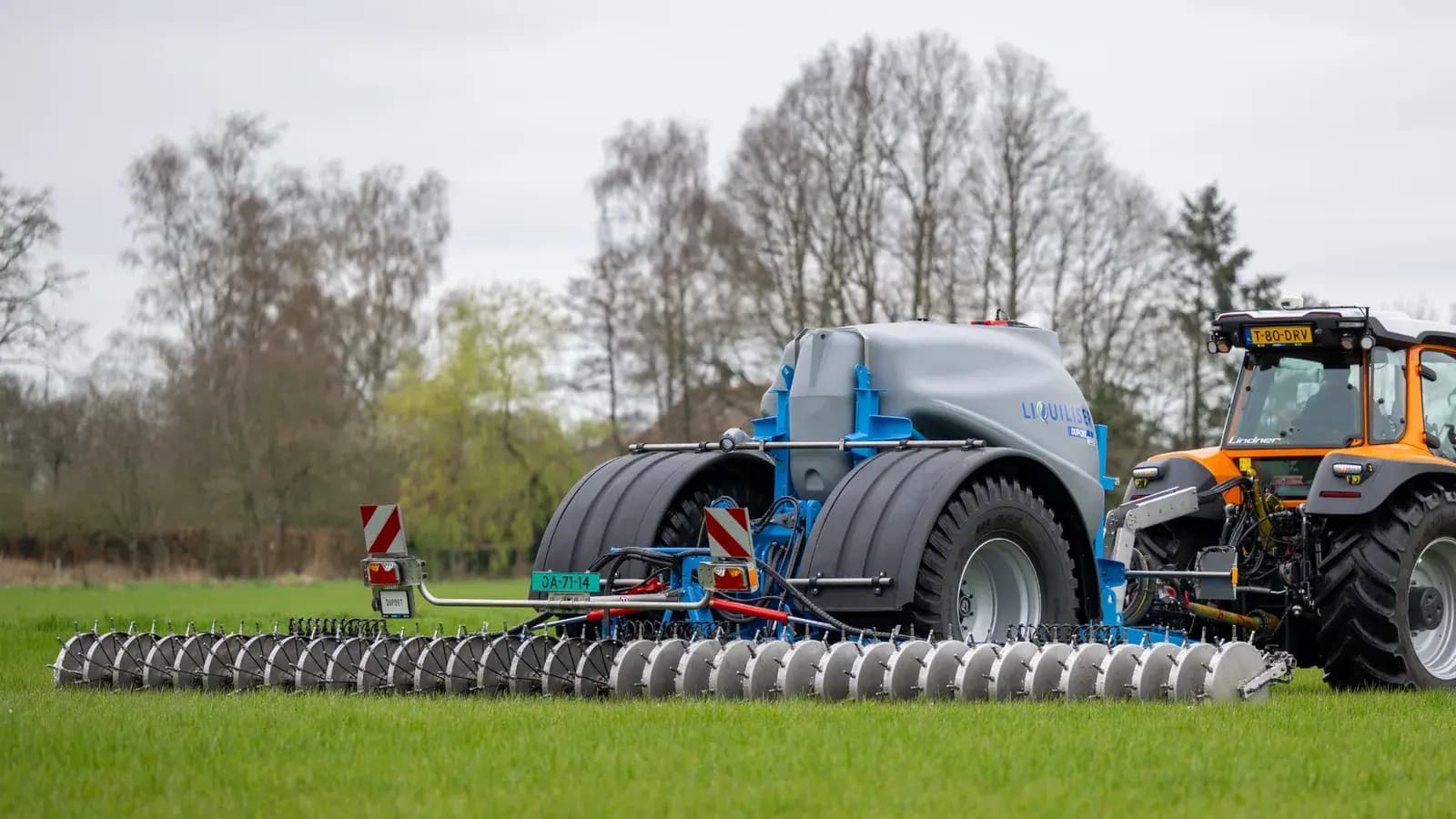
How do you deliver nitrogen to the root before it escapes from the surface?
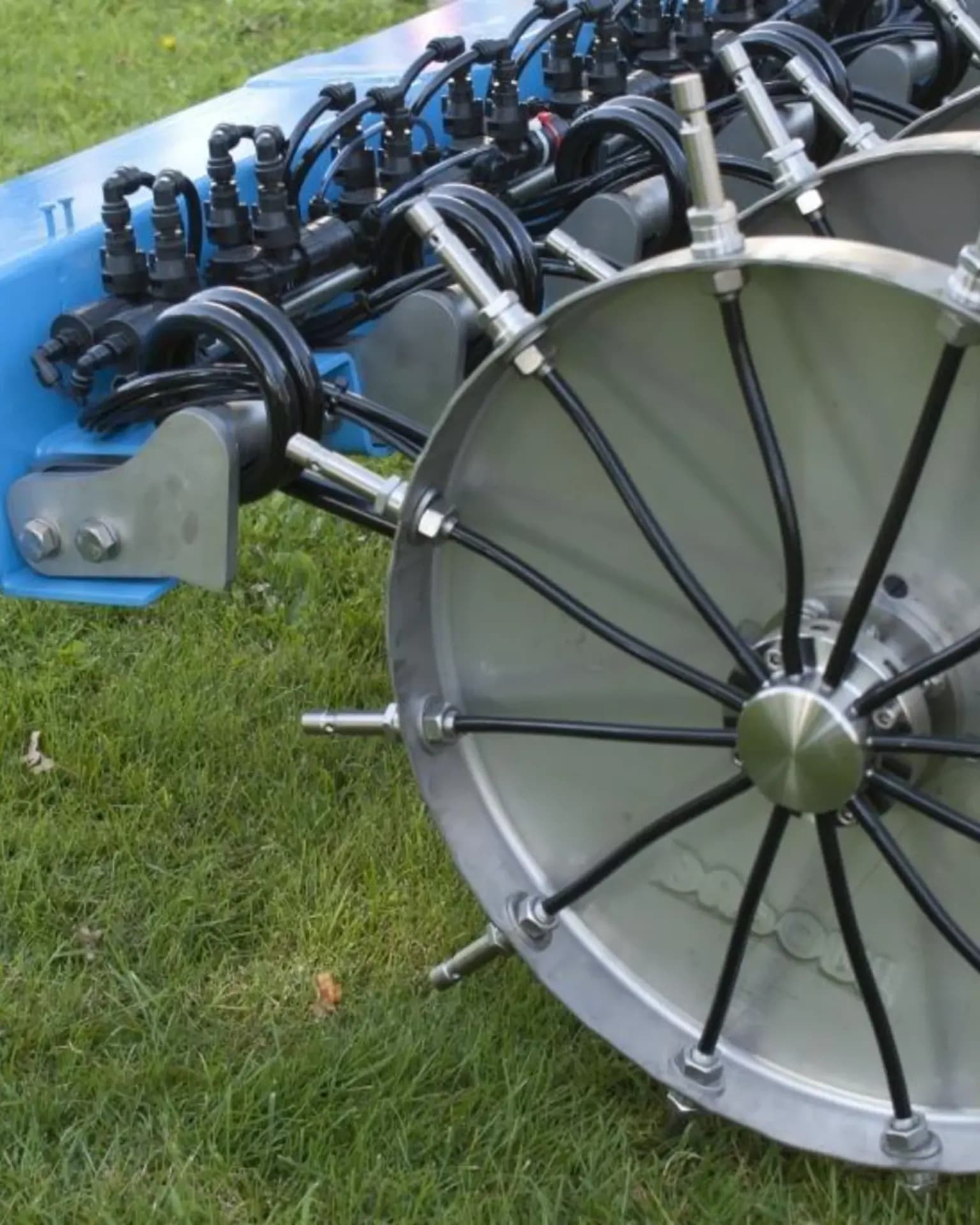
Injection into the root layer with injection discs, in ammonium form — CULTAN technology. The tank (FT / PTW, including the steel PTW 8500) and the SW frame form one system, not separate machines.
Mineral path → LiquiliserHow do you apply slurry without ammonia losses and without compacting the soil?
Two sections of one route: a slurry tanker with its own screw pump delivers it, and an applicator with discs, coulters or hose applies the slurry at ground level — protecting the sward.
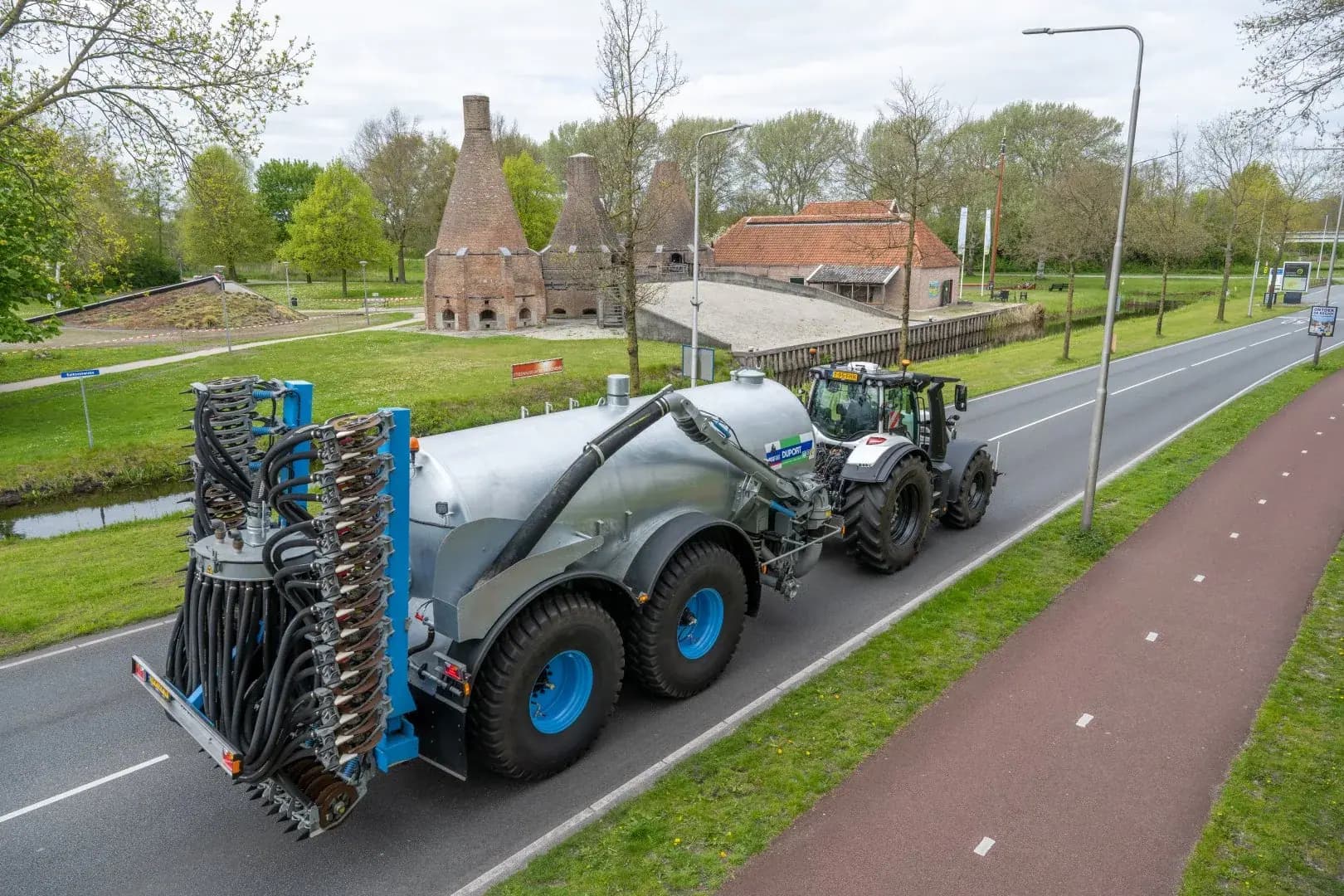
Competitors combine this in one vehicle. Duport separates it.
UAN is chemically aggressive — it requires stainless steel and injector wheels. Slurry is dense and living — it requires a screw pump and sward protection. One vehicle for everything is a compromise on both routes.
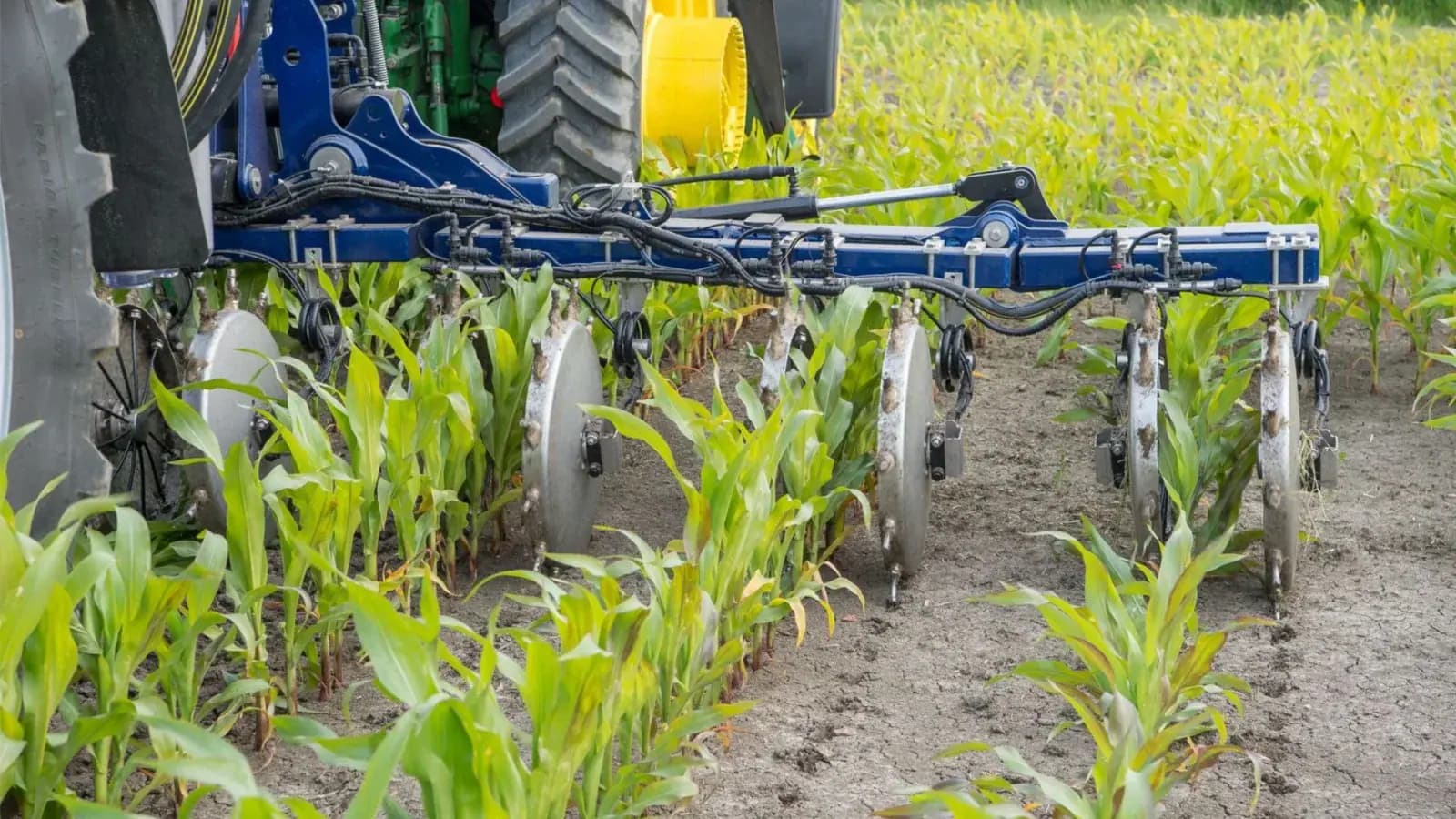
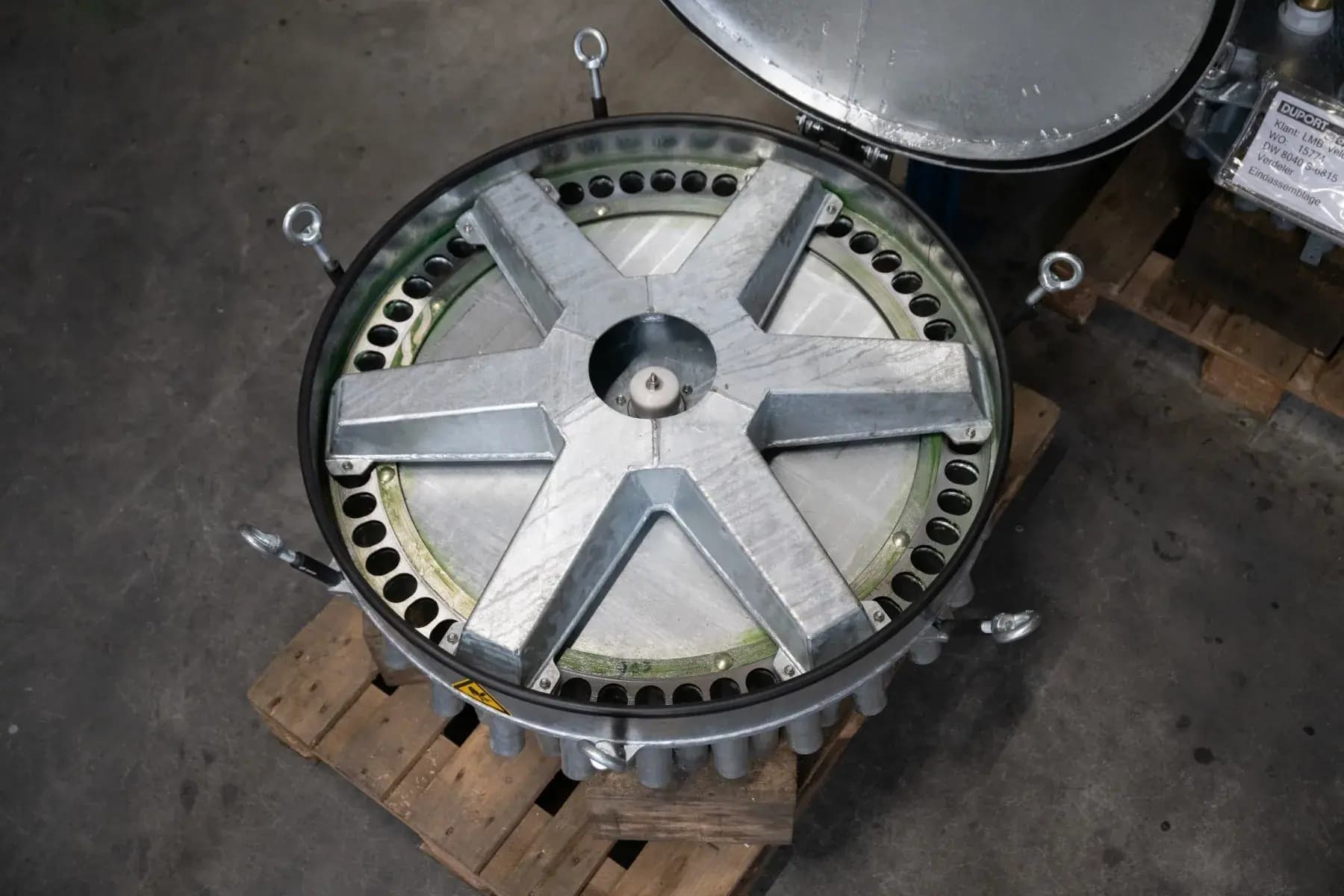
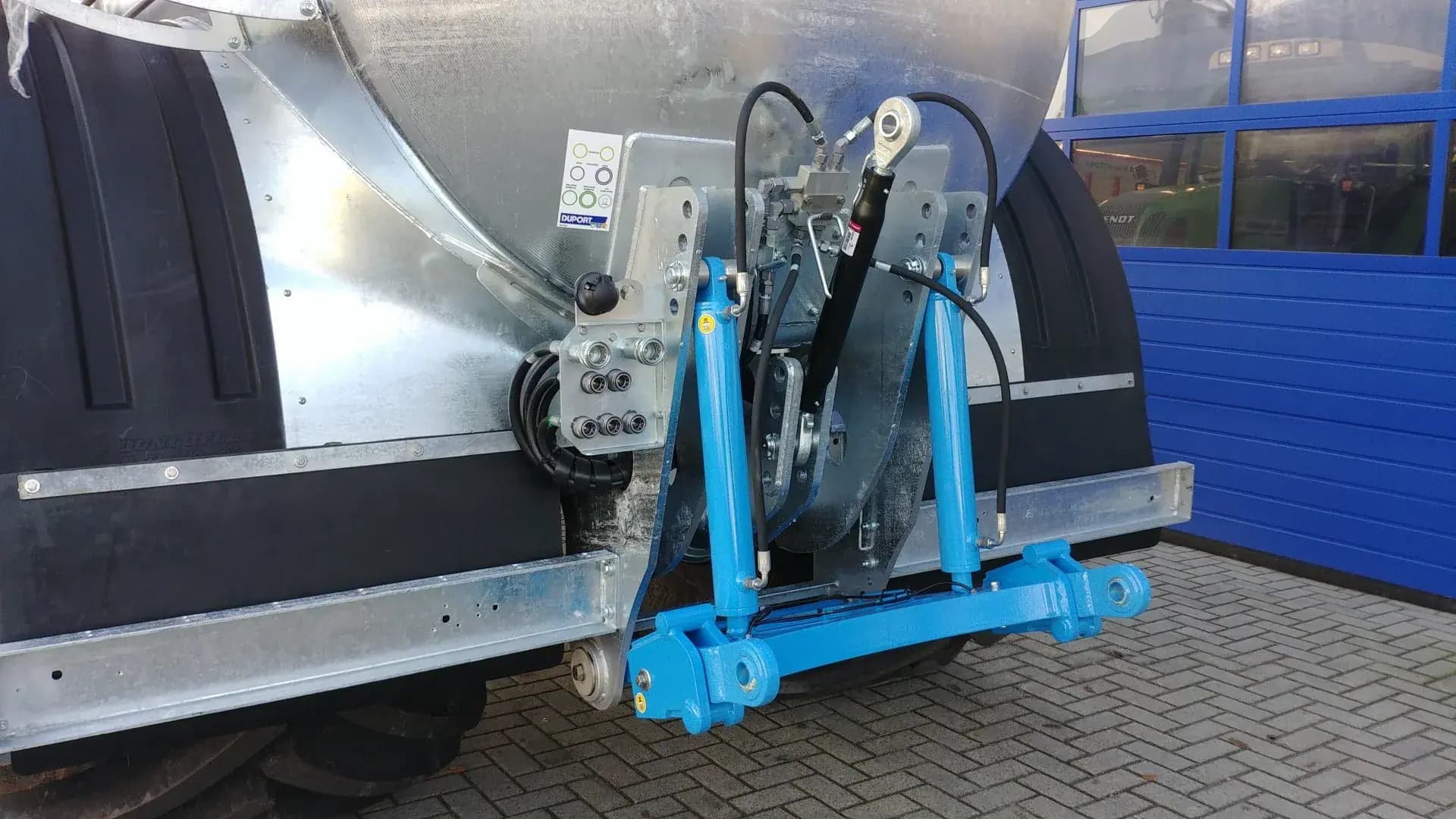
Duport — maszyny w obiektywie
Since 1977, Duport has made only one thing — the nutrient route to the soil — from its own production and assembly in Dedemsvaart. In 2021 it was joined by Güstrower; both brands are built in the same factory.
Conversation with an engineer.
The most common questions we hear from farms before they choose a nutrient route.
We have collected the questions we most often hear from farms before purchase — and the answers from our engineers. Every answer is based on verified knowledge of the machine.
- manufacturer's materials
- dokumentacji technicznej
- questions asked by farms
Answers based on the experience of thousands of farms in Europe.
These are two separate directions of Duport machinery, not variants of the same line. The Liquiliser is an applicator for liquid mineral fertilisers — RSM, liquid multi-nutrient N-P-K fertilisers, and solutions of ammonium nitrate and urea. It works with CULTAN technology, placing the fertiliser into the root zone via injection wheels with needles tipped with sintered carbide. Slurry applicators (All Track, All Track Twin, Schleppschuh/Sleepvoet) are designed for organic material — cattle and pig slurry and digestate from biogas plants — and have a different working design: cutting discs that open the sward or trailing shoes that lay the slurry close to the soil, fed from the tanker by a screw pump. The slurry rate is 8–60 m³/ha. The Liquiliser is not used for slurry, and vice versa.
The All Track disc injector introduces slurry below the soil surface through a slit cut by a disc — ammonia losses are minimised, but the operation requires more tractor power and leaves visible marks in the sward. The Sleepvoet, a trailing-shoe applicator, lays slurry in strips on the soil surface between rows of stubble or grass — the shoes part the grass cover without cutting it. The Sleepvoet is the right choice on meadows and pastures where preserving the sward is crucial, and also on peat and heavy clay soils where disc cutting is undesirable. The Sleepvoet also requires noticeably less tractor power than a disc injector.
Duport slurry applicators — All Track disc injectors (Farmer / HD Profi / Twin), the wide-working All Track 15 m and the trailing hose Schleppschuh — work within a rate range of 8–60 m³/ha, with optional Section Control. The All Track 15 m and Schleppschuh have hydraulic outflow shut-off (Tropfstop), which stops dripping at headland turns and outside the field. The specific rate is chosen for the crop, the type of slurry and the soil's water-holding capacity, while the tanker cart (Enkelas, Tandemtank, 4-in-Line or Bigfoot) is matched to the slurry volume and the field's sensitivity to compaction.
No. Duport slurry applicators have a standard hitch and hydraulic interface, so they also work with tanker carts from other manufacturers. Duport tanker carts (Enkelas, Tandemtank, 4-in-Line, Bigfoot) are of course designed to work together with Duport applicators — this gives full configuration consistency — but it is not a technical requirement. Each product line functions independently.
This is a real and confusing coincidence of names. Duport uses the abbreviation "PTW" in two entirely different product lines. In the Liquiliser system — PTW 3000, PTW 6000, PTW 8500 — these are towed tanks for working liquid for liquid mineral fertilisers: RSM, aqueous solutions of ammonium nitrate and urea, and liquid multi-nutrient fertilisers. Capacity is stated in litres, material is polyethylene or stainless steel, pump 500 l/min, coupled with the SW injection frame. In the range of slurry tanker carts — PTW 8, PTW 9, PTW 10.3, PTW 11.5, PTW 12.5, PTW 14, PTW 16 — these are independent slurry carts. Capacity is stated in cubic metres, the construction is designed for slurry, screw pump 4,000–8,000 l/min, separate service. The shared abbreviation in the name does not mean the same machine.
The choice depends on the scale of work and the field's sensitivity to compaction. The single-axle cart (Enkelas) in the Farmerline and Profiline variants suits medium-sized farms with moderate slurry volumes. The Tandemtank (two-axle) — Farmerline, Profiline or the flagship Bigfoot — spreads the load across four wheels, reducing unit pressure; the Bigfoot on wide-profile low-pressure tyres is the right choice for fields that are waterlogged in spring and autumn. The 4-in-Line (four-axle) in the Farmerline, Profiline and Flex variants gives the greatest capacity at the lowest unit pressure, with all axles steering; the Flex adds an elastic coupling for work on difficult terrain.
RUTHENIA ALBA, as importer, is responsible for commissioning the machine, warranty and after-warranty support in Poland. From our warehouse we supply parts for both Duport directions: injection wheels and needles for the Liquiliser; discs, shoes, hoses and other wearing parts in slurry applicators; screw pumps, bearings and hydraulic components in tanker carts. The specific scope of service and parts availability is discussed individually once the model and its configuration have been determined.
Solid nutrient — not liquid?
Güstrower — fertiliser and lime spreading →Slurry without a tank in the field?
Perwolf — hose system →