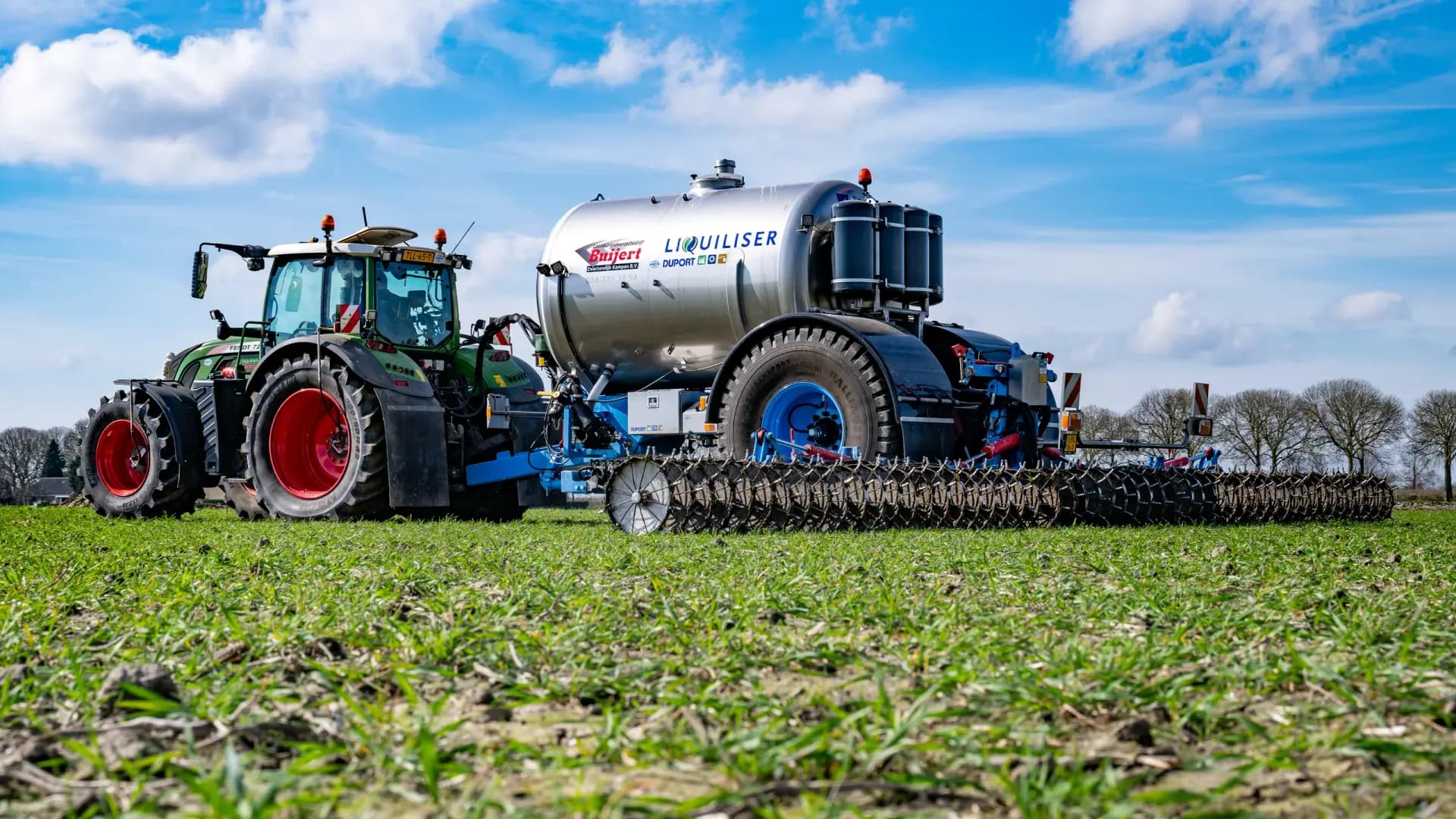
Nitrogen works where you place it —not where you spill it.
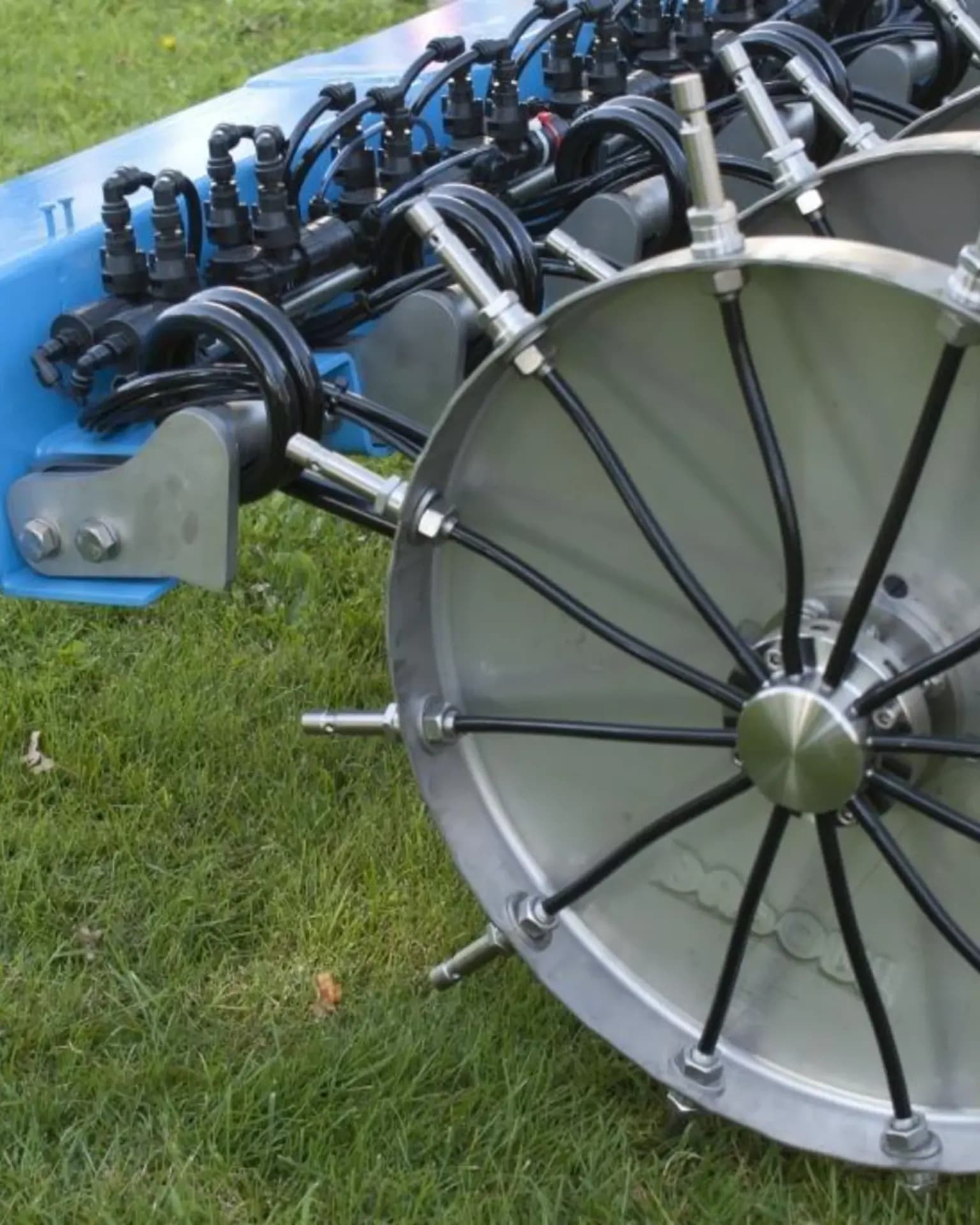
Liquiliser places liquid nitrogen through the needles of the injection discs directly into the root zone — instead of spreading it over the surface, where it evaporates and leaches away.
- 120–1500
- l/ha — application rate range
- ~8 cm
- injection depth
- 3000–8500
- l — trzy zbiorniki
- 6
- machine types
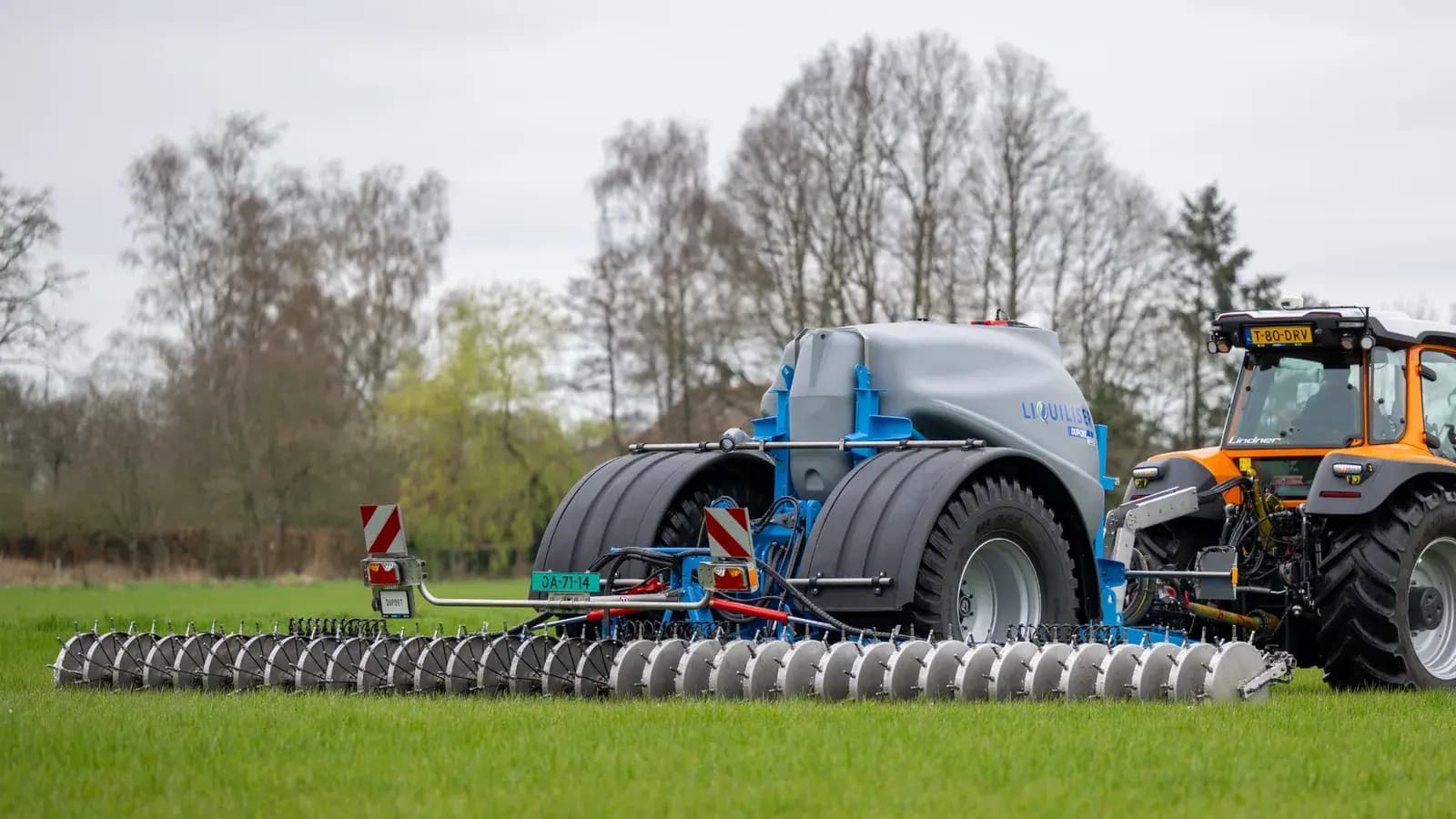
Duport Liquiliser
Nitrogen is lost from the field through five routes. Each element of this design closes one of them:
- Ulatnianie
- liquid form placed below the surface — ammonia does not escape into the air
- Wymywanie
- ammonium (NH₄⁺) bound by the soil stays in place — rain does not wash it away
- Forma
- a concentrated ammonium deposit instead of mobile nitrate
- Miejsce
- injection wheel needles ~8 cm — straight into the root zone
- Tempo
- gradual uptake as the roots develop — the principle of CULTAN
Where these five routes come from — see the chapter “Why injection works” below.
Rate: adjustable and section-based
Working width: four agricultural SW models
Maximum tank capacity (3,000 / 6,000 / 8,500)
Form of nitrogen: CULTAN deposit in the sorption complex
The Liquiliser is not one machine — it is a system
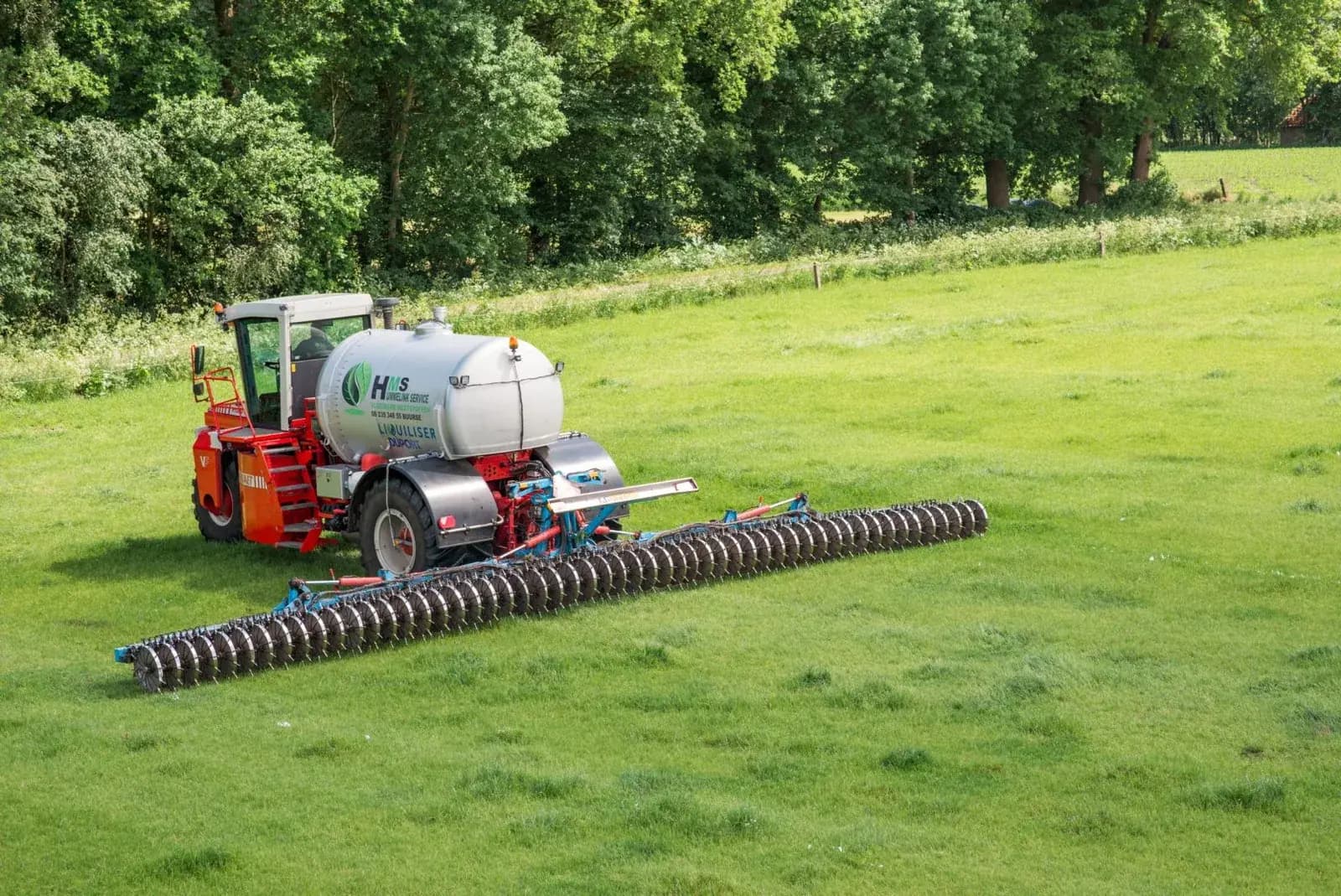
Four units — trailed tank, front tank, applicator and mounted machine — combine into six machine types. You buy exactly the part of the system your farm is missing: from a complete set down to the applicator alone for the barrel you already have.
Kompletne zestawy
Tank and applicator in one order — starting from scratch.
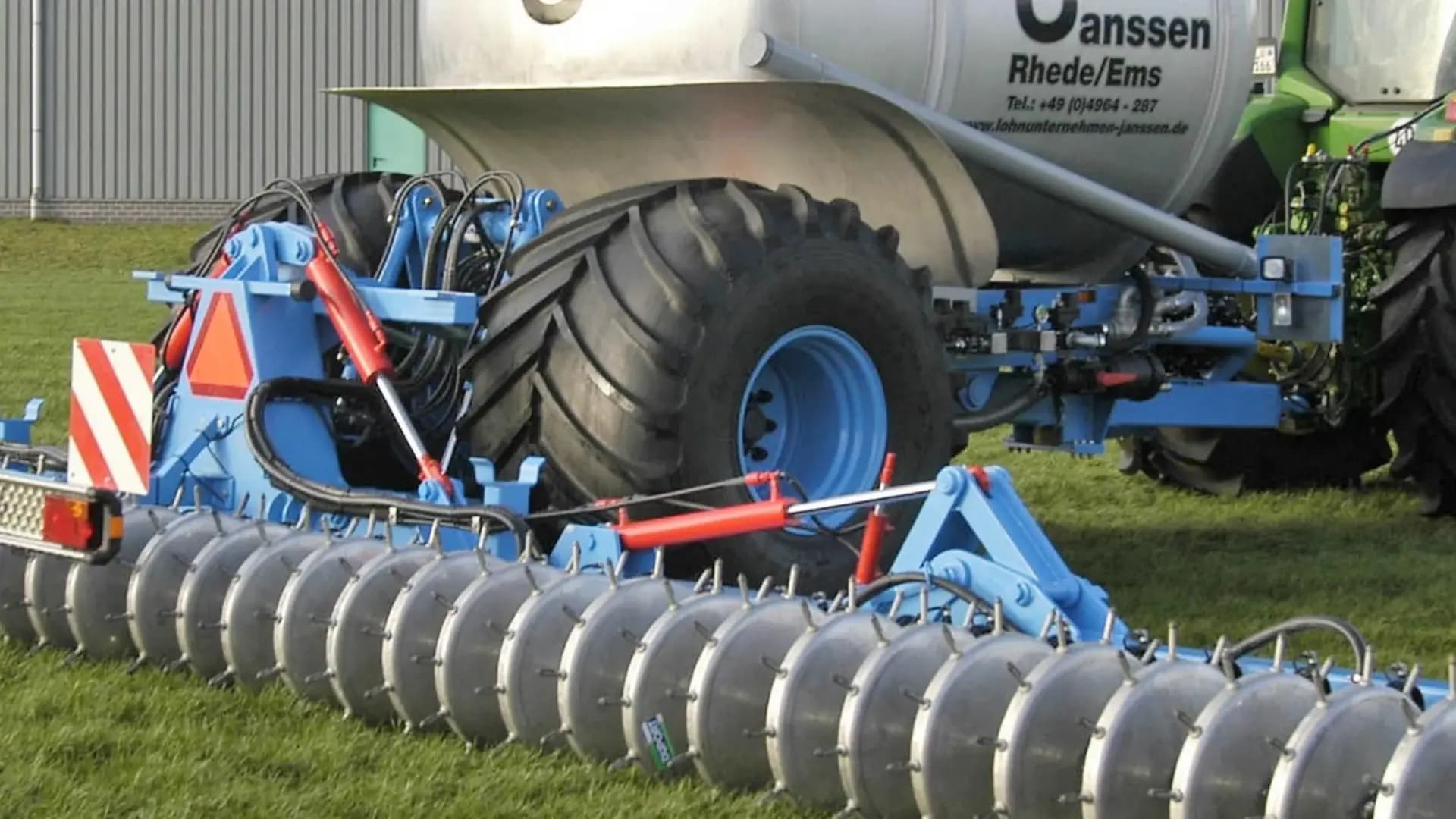
Towed tank + injector
Gezogener Tank und Injektor
complete set: tank on its own chassis and injector
Front tank + injector
Fronttank und Injektor
tank on the front three-point hitch, injector at the rear — shorter set-up
Maszyna zawieszana
The applicator alone on TUZ — the most manoeuvrable variant, the only one for grassland.
Mounted machine (three-point hitch)
3-Punkt-Anbau
injector alone on a three-point hitch
System add-ons
Adding the missing unit to what already runs on the farm.
Injector only
Nur Injektor
for a tank the farm already has
Front tank only
Nur Fronttank
add-on for an existing set-up
Towed tank only
Nur gezogener Tank
tank without injector
Four applications
Full-area application (25 cm). grassland and arable land — spiked wheel spacing 25 cm
Row cropping (variable spacing). spacing set to suit the inter-row, no fixed working width
Sports pitches and lawns (15 cm). dense 15 cm spacing — mounted machine only
Orchards. single row, reinforced spiked wheels XL / XXL
The badges on the machine types above show which applications each type exists for at all. For example, lawns are served only by a mounted machine, and row cropping only by a set with a front tank or the injector alone.
Tank size determines the whole machine
This is not “the same cart in three sizes”. Tank size determines the pump drive, controls, number of sections and available automation. Parameter by parameter, below.
3000 lzbiornik PE
The lightest set — for smaller areas and lighter tractors. Simple layout: pump drive from the PTO, tractor valve control, manual sections.
6000 lzbiornik PE
Mid-range — full list of options: hydraulic pump, Load Sensing, GPS section control, FlowControl, up to 9 sections.
8500 lstal nierdzewna
The largest — the only one with two compartments (two media in a single pass) and suspended drawbar. Options as for the 6000 l.
| Parameter | 3000 l · zbiornik PE | 6000 l · zbiornik PE | 8500 l · stal nierdzewna |
|---|---|---|---|
| Tank material | polietylen (PE) | polietylen (PE) | stal nierdzewna |
| Two-compartment system | — | — | yes (the only one in the range) |
| Output pump | PTO drive (AR) | hydraulic centrifugal pump | hydraulic centrifugal pump |
| Tyres | Ceat 850/50R30.5 | 7 tyre variants | 7 tyre variants |
| Terminal | Arag Bravo | bez terminala / L10i | bez terminala / L10i |
| Number of sections | 3 · 5 | 3 · 5 · 7 · 9 | 3 · 5 · 7 · 9 |
| GPS section control | — (manual sections) | opcja | opcja |
| Load Sensing | — (tractor valves) | opcja | opcja |
| FlowControl | — | opcja | opcja |
| Clean water tank | 10 l | 30 / 120 / 200 l | 30 / 120 / 200 l |
| Sliding axle (Schiebeachse) | — (fixed track width) | opcja | opcja |
| Drawbar suspension | — | — | 3 warianty |
| Support | mechaniczna | mechaniczna / hydrauliczna | hydrauliczna |
Source: Duport factory configurator, equipment for the Polish market
From 120 to 1,500 l/ha — ten metering plates
The rate is set by a replaceable metering plate. The conversation about the Liquiliser starts right here: what UAN rate you want to apply. The plate is chosen accordingly, and the rest of the machine follows from there.
Go to the configurator →| Rate [l/ha] | Plate no. |
|---|---|
| 120–200 | 34 |
| 165–280 | 39 |
| 235–420 | 43 |
| 300–520 | 49 |
| 450–770 | 61 |
| 530–930 | 70 |
| 710–1200 | 86 |
| 820–1500 | 98 |
| 980–1500 | 115 |
| 1020–1500 | 132 |
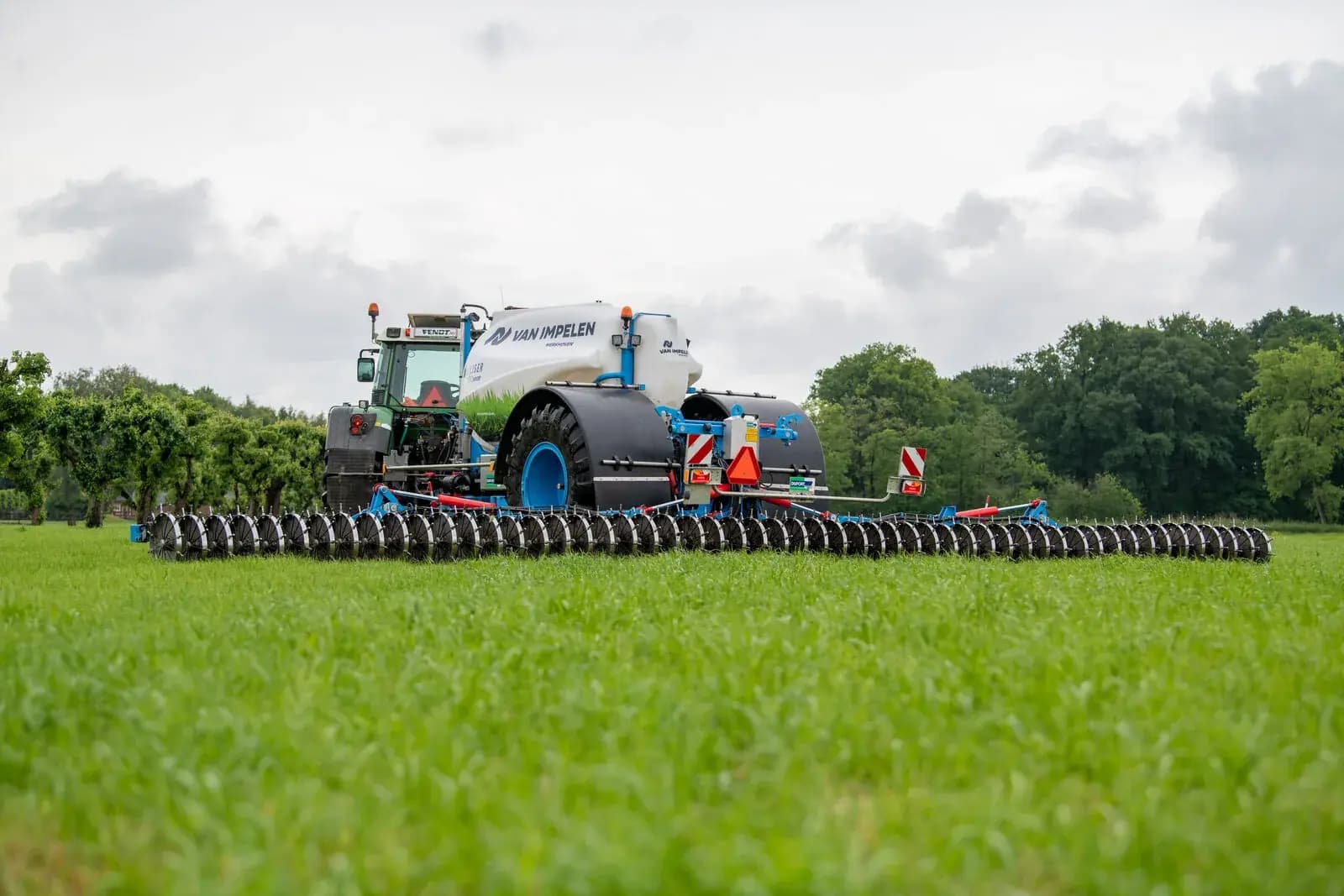
Most often we are asked how much nitrogen to apply. But nitrogen is not lost because of the quantity.
Route 1Volatilisation
Urea and RSM spread over the surface on a warm, windy day volatilise as ammonia — before they can reach the roots.
Nitrogen spread on top waits for rain. Until then, it escapes into the air.
Route 2Leaching
Nitrogen in nitrate form (NO₃⁻) is mobile. Water carries it deeper, beyond the reach of the roots.
It is not the quantity that is wasted. Nitrogen is wasted when it is in the wrong form and in the wrong place.
Ammonium (NH₄⁺) is bound by the soil's sorption complex and stays in place. Nitrate does not.
Nitrification gradually converts ammonium into nitrate. So it matters not only where, but also how long nitrogen remains in a form that the soil does not release to water.
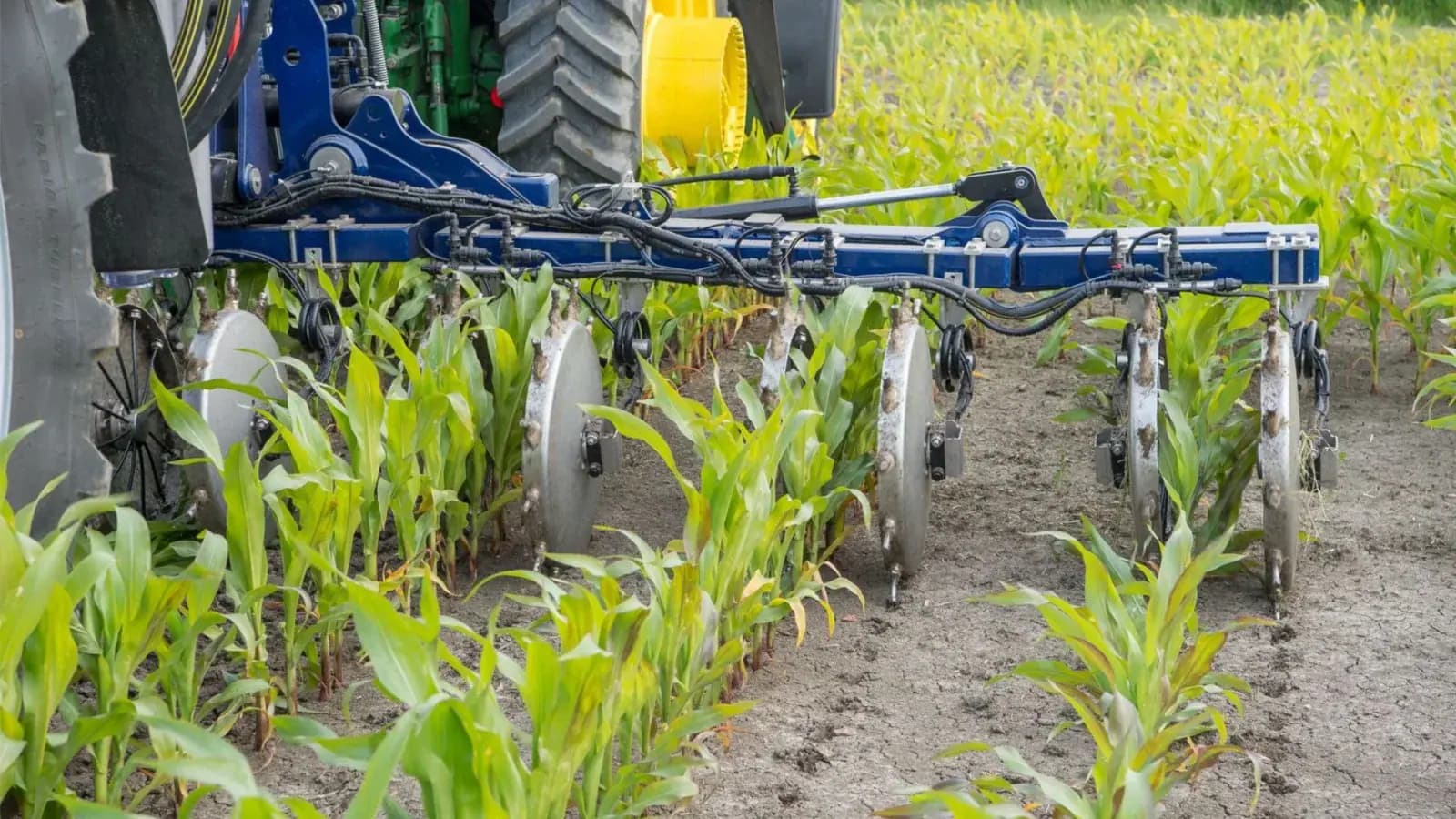
Nitrogen placed in the root layer is available immediately — where the root reaches.
And the plant takes up a concentrated ammonium deposit gradually, as the roots develop — this is the essence of CULTAN: Controlled Uptake Long Term Ammonium Nutrition.
Fertilisation is not about the amount of nitrogen. It is about the place and form in which it reaches the root.
Conversation with an engineer.
The most common questions we hear from farms before buying a Liquiliser.
We have collected the questions we most often hear from farms before purchase — and the answers from our engineers. Every answer is based on verified knowledge of the machine.
- manufacturer's materials
- dokumentacji technicznej
- questions asked by farms
Answers based on the experience of thousands of farms in Europe.
Full ISOBUS integration: Liquiliser communicates with the tractor terminal using standard ISOBUS protocols. Supported are: Müller Elektronik, TRACK-Leader, Section Control (automatic section shut-off within field boundaries and on headlands) and APP&GO. In practice this means nitrogen application appears in the same task list and on the same maps in which the seed drill with VRA and the sprayer with Section Control operate. There is no separate display on the applicator; everything is controlled from the cab.
CULTAN (Controlled Uptake Long Term Ammonium Nutrition) delivers nitrogen in ammonium form (NH₄⁺) directly into the root zone, using injection needles about ~8 cm long. At the injection point a local deposit forms, which the soil's sorption complex holds in place until the roots grow to it, so the plant takes up nitrogen gradually throughout the growing season. Classic saltpetre (CAN/KAS, NO₃⁻) is spread on the surface and needs rain to bring the nitrogen to the roots; along the way part of it volatilises as NH₃, and part leaches into groundwater as nitrates. CULTAN does not eliminate both phenomena entirely, but it reduces them, because the application point has no contact with air or with the upper soil layers most exposed to leaching.
Liquiliser handles all the typical mineral liquid fertilisers used in Polish agriculture: urea-ammonium nitrate solution (RSM-28, RSM-30, RSM-32), liquid multi-nutrient N-P-K fertilisers (with added micronutrients), aqueous ammonium nitrate solutions and aqueous urea solutions. Each of these forms reaches the root zone through the same injection discs, without contact with air.
No. Liquiliser is an applicator for liquid mineral fertilisers: RSM, liquid multi-nutrient fertilisers, ammonium nitrate solutions and urea. Organic material (cattle slurry, pig slurry, biogas plant digestate) requires a completely different machine design: larger hydraulic cross-sections, six-blade splitting rotors, non-return valves protecting the system from ingress of organic matter, and reinforced-wall rubber hoses. For slurry, Duport has a separate technology: All Track applicators (Farmer / HD Profi / Twin), All Track 15 m and Schleppschuh, and tankers with a progressive cavity pump. Liquiliser is not used for slurry, and vice versa.
The SW range comprises four models: SW 8032, SW 12048, SW 13554 and SW 15060, with working widths from 8 to 15 m, and tanks of 3,000, 6,000 or 8,500 l to choose from. The choice depends not only on field area but also on field geometry (long fields can be covered with a wider boom; fields with numerous turns and curves require a smaller width), on tractor power and on fertiliser logistics (a larger tank means fewer returns to the loading point, but also a greater load on the axles). We determine the specific choice in discussion with an agronomist and the RUTHENIA ALBA service team.
The needles penetrate the soil between crop rows and place the fertiliser locally; they do not cut the plant's roots or the main axis of the root system. Point punctures in the root zone are a natural element of agronomic CULTAN practice; the plant responds to a nitrogen deposit near its root system by growing root hairs towards it. In field practice the operation is neutral for the crop, provided the wheel track matches the row spacing and the working speed is within the range permitted by the manufacturer.
From the RUTHENIA ALBA warehouse. We keep in stock stainless steel needles (with tungsten carbide tips), complete injection discs, injector springs, and hydraulic and ISOBUS terminal components. The specific range of parts and delivery times are agreed once the SW model and its configuration are determined. A replacement part for an injection disc should not halt the season; this is one of the reasons we maintain a warehouse in Poland, not just an import point.
Build your Liquiliser
The same questions as the Duport factory configurator — in Polish and without logging in. We start with the application and machine type, as these determine which units can be configured at all.
Machine
Allgemeine Maschinendaten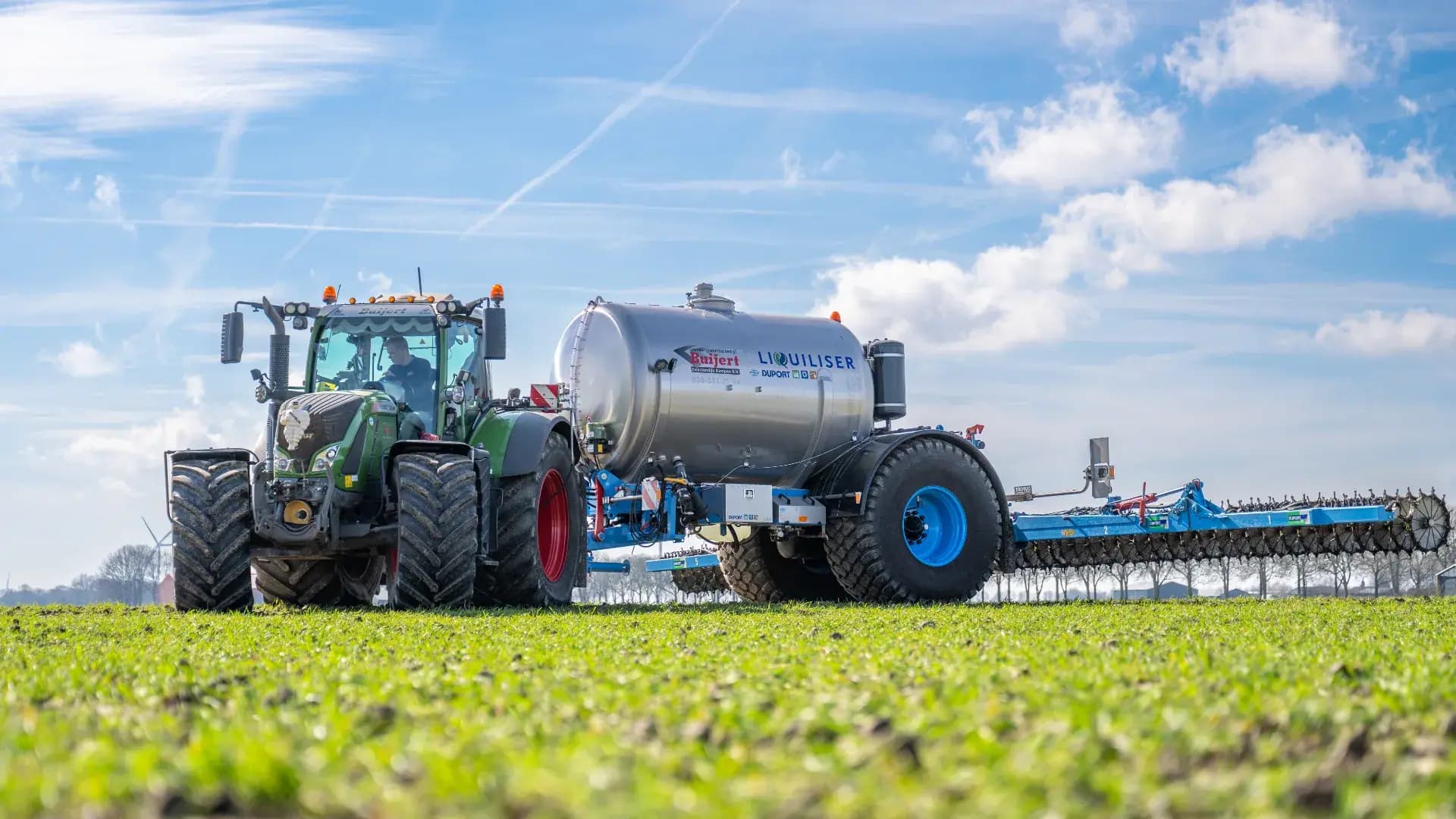
Duport
Towed tank + injector
Quotation
Individual — on request
complete set: tank on its own chassis and injector. Units to configure: trailed tank + aplikator.
Your configuration
Liquiliser Towed tank + injector · 6000 l
- Application
- Full-area application (25 cm)
- Machine type
- Towed tank + injector
- Hopper capacity
- 3,000 l — PE tank
- Towing eye
- Eye ø50
- Drawbar support
- Mechanical
- Brakes
- Pneumatic two-line
- Axle
- Fixed track width (2.05 m)
- Lift cylinder damping
- Rigid 3-point linkage
- Hydraulic control
- From tractor valves
- Hydraulic hoses
- Press sleeves and couplings, steel
- Number of applicator sections
- 3 sections
- Section switching
- Manual, from terminal / S-Box
- GPS receiver on the tank
- No antenna, external signal
- Foam marker
- With foam marker
- Terminal
- No terminal
- Output pump
- Hydraulic centrifugal
- Filling pump
- Double, 1800 l/min
- Level indicator
- Sight glass
- Access to the manhole
- No platform or steps
- Lubrication system
- Quick coupler for the lubrication system
- Clean water tank
- 30 l
- Hose routing to the tractor
- Basic
- Spare spiked wheel holder
- No holder
- FlowControl flow regulation
- No flow regulation
- Working lights
- No working lights
- Camera
- Without camera
- Tyres
- Alliance 1050/50 R32 A377+ XT VF SB 198 D TL
- Tyre pressure regulation
- No adjustment
- Air buffer tank
- Without buffer
- Applicator working width
- 6,00 m
- Applicator wheels
- Standard applicator wheel
- Spiked wheels
- Split
- Element type
- Spring elements
- Number of sections
- 3 sections
- Spray line cover
- Without guard
- Hydraulic line connectors
- Steel
- Hitch lock
- Hydraulic
- Foam marker on the boom
- With marker
- Spare parts kit
- With wear parts kit
- Paint
- RAL 5012 — Duport blue
- Dosing plate (fitted in the machine)
- 235–420 l/ha (plate 43)
Pricing is always individual — it depends on the units, equipment and delivery time. Ask us: we will prepare an offer and check funding options.
Your field has its own nitrogen, its own soil and its own timing. Let us match the Liquiliser to them.
Let's work out the right configurationThe injection frame alone needs working liquid.
System tank — PTW 8500 →And if you fertilise organically — without compacting the soil with a barrel?
Perwolf hose system →